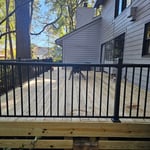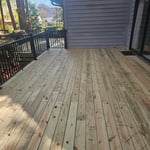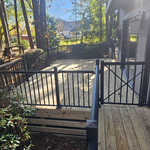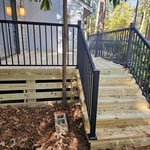








Top-rated deck repair pros.

Best deck repair pros near Fountain, NC

Enter your zip and get matched with up to 5 pros

Need a pro for your deck repair project in Fountain, NC?

Select your specific project to find the pro for you.

TRUSTED BY FOUNTAIN, NC HOMEOWNERS

  • Average homeowner rating star icon4.8
    Average homeowner rating
  • Verified reviews icon13
    Verified deck repair services reviews

Top-Rated Deck repair pros in Fountain - Updated Nov 2026

Avatar for Schulers Property Services
Schulers Property Services
New to Angi
Deck or Porch - Repair

Serving Fountain, NC and surrounding areas

Approved

Small jobs welcome

Offers commercial services

Schulers Property Services is a dependable, family‑owned local company committed to helping homeowners care for every part of their property—inside and out. Known for professionalism, clear communication, and quality craftsmanship, they provide a full range of interior and exterior services that enhance comfort, appearance, and long‑term value. Rooted in the community and focused on building a better future for local families, SPS delivers reliable results with a friendly, customer‑first approach that makes every project smooth and stress‑free.

Outdoor Living Upgrade

+21

...
Showing 1-10 of 98
Deck Repair FAQs, answered by experts

Whether composite decking is better than wood depends on your priorities, especially regarding budget and maintenance. Composite decking offers superior longevity (30 to 50 years) and durability, and it is low-maintenance, requiring no sanding, staining, or sealing. In contrast, wood decks typically last 10 to 30 years and need refinishing every few years. While the upfront cost of composite is higher than wood, the reduced maintenance can lead to long-term savings. If a lower initial cost is the primary factor, wood is the more affordable choice.

When deciding if you should use 2x6 or 2x8 deck joists, consider the size of the deck, joist spacing, and materials. Larger decks, larger-spaced joists, and weaker wood all require more support, meaning they need larger joists. For example, 2x8 redwood joists spaced 16 inches apart can only safely span up to 10 feet and 7 inches. On the other hand, 2x10 southern pine joists spaced 12 inches apart can be as big as 16 feet and 2 inches. If you aren’t sure what size joist is best for your project, speak with your deck builder.

When sourced responsibly, the most sustainable wood decking options are timber trees like redwood, pine, Douglas fir, Nootka cypress, and Western red cedar. These tree species are fast-growing with low carbon emissions. Plus, most timber woods make durable deck materials because of their resistance to rot and decay over time. 

The best way to sand a deck is by cleaning it, sanding the boards and stairs with 60- or 80-grit sandpaper, and sanding the railings and posts with 80-grit sandpaper. You should sand in the direction of the wood grain to avoid damaging the timber. When sanding your deck, use medium pressure and aim for an even sand. Pressing too hard with a sander can damage decks, as most are softwoods.

When staining a deck, don’t skip surface prep, avoid staining damp or dirty boards, and don’t apply stain in extreme heat, cold, or wet conditions. Never overload the wood with a stain, as too much can cause tackiness or peeling. Also, don’t forget to test a small area first to ensure the color and finish look right.

The Fountain, NC homeowners’ guide to deck repair services

From average costs to expert advice, get all the answers you need to get your job done.