


Top-rated welders.

Get matched with top welders in Shannon, MS

Enter your zip and get matched with up to 5 pros

Need a pro for your welding project in Shannon, MS?

Select your specific project to find the pro for you.

Find Welders in Shannon

Southern Mobile Welding Repair and Services
5.0(
6
)

Serving Shannon, MS and surrounding areas

Approved

In business since 2016

Free estimates

Credit card accepted

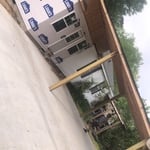
"Quick reply with quote, delivered exactly what we needed. The project required 16 slab concrete steps on cast to be demolished and replaced on an apartment complex. The job was completed in the time frame that was promised. Stayed in communication throughout the process. Was completed just as promised, even painted and did an excellent job cleaning up after themselves. Every Pro should be like Southern Mobile Welding. Will be using again and I highly recommend them."
Response time11 hrs
Recommended by100%of homeowners

Avatar for BRO WELDING LLC
BRO WELDING LLC
5.0(
9
)

Serving Shannon, MS and surrounding areas

In business since 2020

Free estimates

Emergency services offered

"Very professional and amazing attention to detail. Very hardworking and goes above and beyond for his customers. Great communication and beautiful skills shown. Very happy with the work done."
Response time2 days
Avatar for Luke Hudson Mobile Welding
Luke Hudson Mobile Welding
5.0(
3
)

Serving Shannon, MS and surrounding areas

In business since 2025

Free estimates

Emergency services offered

"A true professional that shows skill in what he is doing at a competitive price. There couldn't have been a better job done on the work that was needed. I would definitely recommend to anyone needing welding done!"
15 neighbors recently requested a quote
...
Showing 1-10 of 53
Welding questions, answered by experts

Cutting rectangular ductwork requires careful measurements and the right technique. Use a measuring tape and pencil to mark the cutting lines accurately. Tin snips are excellent for straight cuts on smaller ducts. For more extensive or thicker rectangular ducts, a reciprocating saw with a metal-cutting blade is effective. 

Ensure the duct is well-supported and secure while cutting to prevent wobbling and maintain precision. After cutting, use a metal file to smooth any sharp edges, ensuring safety during installation. 

The average cost for a welding project is about $300, with typical costs ranging from $125 to $490. However, prices can be as low as $125 for very small jobs or exceed $1,200 for large or complex projects. Welders typically charge an hourly rate between $65 and $150, depending on their experience, and many charge a minimum fee to cover overhead and travel expenses. The total cost is influenced by several factors, including labor, the cost of materials like metal rods and shielding gas, the type of metal being welded, the project's size and complexity, and your geographic location. For a precise quote, it's best to ask a local welder for an estimate based on your specific project.

Welders use a variety of methods in their trade. Different types of welding are better suited for different purposes and contexts. For example, stick welding is a versatile form suitable for most metals and alloys. The most common types of welding include:

  • Stick welding: $100–$1,000

  • Metal Inert Gas (MIG) welding: $250 and up

  • Tungsten Inert Gas (TIG) welding: $250 and up

  • Gas welding: $150 and up

  • Forge welding: $15–$25 per hour

You should not do your own welding unless you have the proper training and experience. Most home electrical systems can only handle MIG welding, which creates weaker bonds than TIG welding and won’t work on certain metals or metal thicknesses. Both welding forms usually require the use of shielding gas, which can be dangerous to store at home. Additionally, welding machines create temperatures of over 3,000 degrees, and the sparks can blind you if you don’t have the proper equipment. As such, it’s usually better to hire a professional welder for your welding projects.

Yes, you can use a saw to cut metal pipes. The best saw to use is a reciprocating saw, but even a fine-tooth hacksaw can get the job done. No matter which saw you use to cut metal pipes, wear protective gear, like work gloves, safety goggles, and ear plugs. Apply a firm, steady pressure to the tool, and always ensure the pipes are secured so they don't move while you make the cuts.

The Shannon, MS homeowners’ guide to welding services

From average costs to expert advice, get all the answers you need to get your job done.