



Top-rated generator install pros.

Get matched with top generator install pros in Caledonia, MS

Enter your zip and get matched with up to 5 pros

Need a pro for your generator install project in Caledonia, MS?

Select your specific project to find the pro for you.

Find Generator install pros in Caledonia

Avatar for Quality Construction & Engineering
Quality Construction & Engineering
4.6(
31
)
Fixed Generator - InstallFixed Generator - RepairGenerator - Install - For Business+1 more

Serving Caledonia, MS and surrounding areas

Approved

In business since 2006

Free estimates

Emergency services offered

"Quality Construction Engineering did an outstanding job installing the generator at my home! I truly appreciate their professionalism, quality workmanship, and attention to detail. Having backup power gives me and my family added peace of mind, and I’m so pleased with the installation. Thank you for a job well done! I highly recommend Quality Construction Engineering to anyone looking for quality generator installation."
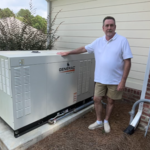
Generac Generator
12 neighbors recently requested a quote

Avatar for Ultimate Construction Pros, LLC
Ultimate Construction Pros, LLC
5.0(
8
)
Fixed Generator - InstallPortable Generator - Install

Serving Caledonia, MS and surrounding areas

In business since 2012

Free estimates

Small jobs welcome

"The construction business did an outstanding job from start to finish. Their team was professional, and highly skilled. The quality of their work exceeded my expectations, and they paid great attention to every detail. Communication was clear and consistent throughout the project, making the whole process smooth and stress free. I highly recommend them to anyone looking for reliable and top notch construction services."
Remold
Remold
Remold
Remold
Remold

+23

1 neighbors recently requested a quote
Showing 1-10 of 19
Generator Install questions, answered by experts

Homeowners can often access federal tax credits, such as the Investment Tax Credit (ITC), which covers a percentage of installation costs. Many states and utilities offer additional rebates, grants, or performance-based incentives. These programs can significantly lower your upfront investment. Check the Database of State Incentives for Renewables and Efficiency (DSIRE) or contact your local energy office for current offers.

To determine the right size generator for your house, you should calculate the total wattage of the appliances and devices you want to power during an outage. List all essential items, note their start-up wattages, and add them together.

Here are some typical wattage requirements for common appliances:

  • Refrigerator: 600 watts

  • Large dehumidifier: 700 watts

  • Large window air conditioner: 1,400 watts

  • Water heater: 3,000 to 4,500 watts

  • Electric furnace: 5,000 to 25,000 watts

A 7,500-watt generator might be sufficient for essentials like a refrigerator, freezer, well pump, and lighting circuits. However, for high-demand items like a water heater or furnace, a whole-home generator is a better choice. A portable generator may be enough if you only need to power a few critical items.

While home square footage can offer a rough estimate, it is not always a reliable indicator. For reference, here are some typical generator sizes based on square footage:

  • 1,000 sq ft: 6–9 kW

  • 1,500 sq ft: 7–10 kW

  • 2,000 sq ft: 10–14 kW

  • 2,500 sq ft: 12–16 kW

  • 3,000 sq ft: 16–20 kW+

For the most accurate sizing, consult a professional who can calculate your home's peak and average power consumption and recommend the optimal generator.

You can expect a diesel generator to last for up to 30,000 hours of use, which works out to 20 to 25 years with the proper maintenance, of course. That depends on how much you use it, so a diesel generator used for emergencies a couple of times a year will last a lot longer than a generator that takes over for a faulty electrical grid every month for a day or two. 

Potential benefits of using a natural gas generator include reducing your carbon footprint, lower likelihood of carbon monoxide exposure, budget-friendly operating costs, and low-maintenance, continuous fuel supply. Some possible drawbacks, though, include higher initial installation costs, dependency on a natural gas supply, and installation complexity. Keep in mind that pros and cons will vary based on the type and brand of natural gas generator. 

Sizing a generator is a careful process that requires calculating the electrical load of your entire house. You have to take into account every device you want to use and their wattage requirements, plus the wattage needed to start them, and look for a generator that can safely run all that at around 80% capacity.

In more practical terms, a small home can run on a 10,000-watt generator (and if you only want to power a few key appliances, much less than that). A mid-sized home may need something between 15,000 and 22,000 watts. Larger homes require 25,000 watts or more. 

The Caledonia, MS homeowners’ guide to generator installs

From average costs to expert advice, get all the answers you need to get your job done.