





Top-rated sink repair pros.

Get matched with top sink repair pros in Sheldon, MO

Enter your zip and get matched with up to 5 pros

Need a pro for your sink repair project in Sheldon, MO?

Select your specific project to find the pro for you.

TRUSTED BY SHELDON, MO HOMEOWNERS

  • Average homeowner rating star icon4.1
    Average homeowner rating
  • Verified reviews icon26
    Verified sink repair services reviews

Find Sink repair pros in Sheldon

No results for Sink repair pro in

Try adjusting your search criteria.
Sink Repair questions, answered by experts

Deteriorated seals, O-rings, or gaskets are common culprits behind a leaky sink after you’ve turned off the water—especially if your sink is older than 15 years. Inspect each of these mechanisms in your sink for signs of corrosion or looseness, then replace the worn-out part to fix it. Older sinks may be worth replacing if several of the parts are worn-out.

The average cost to hire a plumber is typically between $45 and $200 per hour, with a common average rate around $125 per hour. This cost can vary based on your location, the plumber's experience, and the complexity of the job. Rates are often broken down by experience level: an apprentice may charge $45 to $90 an hour, a journeyman $60 to $110 an hour, and a master plumber $80 to $200 an hour. While hourly rates are standard, some plumbers may charge a flat fee for routine projects or offer project-based pricing. It's also common for plumbers to charge a minimum service or trip fee. For reference, some typical flat-rate costs for common jobs include: drain unclogging ($220), leaky faucet repair ($270), burst pipe repair ($400), toilet repair ($300), and water heater repair ($600). Note that these rates are for standard service hours; emergency, holiday, and after-hours calls will cost significantly more.

The standard kitchen sink size is typically 22 inches by 30 inches. However, kitchen sinks are available in a wide range of sizes to fit different kitchens, commonly from 25 to 39 inches long, though you can find even larger or custom sizes. When choosing a replacement, the easiest option is to select a sink that matches your existing one's dimensions. If you decide to install a larger sink, you will need to enlarge the cutout in your countertop; be sure to use the template that comes with the new sink to ensure a proper fit. Installing a smaller sink can be more complex, as it may require replacing the entire countertop.

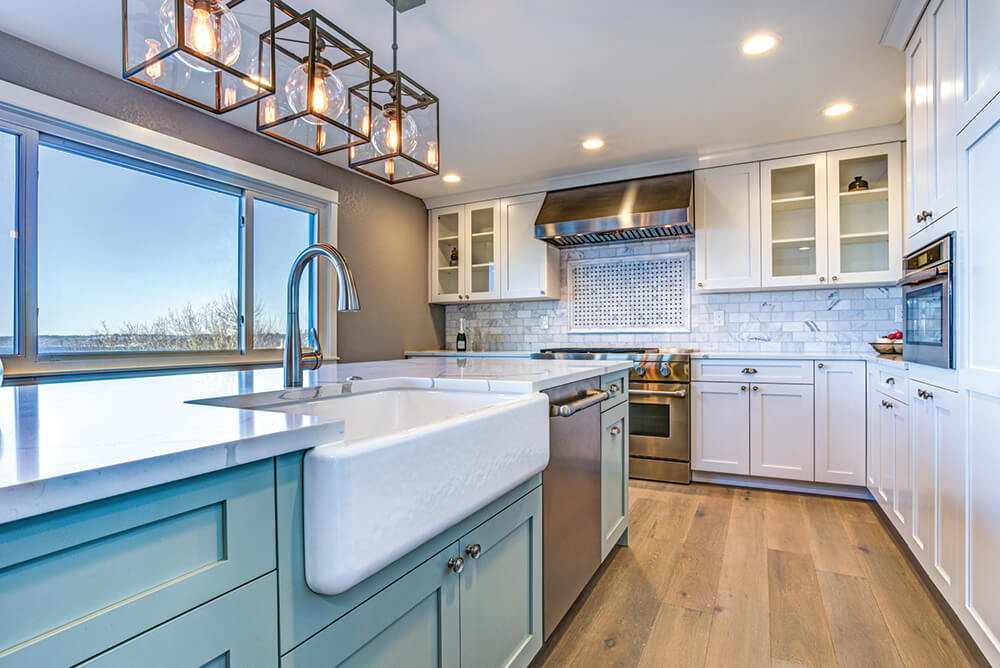
Yes, you can install a farmhouse sink on an existing countertop—but there are some caveats. You’ll need to precisely measure. It’s best to choose a sink that’s the same dimensions as your existing sink, since your contractor won’t have to cut the countertop. Otherwise, pay close attention to the depth of your counter (the front to back measurement). You don’t want to install something that’s so big it sticks out beyond your countertop and cabinetry.

Because it’s an engineered stone, quartz composite is much denser than other natural stone alternatives. For instance, if you drop a heavy object in a natural stone sink, there’s a chance the sink could crack, chip, or dent. Quartz’s density means quartz sinks are more resistant to scratches or staining. However, darker quartz sinks are more likely to show scratches or scuffs, and quartz sinks can stain over time.

The Sheldon, MO homeowners’ guide to sink repair services

From average costs to expert advice, get all the answers you need to get your job done.