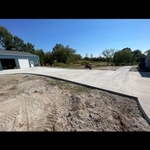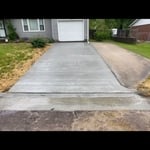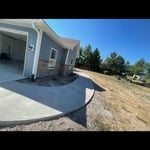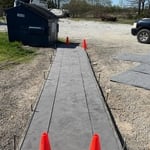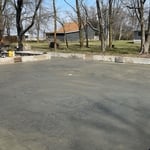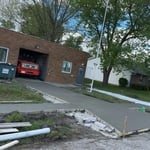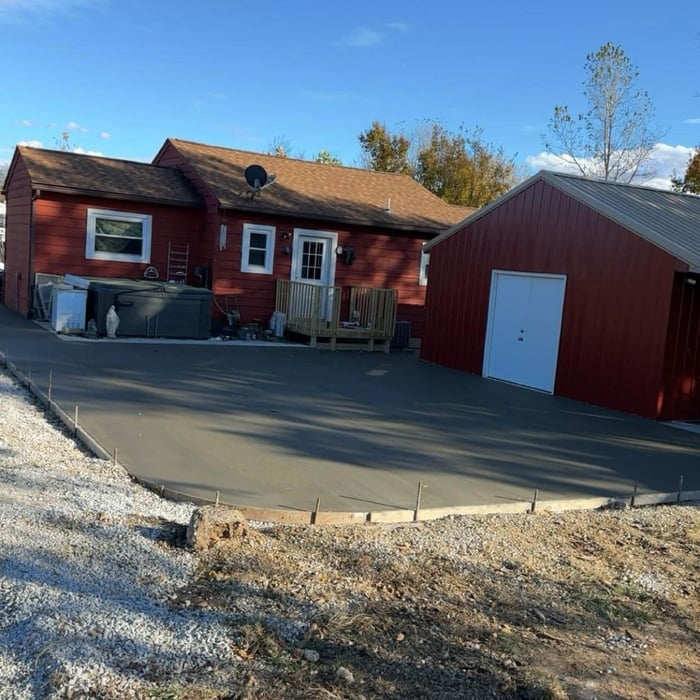




Top-rated concrete cutting pros.

Get matched with top concrete cutting pros in Bland, MO

Enter your zip and get matched with up to 5 pros

Need a pro for your concrete cutting project in Bland, MO?

Select your specific project to find the pro for you.

Find Concrete cutting pros in Bland

R & R Concrete and Excavating, LLC
2.8(
12
)
Concrete - Sawing or RemovalConcrete - Sawing or Removal- For Business

Serving Bland, MO and surrounding areas

In business since 2008

Free estimates

"Hired company. Had several delays. Price was good. The concrete finish was poor. When contacted company found out they had a problem with their foreman. Which they now have replaced. If someone were to hire them now they may be happier wit their service. I asked them to fix the finish and was told it would not be cost effective for them. They offered me a discount to settle out the issue. I would have rather had the issue fixed but took the discount rather than deal with a difficult situation."
Recommended by85%of homeowners
Showing 1-10 of 43
Concrete Cutting questions, answered by experts

Cutting rectangular ductwork requires careful measurements and the right technique. Use a measuring tape and pencil to mark the cutting lines accurately. Tin snips are excellent for straight cuts on smaller ducts. For more extensive or thicker rectangular ducts, a reciprocating saw with a metal-cutting blade is effective. 

Ensure the duct is well-supported and secure while cutting to prevent wobbling and maintain precision. After cutting, use a metal file to smooth any sharp edges, ensuring safety during installation. 

Welding is the process of using extreme heat—and, sometimes, pressure—to attach two pieces of metal. In contrast, metal fabrication is a more involved process that can include welding, sheet metal work, bending, and other forms of metal manipulation. Metal fabrication is a large-scale project that may or may not involve welding, while welding is more often a step in larger fabrication projects.

Yes, you can use a saw to cut metal pipes. The best saw to use is a reciprocating saw, but even a fine-tooth hacksaw can get the job done. No matter which saw you use to cut metal pipes, wear protective gear, like work gloves, safety goggles, and ear plugs. Apply a firm, steady pressure to the tool, and always ensure the pipes are secured so they don't move while you make the cuts.

You should not do your own welding unless you have the proper training and experience. Most home electrical systems can only handle MIG welding, which creates weaker bonds than TIG welding and won’t work on certain metals or metal thicknesses. Both welding forms usually require the use of shielding gas, which can be dangerous to store at home. Additionally, welding machines create temperatures of over 3,000 degrees, and the sparks can blind you if you don’t have the proper equipment. As such, it’s usually better to hire a professional welder for your welding projects.

It will likely take an experienced pro less than an hour to install a ground rod, which is another reason why letting them handle the job is such a good idea. Safety concerns aside, it would likely take you much longer to install a ground rod if you decided to take this one as a DIY job.

The Bland, MO homeowners’ guide to concrete cutting services

From average costs to expert advice, get all the answers you need to get your job done.