






Top-rated deck repair pros.

Best deck repair pros near Luverne, MN

Enter your zip and get matched with up to 5 pros

Need a pro for your deck repair project in Luverne, MN?

Select your specific project to find the pro for you.

Top-Rated Deck repair pros in Luverne - Updated Nov 2026

Deck Repair FAQs, answered by experts

The proper height for a stair riser or deck step is between four and seven inches, with seven inches often considered the most comfortable. Building your stairs to this height ensures a strain-free step position and minimizes the risk of trip and fall injuries. For optimal safety and comfort, especially on deck stairs, a rise of around seven inches should be paired with a tread depth (or run) of at least 10 to 12 inches. While it is possible to design stairs with risers up to 12 inches, this height can be challenging for children, pets, or individuals with mobility issues. Always check with your local building codes, as they may mandate specific dimensions that differ from these general recommendations.

Decks require several inspections during and after the building process, but the specifics vary depending on where you live. Most areas mandate that decks comply with local building codes and safety regulations for the foundation, framing, and structure. Some pros recommend a footing inspection, which verifies the depth, width, and location of the various footings to ensure they offer enough foundational support.

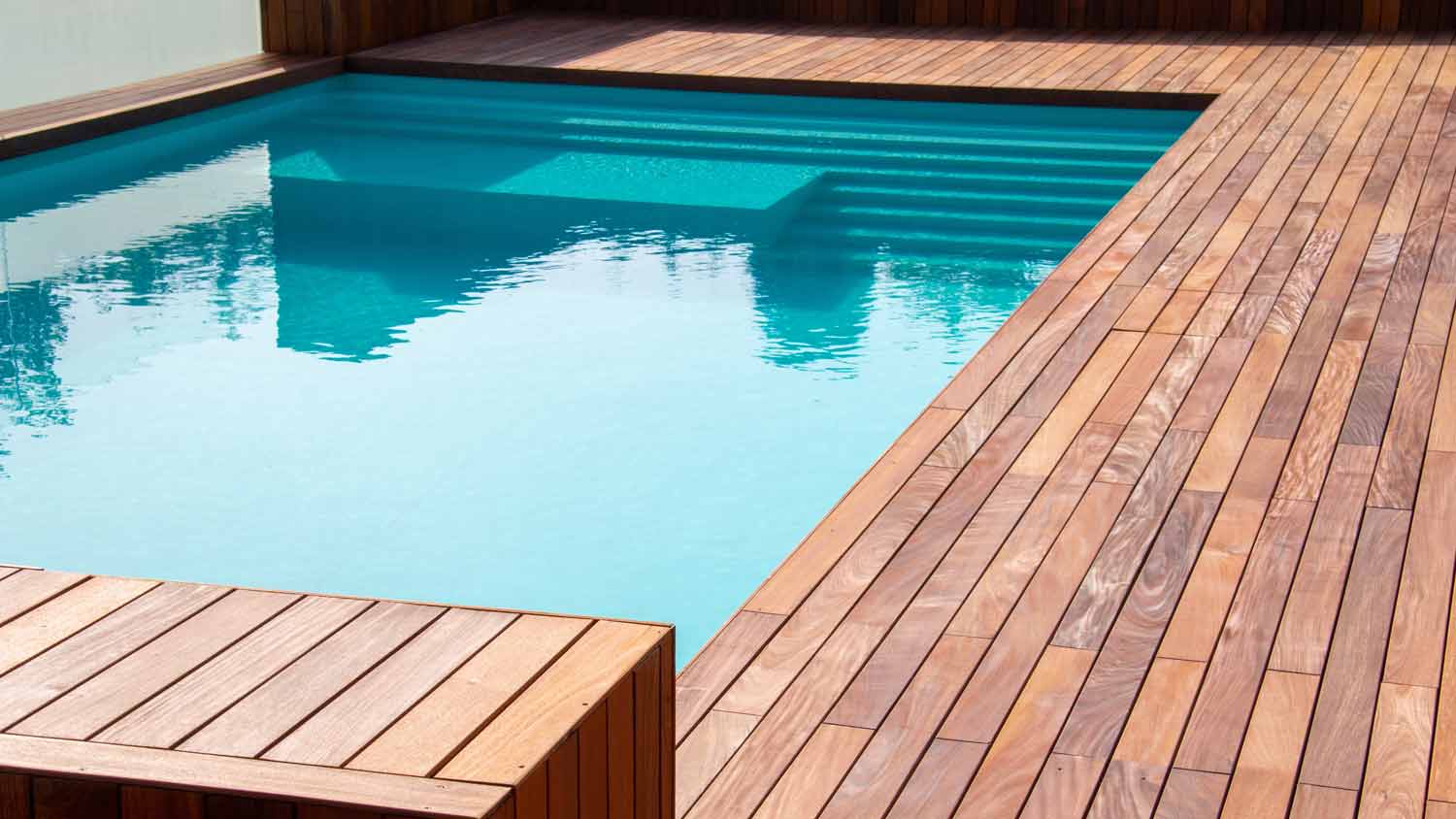
Coping is the material that lines the perimeter of a pool and seals the transition between the top of the pool wall and the water. Decking surrounds the poolscape and extends far beyond the water's edge to provide a safe walking and lounging area. In short, coping is the border between the decking and the pool itself.

No, termites do not eat Trex or any other composite decking brand. Termites eat cellulose, of which composite decking like Trex contains very little compared to natural wood. This feature can help justify the higher Trex decking costs if you live in an area with abundant termites.

What goes under your floating deck depends on your preferences. Some homeowners put landscaping fabric underneath their decks to prevent weeds from popping up through the boards. Others choose to build a floating deck over grass or gravel. However, it’s best not to set your deck directly on the ground. Instead, set your deck on blocks to keep it elevated enough to prevent moisture from rotting the wood.

The Luverne, MN homeowners’ guide to deck repair services

From average costs to expert advice, get all the answers you need to get your job done.