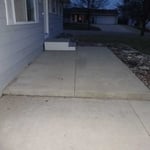
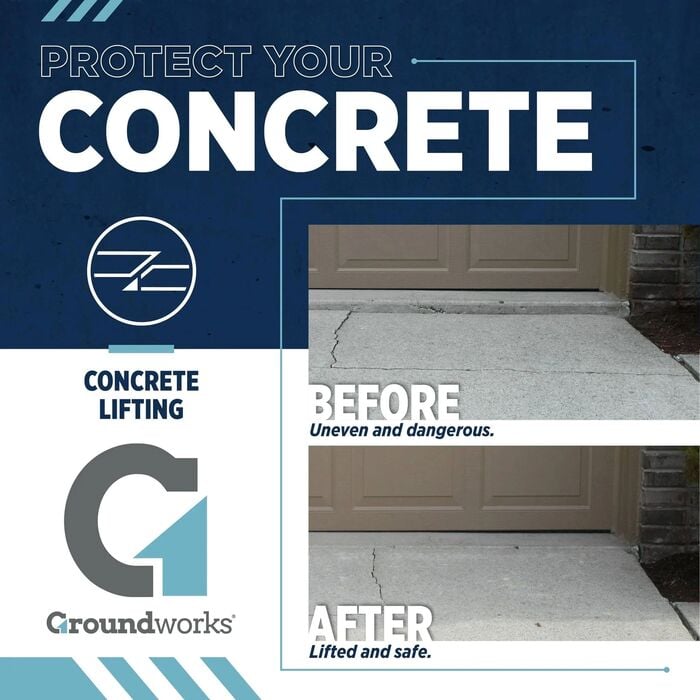
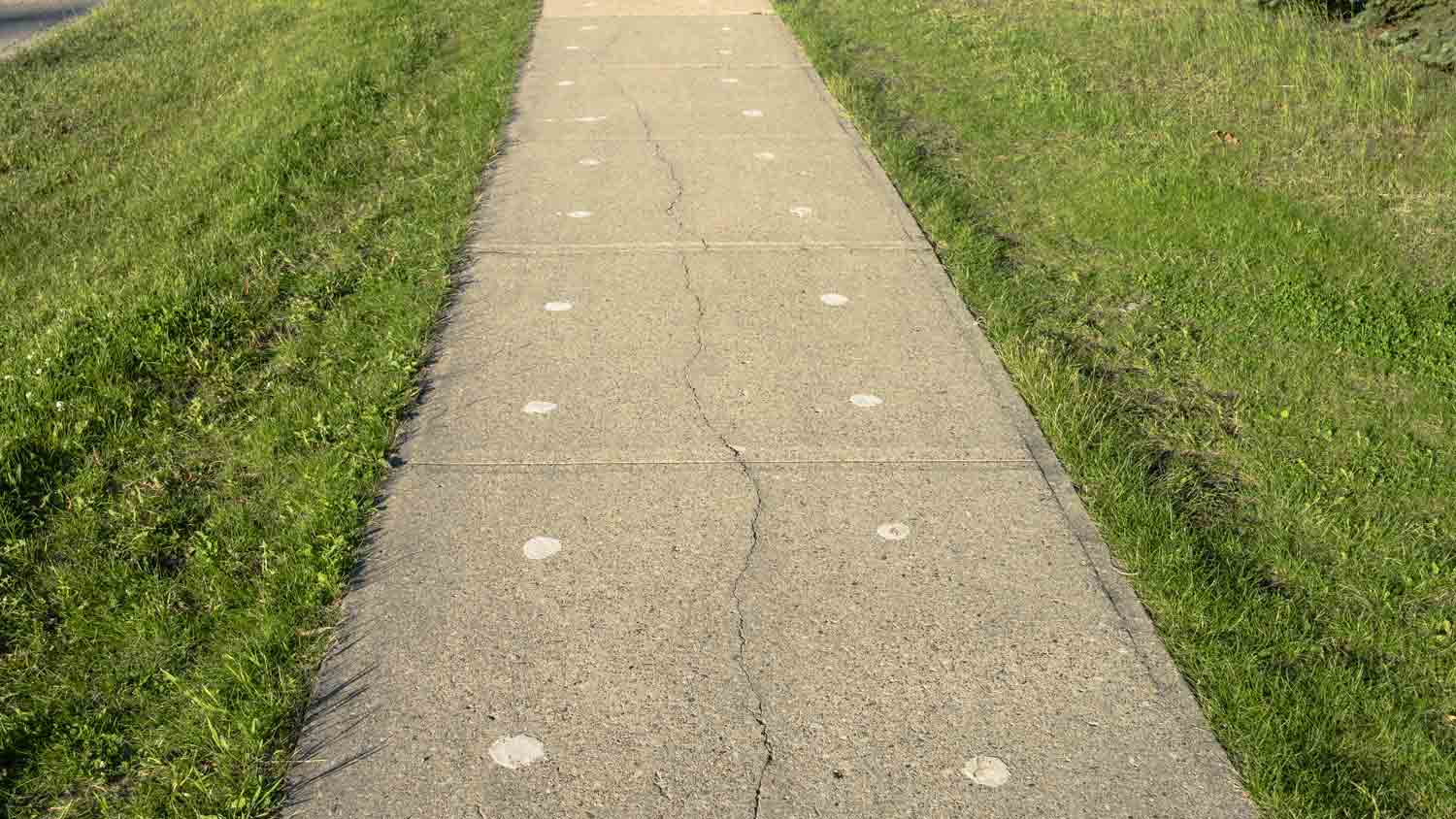
"They did great. The entire surface was level and free from tripping hazards. It is important to have them seal the cracks because there will be water from snow melt and the concrete will move. This will get you the 5 yr warrantee just in case."
Groundworks is the North America's leading and fastest-growing foundation repair and water management solutions provider. Groundworks is a vertically integrated company with its own manufacturing operations and a world-class software solution, allowing us to serve our customers more effectively. From the first phone call to the annual maintenance offered, our customers have peace of mind knowing we're there with one mission to repair, protect and improve their home. For state licenses visit Groundworks.com/licensing
Concrete Mudjacking questions, answered by experts
It’s best not to perform mudjacking in the winter unless the ground temperature remains above freezing. Freezing temperatures can cause the slurry to harden too quickly, compromising its strength and longevity. Concrete is also more susceptible to cracking and splitting in cold temperatures, so there’s a higher risk of damaging the slab during the drilling and lifting process in winter.
Mudjacking can be an expensive foundation repair process, but in many cases, it’s well worth the investment. This is especially true if you’re lifting a portion of sunken foundation slab back into place. In that case, mudjacking can help avoid major structural damage and even home collapse by restoring the integrity of your structure with minimally invasive procedures. Mudjacking a concrete patio, walkway, or sidewalk can be worthwhile because it removes tripping hazards and makes your outdoor area more aesthetically appealing.
Concrete leveling can last anywhere from five to 10 years or more, and in some cases, it can be a permanent solution. The longevity depends on the method used and whether the underlying cause of the sinking is addressed. For example, mudjacking typically lasts five to 10 years, while polyjacking can last for 20 years or more. It's best to consult a professional for an accurate timeline based on your specific situation and any factors that could cause the issue to recur.
Yes, expanding foam (also known as polyurethane foam) can lift concrete. This approach, called polyjacking, involves injecting the foam rather than concrete slurry to fill voids and raise the concrete slab back into place. It’s often faster and requires smaller drill holes than traditional mudjacking, though it may come at a higher cost. Some contractors also prefer polyjacking over mudjacking for more damaged and delicate slabs.
Mudjacking restores level surfaces, prevents further damage, and is more cost-effective than a full replacement.
The Lake Benton, MN homeowners’ guide to concrete mudjacking services
From average costs to expert advice, get all the answers you need to get your job done.
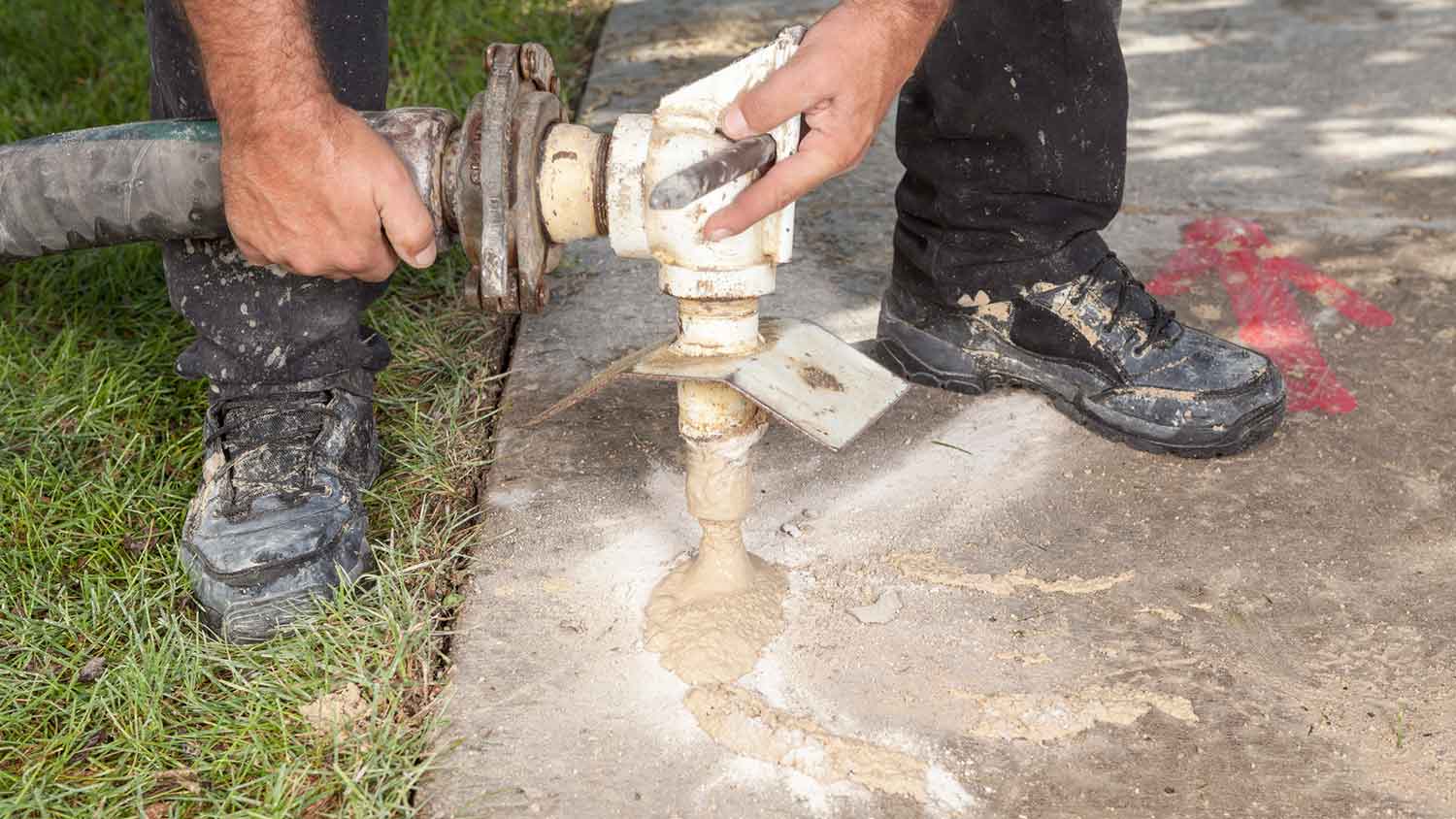
DIY mudjacking is an advanced task, but learning how to raise a concrete slab is great to know for many scenarios. Let's take a look at how to DIY mudjack.
Sunken concrete can be a structural issue, but a professional can easily repair it. Ask these concrete injection leveling and mudjacking questions before you hire.