



Top-rated bird control service pros.

Get matched with top bird control service pros in Sagola, MI

Enter your zip and get matched with up to 5 pros

Need a pro for your bird control service project in Sagola, MI?

Select your specific project to find the pro for you.

Find Bird control service pros in Sagola

Bird Control questions, answered by experts

An owl's worst enemy in the wild is often other raptors and environmental factors. Among the avian threats, larger owls or other birds of prey can pose a danger, engaging in territorial disputes or competing for food resources. Terrestrial predators like foxes, raccoons, and larger mammals may target owl nests or young fledglings. Environmental factors like severe weather conditions, habitat loss, and food availability changes can also significantly impact owl populations.

The cost to hire an exterminator or pest control service is $175 on average, with typical costs ranging from $100 to $500. However, you could spend more depending on several factors, including the type of pest, the size and severity of the infestation, and the number of visits required.

Service costs also vary by frequency:

• One-time service: $300–$550

• Initial visit with ongoing service: $150–$300

• Monthly visits: $40–$70

• Quarterly visits: $100–$300

• Annual visits: $300–$550

The type of pest significantly impacts the price. For example, exterminating spiders typically costs between $100 and $300, while a termite problem can range from $230 to $2,500 or more, depending on the extent of the damage. Routine pest control services can help prevent future infestations and costly damage to your home.

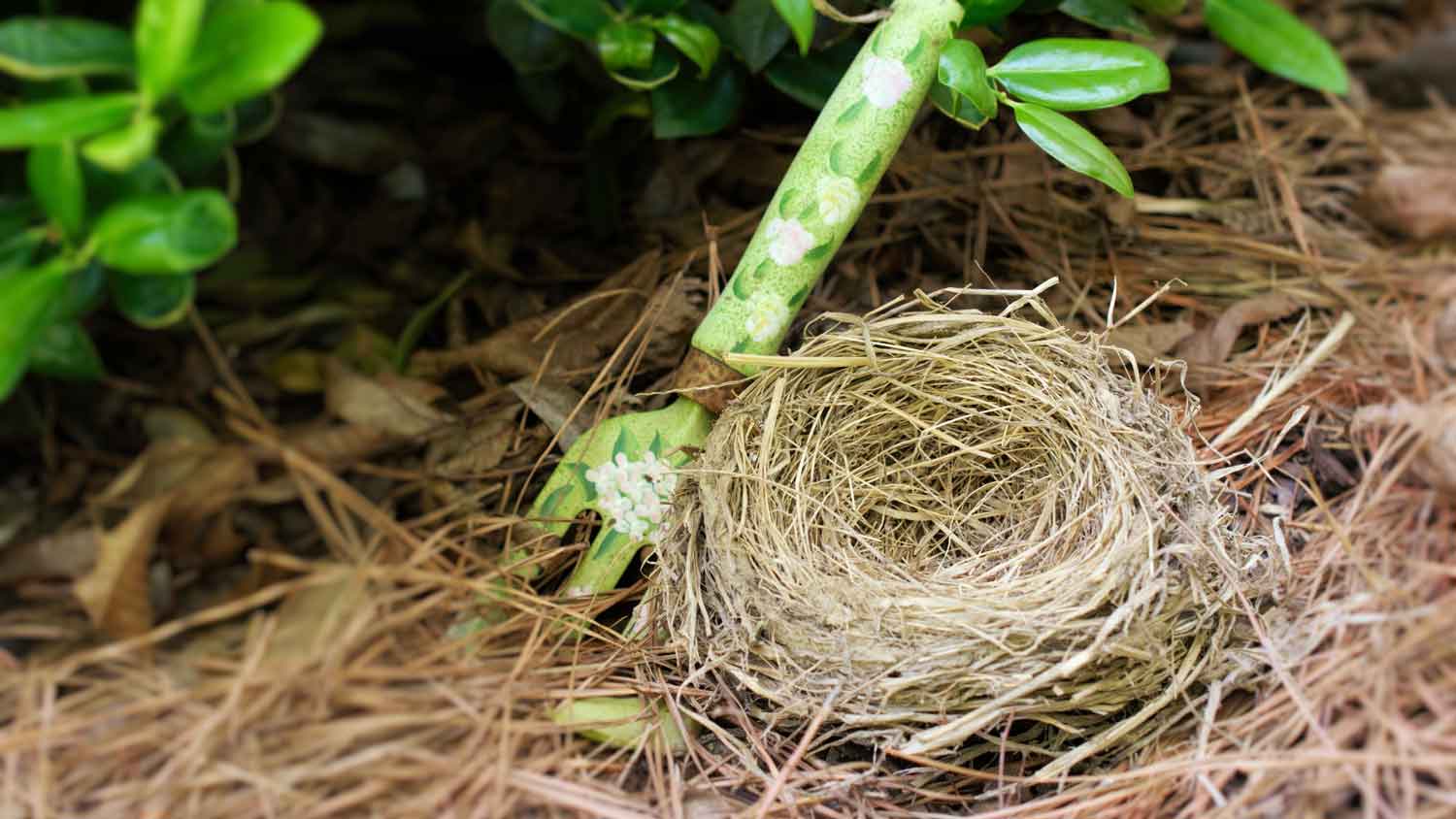
Metal coil-shaped retriever tools (around $50) help remove empty nests and debris from chimneys. Unless you are sure the nest is vacant, we recommend calling in a pro to handle bird’s nest removal from chimneys, vents, roofs, and other hard-to-reach places.

When woodpeckers start banging on your walls or roof, they are probably looking for insects to eat, storing nuts for winter, drilling a hole to make a nest, or communicating with other birds to establish territory or find a mate.

The size of the hole can help determine the reason for the pecking. Small irregular holes are a result of insect hunts. Acorn holes are more consistently sized and often fitted with a nut in the middle. Nest holes are large and have rounded edges. If the bird is pecking to mark its territory or attract a mate, it may leave dents rather than holes, and the noise will stop when the mating season starts in spring.

Some of the plants listed above, like daffodils, are poisonous to many animals if eaten. But wild animals instinctively avoid them, for the most part. Household pets don’t always have the same survival instinct, which is why it’s a good idea to familiarize yourself with common plants that pose a danger to cats and dogs.

The Sagola, MI homeowners’ guide to bird control services

From average costs to expert advice, get all the answers you need to get your job done.