Top-rated concrete mudjacking pros.

Get matched with top concrete mudjacking pros in Winter Harbor, ME

Enter your zip and get matched with up to 5 pros

Need a pro for your concrete mudjacking project in Winter Harbor, ME?

Select your specific project to find the pro for you.

Find Concrete mudjacking pros in Winter Harbor

Holland's Masonry
New to Angi

Serving Winter Harbor, ME and surrounding areas

In business since 2003

Holland's Masonry takes prides in performing quality workmanship at competitive prices. We respond in a timely manner on all bids and calls. Holland's Masonry completes jobs on schedule and on budget, while assisting the General Contractor in many ways. Experience speaks for itself. We have been providing quality construction services to satisfied customers for years. Let Holland's Masonry be your source for specialized custom masonry stoves, stone and brick fireplaces, mosaques, tile, chimneys, and all masonry restoration and waterproofing. No job too big or too small.\n\n� Stone\n� Brick\n� Block\n

brickett oven
 mosaques
 stone collums
 soap stone firebox
 paver walkway

+24

Concrete Mudjacking questions, answered by experts

Concrete leveling can last anywhere from five to 10 years or more, and in some cases, it can be a permanent solution. The longevity depends on the method used and whether the underlying cause of the sinking is addressed. For example, mudjacking typically lasts five to 10 years, while polyjacking can last for 20 years or more. It's best to consult a professional for an accurate timeline based on your specific situation and any factors that could cause the issue to recur.

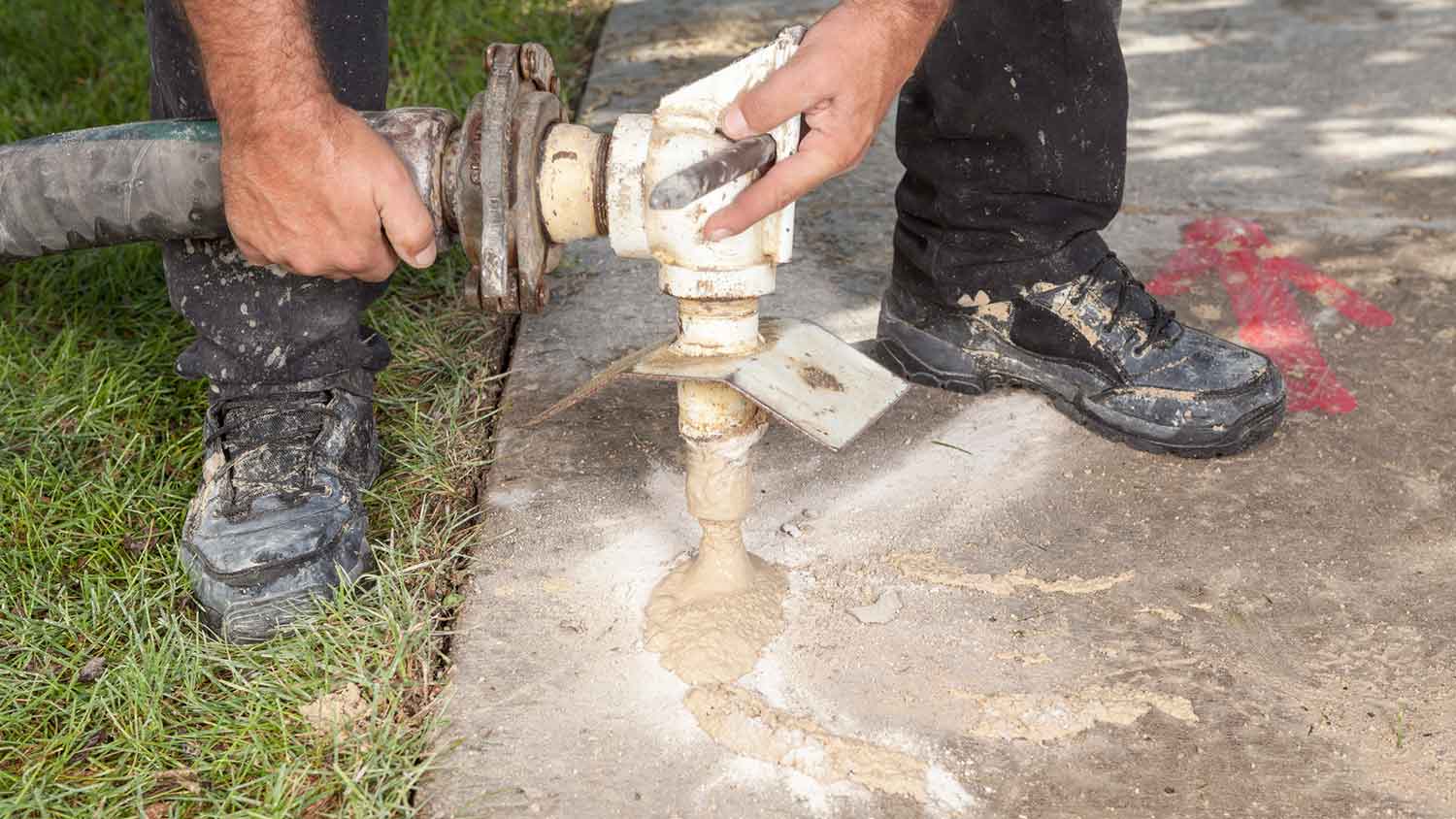
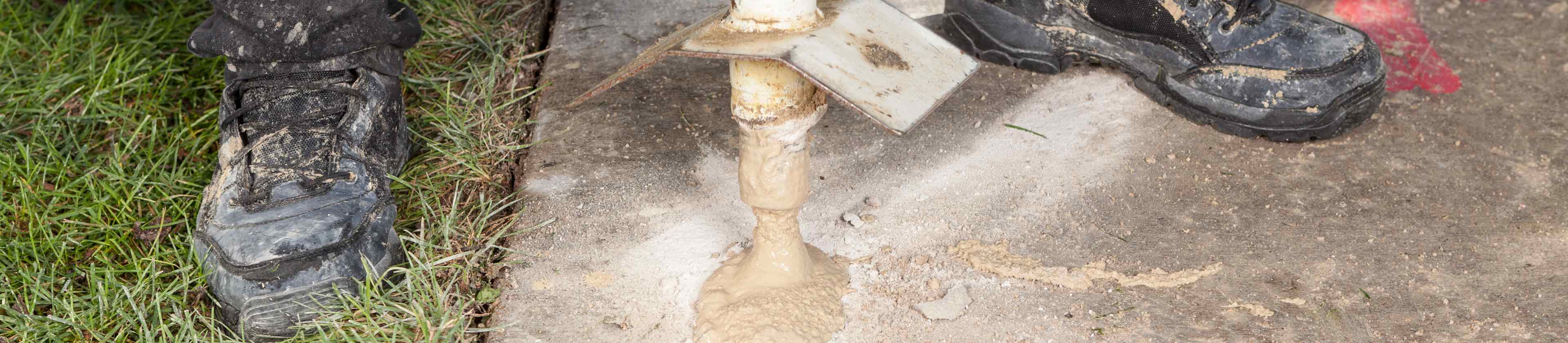
A slurry of cement, sand, and water is injected beneath the concrete to lift and stabilize it.

A good slump height really depends on the project, but there is a use for nearly all slump levels. For example, low slumps are best in projects that require structure, such as curbs and roads. High slumps often require additional reinforcement, but they flow more freely into hard-to-reach spaces.

Generally speaking, push piers—or steel piers—are the best option for underpinning, as they reach down to solid bedrock to find support for your foundation rather than relying on soil, which could be subject to the same issues as the soil directly below your foundation. However, the best underpinning method for your home depends on your location, how far down the bedrock is, and the type of soil in your area. Helical piers are usually the best option for sandy soil or in areas where the bedrock is too deep to use steel piers.

Trenching and boring are two distinct methods for installing underground utilities. Trenching involves digging a channel using equipment like an excavator, trencher, backhoe, or shovel. While it is a simpler process, it causes significant disruption to the surface, landscaping, and surrounding ecosystems.

Boring, also known as directional boring, is a less invasive alternative that uses a drill to create a tunnel for utility lines without disturbing the surface. This method is more precise and is ideal for installations that need to go underneath buildings, roads, or bodies of water. Although boring is less disruptive, it is generally more expensive than trenching.

The Winter Harbor, ME homeowners’ guide to concrete mudjacking services

From average costs to expert advice, get all the answers you need to get your job done.