


Top-rated drapery cleaners.

Get matched with top drapery cleaners in Gorham, ME

Enter your zip and get matched with up to 5 pros

Need a pro for your drapery cleaning project in Gorham, ME?

Select your specific project to find the pro for you.

Find Drapery cleaners in Gorham

Avatar for Abbie and Maids Co.
Abbie and Maids Co.
4.9(
7
)
Drapes or Curtains - CleanDrapes or Curtains - Clean - For Business

Serving Gorham, ME and surrounding areas

In business since 2020

Free estimates

Offers commercial services

"Great people who do great work! I highly recommend trying them before a larger chain cleaning company. They respond quickly and can clean both personal and professional spaces. Chemical/organic conscious, just don't wait too long like I did! It's better to have people you trust come in semi-consistently than wait to deep clean a hellscape on your own, my time is my money and we all deserve healthy spaces to live and work in. 10/10 Would recommend"
Response time5 hrs
Response rate100%
Recommended by100%of homeowners
Mainly steam cleaning
New to Angi
Drapes or Curtains - CleanDrapes or Curtains - Clean - For Business

Serving Gorham, ME and surrounding areas

In business since 2019

Free estimates

We're a father and son company that specializes in Earth-friendly, Organic Steam Cleaning. We Clean just about everything that can be cleaned with well...Mainly Steam. We do carpets, upholstery, and everything in between. We look forward to building a long relationship with our clients with our exceptional service!

Showing 1-10 of 14
Drapery Cleaning questions, answered by experts

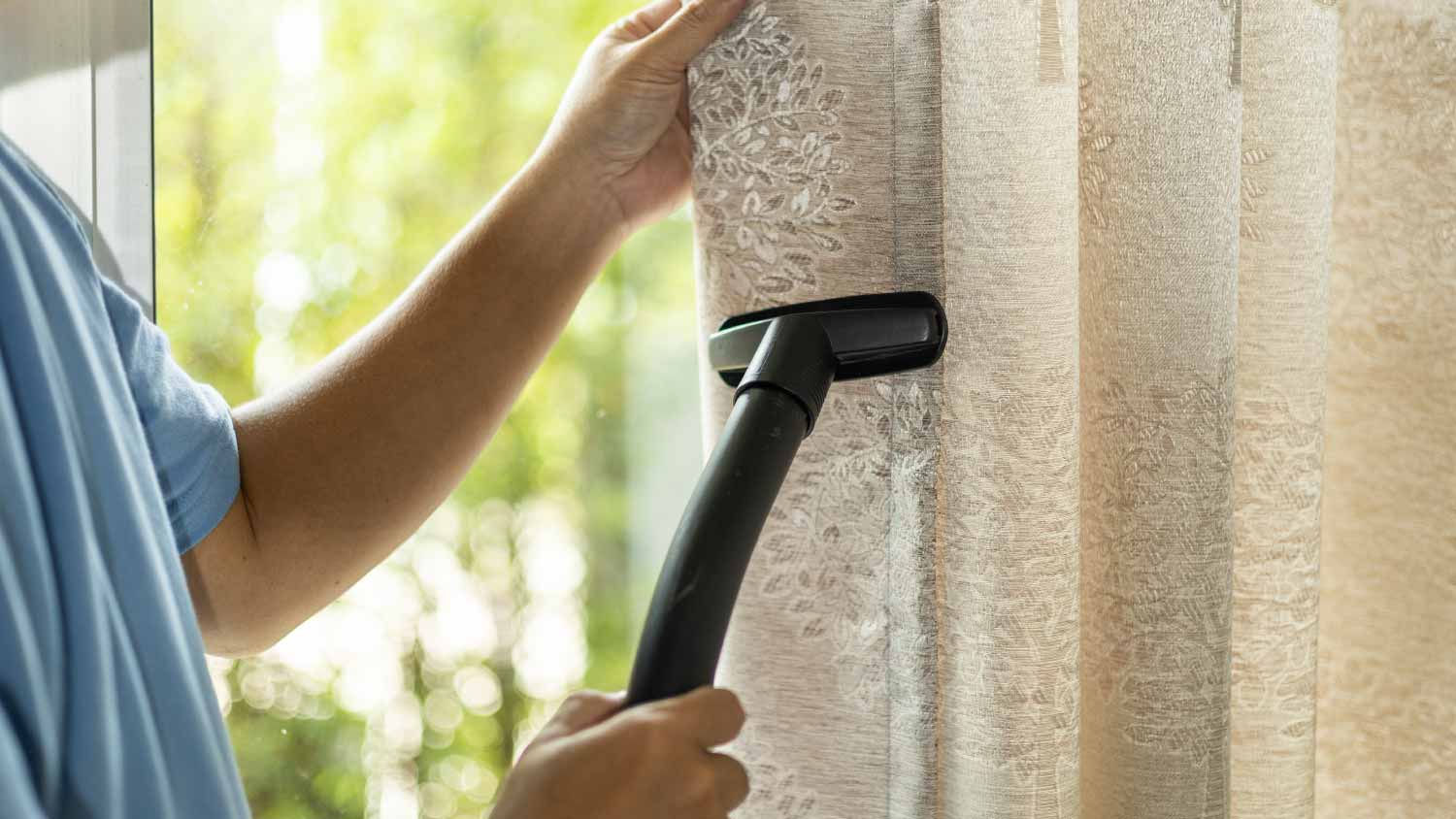
The recommended frequency for professionally cleaning drapes varies. As a general guideline, aim for every four to five years. However, you should consider more frequent cleanings in specific circumstances. For homes with pets, heavy soiling, or residents with severe allergies, cleaning every two to three years—or even two to four times per year—is beneficial. Light-colored drapes may need cleaning every one to two years to maintain their appearance. Some also follow a biannual schedule, cleaning in the spring to remove winter dust and in the fall to remove summer pollen. In between professional services, lightly vacuum your drapes with a special attachment to remove surface debris, but avoid abrasive brushes on delicate fabrics like silk and linen.

Regarding UV protection for furniture, synthetic fabrics like polyester and acrylic are some of the best choices. They have inherent UV-blocking properties and can withstand prolonged sun exposure better than natural fabrics like cotton or silk. Additionally, outdoor-specific fabrics for patio furniture often include UV-resistant treatments to enhance sun protection. Fabrics like these have become softer and more comfortable, making them suitable for interior spaces like sunrooms and other spaces brimming with natural light.

Custom curtains or drapes are an investment, often costing hundreds of dollars. Just like rugs or fabric furniture, cleaning helps maintain its original quality and keeps it lasting for years to come. Skipping regular drapery cleaning can result in discoloration, odors, mold or mildew, and even allergens from dust buildup.

The best way to clean drapes or curtains depends on the fabric. Always check the care tag for instructions before attempting to wash them.

You can typically clean drapes yourself if they are made of durable materials like cotton, cotton blends, polyester, or burlap, which can often be machine-washed. However, some fabrics can be hand-washed.

For delicate materials such as linen, silk, velvet, lace, sateen, or wool, it is best to hire a professional drapery cleaner. These fabrics are often dry-clean only and can be damaged, shrink, or be destroyed by machine washing or using the wrong cleaning solutions.

If the care tag is missing, the drapes are old, thin, brittle, or have existing damage like pulls or tears, it's safest to have them professionally cleaned. A professional will use the correct methods and solutions for a safe, deep cleaning.

You should avoid using a pressure washer on any surface or item that could be damaged by the high-pressure spray, as some materials are too delicate to withstand the force.

Key items and surfaces to avoid include:

  • Electrical Components: Never pressure wash electrical systems, as water can cause short-circuits and create a safety hazard. This includes utility meters, breaker boxes, electrical outlets, generators, and HVAC or air conditioner units.

  • Delicate and Fragile Materials: Fragile items can crack, shatter, or be stripped by the pressure. Avoid pressure washing windows, glass, light fixtures, shingled roofs (especially asphalt), and stucco.

  • Painted, Stained, or Sealed Surfaces: Unless your goal is to strip the finish, do not pressure wash painted surfaces, stained wood (like decks), or anything with a protective seal that could be stripped away. Be especially cautious with older surfaces that may contain lead paint.

  • Soft Woods and Certain Decking: Delicate surfaces like softwood, composite decking, and antique or wooden patio furniture can be etched or damaged. If you must wash wood, use a lower-powered pressure washer with a wide-angle nozzle to prevent damage.

  • Living Things: Never use a pressure washer on people, pets, or plants. The force can cause serious injury and will destroy landscaping.

The Gorham, ME homeowners’ guide to drapery cleaning services

From average costs to expert advice, get all the answers you need to get your job done.