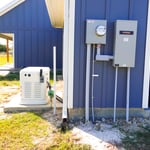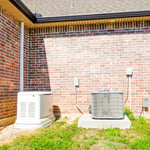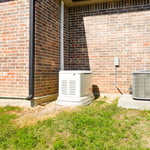



Top-rated generator install pros.

Get matched with top generator install pros in Deridder, LA

Enter your zip and get matched with up to 5 pros

Need a pro for your generator install project in Deridder, LA?

Select your specific project to find the pro for you.

Find Generator install pros in Deridder

Avatar for GroundUp Solar & Electrical LLC
GroundUp Solar & Electrical LLC
5.0(
5
)
Fixed Generator - Install

Serving Deridder, LA and surrounding areas

Approved

Super Service Award Winner

In business since 2014

Free estimates

Emergency services offered

"Statewide company that’s very knowledgeable and personable. Able to assist with any project related to solar installation including landscaping, insulation, ventilation, and minor roofing."
Solar Installation
Solar Installation
Solar Installation
Solar Installation
Solar Installation

+12

Response time3 days
Response rate95%
15 neighbors recently requested a quote
Avatar for Backup Generators LLC
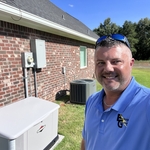
Backup Generators LLC
5.0(
7
)
Fixed Generator - InstallFixed Generator - RepairGenerator - Install+4 more

Serving Deridder, LA and surrounding areas

In business since 2022

Free estimates

Credit card accepted

"Everything was perfect Kip and his crew did an outstanding job. The job was completed in timely fashion, workers were courteous and cleaned up after themselves. Generator looks great and works perfectly, just like we expected."
Agnor Install
Campbell Install
Broomas Install
Generator Project
Agnor Install

+43

Recommended by100%of homeowners
Showing 1-10 of 17
Generator Install questions, answered by experts

To determine the right size generator for your house, you should calculate the total wattage of the appliances and devices you want to power during an outage. List all essential items, note their start-up wattages, and add them together.

Here are some typical wattage requirements for common appliances:

  • Refrigerator: 600 watts

  • Large dehumidifier: 700 watts

  • Large window air conditioner: 1,400 watts

  • Water heater: 3,000 to 4,500 watts

  • Electric furnace: 5,000 to 25,000 watts

A 7,500-watt generator might be sufficient for essentials like a refrigerator, freezer, well pump, and lighting circuits. However, for high-demand items like a water heater or furnace, a whole-home generator is a better choice. A portable generator may be enough if you only need to power a few critical items.

While home square footage can offer a rough estimate, it is not always a reliable indicator. For reference, here are some typical generator sizes based on square footage:

  • 1,000 sq ft: 6–9 kW

  • 1,500 sq ft: 7–10 kW

  • 2,000 sq ft: 10–14 kW

  • 2,500 sq ft: 12–16 kW

  • 3,000 sq ft: 16–20 kW+

For the most accurate sizing, consult a professional who can calculate your home's peak and average power consumption and recommend the optimal generator.

If you’re wondering if you can use your electric vehicle as a backup battery, it depends on whether your EV is compatible with bidirectional charging. This technology allows energy to flow both ways, enabling vehicle-to-home (V2H) backup power, vehicle-to-load (V2L) for appliances and camping, and vehicle-to-grid (V2G) to support the power grid. Compatible EVs convert stored DC energy into usable AC power, helping reduce energy costs and enhance grid stability while providing emergency backup power.

If you have a transfer switch properly installed, the generator and main electrical power cannot feed the system at the same time. However, you should still shut off the power at your main circuit breaker panel before activating the generator. If you do that, you’ll simply need to shut off the generator and reset your circuit breaker once the local power comes back on.

Yes, in most municipalities, you will need a permit to install a permanent home generator, including emergency backup, partial-home, and whole-home models. Because these installations involve significant alterations to your home's electrical system and produce exhaust fumes, local governments often require a permit or inspection for safety purposes. A generator permit typically costs between $50 and $250, depending on your location. Your electrician or certified installer can usually handle the permitting process for you, but you will be responsible for the cost. It's a good practice to confirm with your installer that they will pull all necessary permits before work begins.

A portable generator can supply power to selected appliances and circuits in a home, but it's generally not designed to handle the entire household's electrical needs simultaneously. Portable generators have limited wattage capacity, so they are only designed to power essential devices and electronics temporarily until local power is restored. If your power needs outweigh the capabilities of a portable generator, consider installing a whole-home generator instead.

The Deridder, LA homeowners’ guide to generator installs

From average costs to expert advice, get all the answers you need to get your job done.