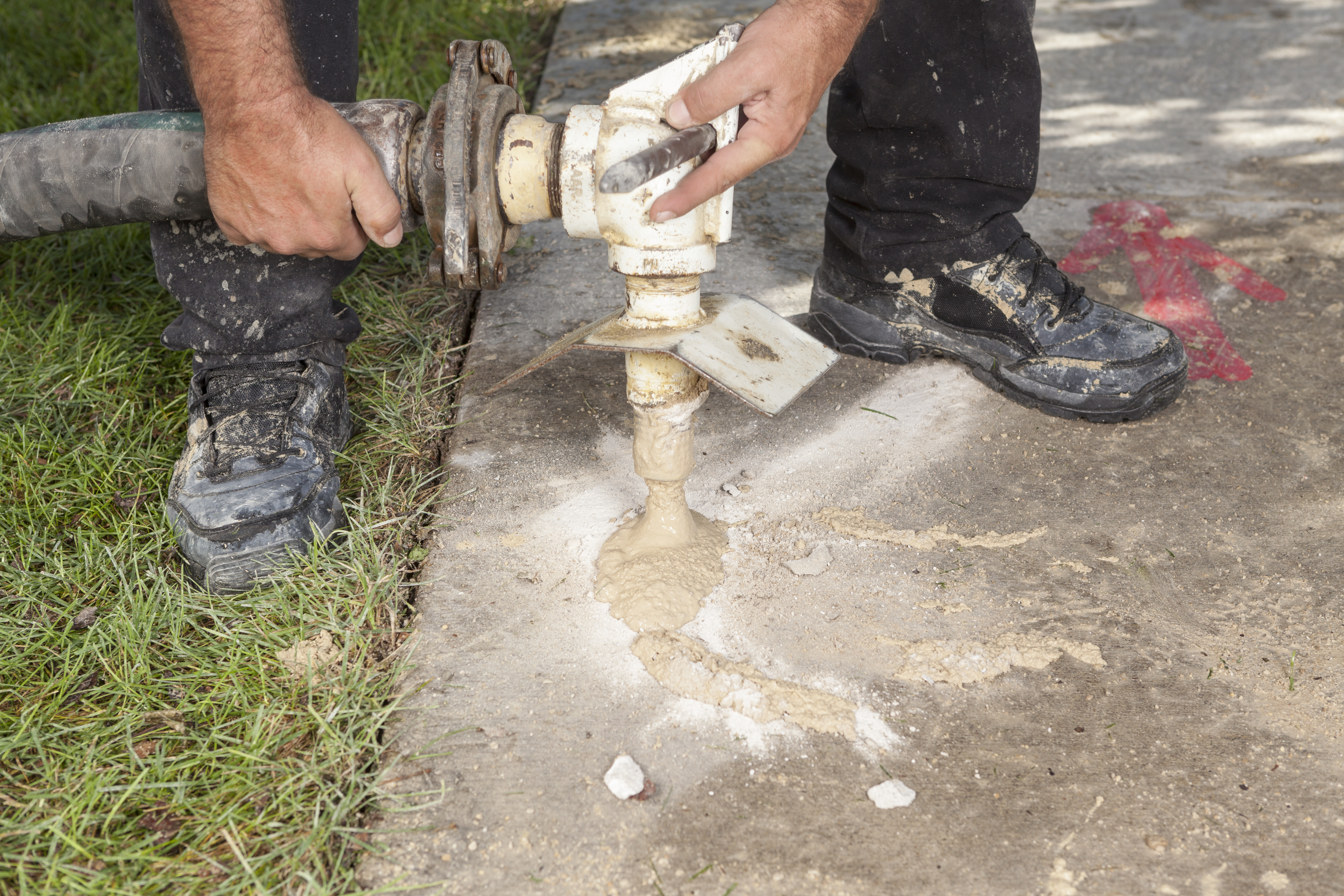
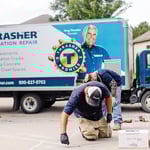
"Big shout out to Dil and Cruise for doing a splendid job . They were very courteous, patient enough to listen to my concerns and very friendly. The Job was to lift the concrete and seal the joint and cracks . Time will tell how well the seal will hold especially with colorodo weather but so far happy the result. Thank you Trasher."
"Dylan, Jeremiah, & Daniel were great! They were very courteous, communicated very well, and were punctual. They worked hard to get my project completed in a timely manner even though it wrapped around the holidays and rained on some days. I appreciate their dedication, professionalism, and care."
We are a small family built company. From humble beginnings in Lamar Colorado, we strive for fair prices with high quality results. Over the course of 13 years, our projects have run from the Rockie Mountains to the Ozarks.
Concrete Mudjacking questions, answered by experts
A good slump height really depends on the project, but there is a use for nearly all slump levels. For example, low slumps are best in projects that require structure, such as curbs and roads. High slumps often require additional reinforcement, but they flow more freely into hard-to-reach spaces.
Generally speaking, push piers—or steel piers—are the best option for underpinning, as they reach down to solid bedrock to find support for your foundation rather than relying on soil, which could be subject to the same issues as the soil directly below your foundation. However, the best underpinning method for your home depends on your location, how far down the bedrock is, and the type of soil in your area. Helical piers are usually the best option for sandy soil or in areas where the bedrock is too deep to use steel piers.
Common issues with concrete that may require professional repair or resurfacing include cracks, spalling, uneven surfaces, and weather damage.
Yes, you can mudjack cracked concrete, but the cracks will need to be repaired once the concrete has been leveled. If the concrete is severely cracked in multiple places, replacement may be a better option, but for less severe cracking, mudjacking is a good solution as long as cracks are correctly caulked and sealed.
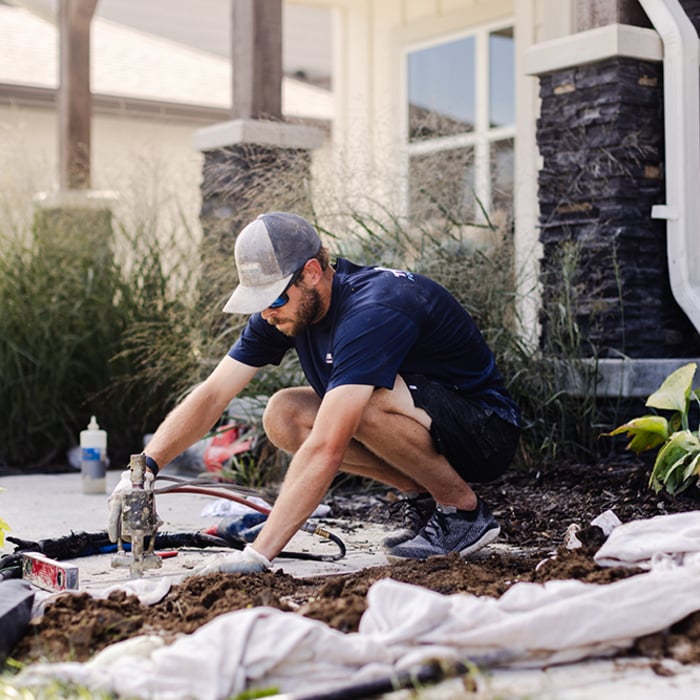
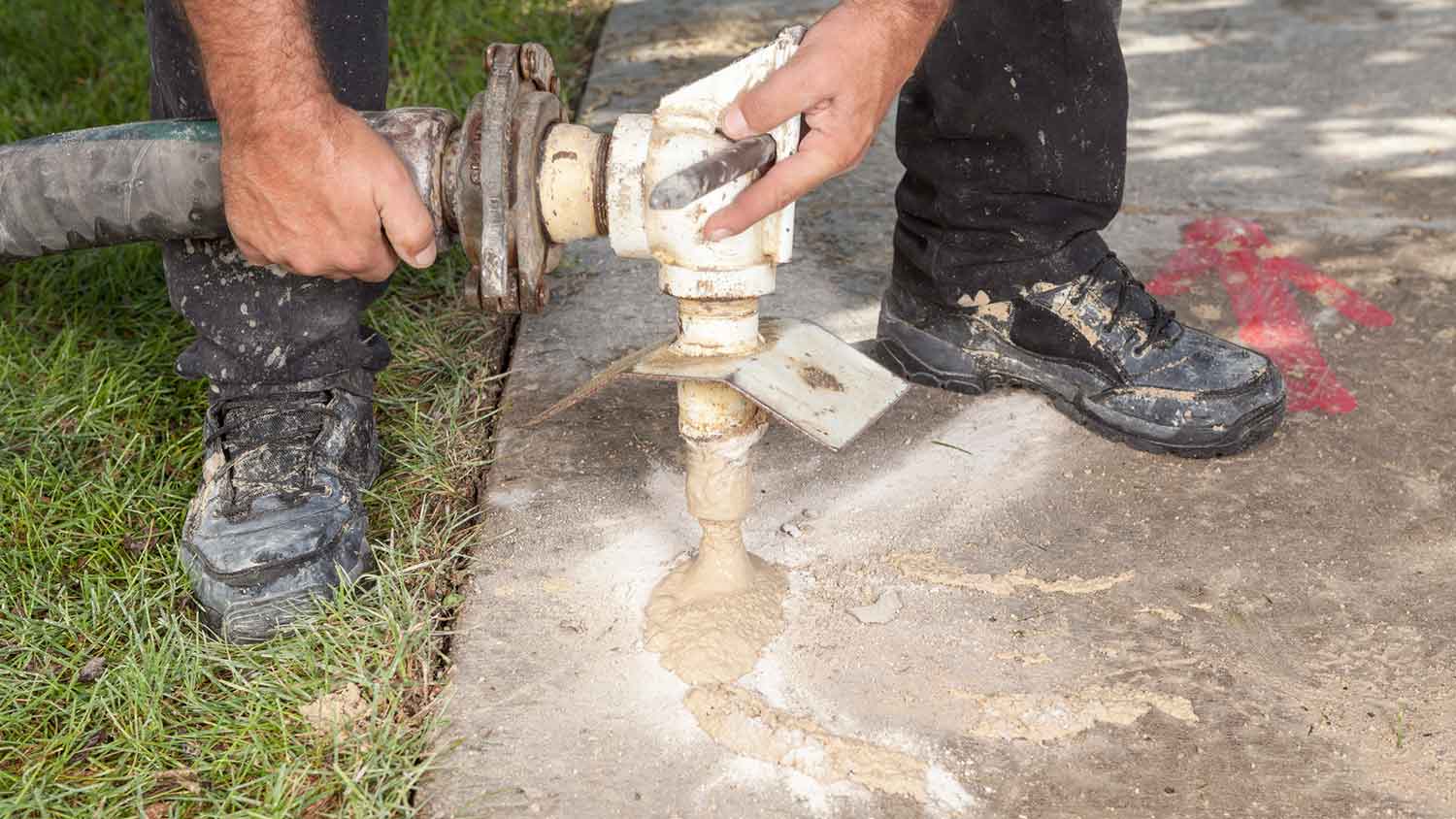
The method involves lifting settled concrete using pressurized cement slurry via drilled holes. This solves uneven surfaces and prevents further settling.
The Cedar Vale, KS homeowners’ guide to concrete mudjacking services
From average costs to expert advice, get all the answers you need to get your job done.
DIY mudjacking is an advanced task, but learning how to raise a concrete slab is great to know for many scenarios. Let's take a look at how to DIY mudjack.