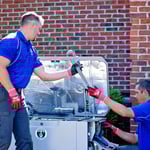
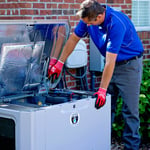
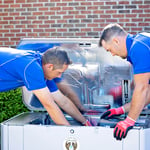
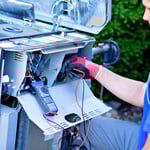
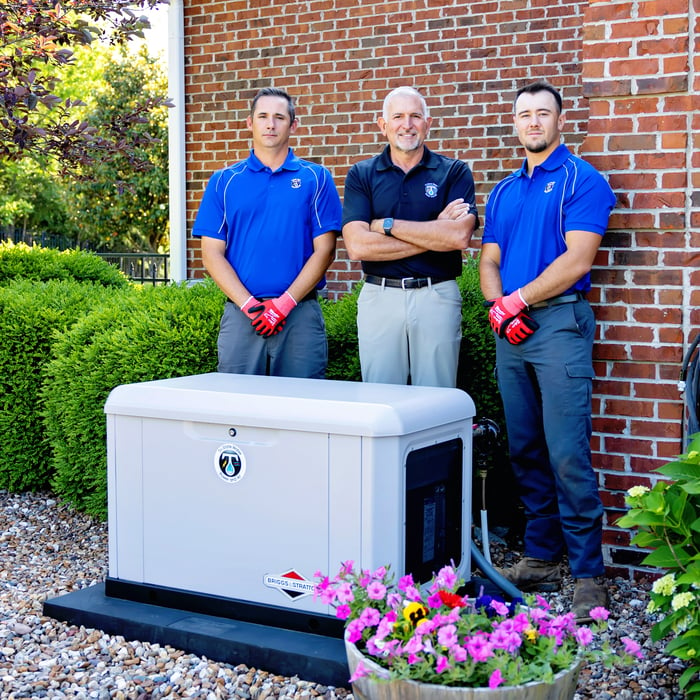
We are the experts in the field of Whole Home Generator Sales and Installation, with over 20 years of experience in the game. We provide turn-key installation by licensed professionals - 24 hour emergency service - Remote Monitoring - Long term maintenance and service by factory trained technicians.
"The crew at Barhambuisness services where extremely Knowledgeable respectful and hard working they installed my cameras fast I am very pleased with their work."
We offer over 30 years of experience in the electrical industry. We take on a wide range of electrical projects to include full installation for additions and remodels as well as wiring and panel upgrades and a variety of other jobs. We're committed to providing a personalized service for each individual project we take on & look forward to building strong, long-term relationships with our clients and guarantee your satisfaction.
\n
Garrett Electric is committed to excellence in every aspect of our business. We uphold a standard of integrity bound by fairness, honesty, and personal responsibility. Our distinction is the quality of service we bring to our customers. Accurate knowledge of our trade combined with ability is what makes us true professionals. Above all, we are watchful of our customers' interests, and make their concerns the basis of our business.
Ross Services of Arkansas LLC is family owned and operated since 2010. We specialize in professional, expert, and friendly heating and furnace system work for your beautiful home. Repairs and installations are our specialty. No job is too big or too small. Call us today for a free estimate!
Generally, you’ll want to keep between 60 and 70 feet between the generator and the transfer switch. There are a few reasons for this, including:
The distance reduces the noise coming from the generator into your home.
It increases efficiency because you won’t have a voltage drop from this short of a distance.
Prevents carbon monoxide poisoning: keep at least 15 feet between your generator and an open window.
A home that is 2,500 square feet will likely need a 20kW to 25kW generator. Consult your local generator installer to confirm the generator size needed to power your home before purchasing a new one. Be sure to consider how much power your necessary devices need to run.
As a safety measure, you should always turn off the main breaker while operating your generator’s backup breaker. In addition, you should also switch off all appliance breakers so you don't have a power surge when the main breaker turns back on. And finally, turning off the main breaker prevents back-feeding, which endangers utility workers with the risk of electrocution. Back-feeding could also destroy the electrical circuits of your neighbors if they use the same power network.
It is safe to run a generator continuously, but you must follow safety protocols to ensure personal and home safety. Read the manufacturer’s instructions for specific recommendations, but the general recommendation is to turn generators off overnight or when you’re away from the house. Overworked generators can pose a fire hazard and if your generator is not in a well-ventilated area, running it continuously could lead to carbon monoxide poisoning.
Yes. You can connect your home back-up battery to a generator with its designated charger. Be sure that the output of the generator matches the input requirements for the battery for best results.
The Huttig, AR homeowners’ guide to generator installs
From average costs to expert advice, get all the answers you need to get your job done.
Natural gas generators are whole-home standby generators that are connected to your home’s natural gas line. The average cost for a natural gas generator is $12,000.
Generators should give you peace of mind, but you’ll only get that if your installer knows what they’re doing. Learn how to hire a pro and what red flags to look for.
Thinking about a generator installation? Learn about backup power options, costs to expect, and how to hire the right local pro to keep your home running.