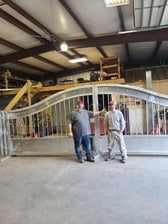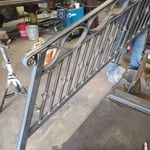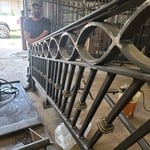

Top-rated welders.

Get matched with top welders in Marion Junction, AL

Enter your zip and get matched with up to 5 pros

Need a pro for your welding project in Marion Junction, AL?

Select your specific project to find the pro for you.

Find Welders in Marion Junction

In and Out Welding
New to Angi
Metal Stairs and Railings - RepairMetal Structure or Object - Weld or CutSheet Metal and Ornamental Metal - Fabricate+1 more

Serving Marion Junction, AL and surrounding areas

In business since 2018

Credit card accepted

Offers commercial services

We are a locally owned and operated company. We value honesty and integrity in all aspects of our business. We offer a variety of welding services that are customized to each individual project. We pride ourselves on the quality of our work, as well as our commitment to outstanding results. We look forward to building lasting relationships with our clients and guarantee your satisfaction!

Response time2 hrs
Showing 1-10 of 49
Welding questions, answered by experts

Some welding projects, such as repairing pipes or fences, require travel, whereas others, like furniture repair, do not necessarily require the welder to come to you. Travel and overhead factor into the overall cost of your welding project. Some of the most common welding projects include:

  • Metal furniture repair: $35–$100

  • Pipe repair: $200–$1,000

  • Small gates: $550–$750

  • Fencing: $1,200–$1,800

  • Fabricated sheet metal welding: $750–$2,500

Cutting rectangular ductwork requires careful measurements and the right technique. Use a measuring tape and pencil to mark the cutting lines accurately. Tin snips are excellent for straight cuts on smaller ducts. For more extensive or thicker rectangular ducts, a reciprocating saw with a metal-cutting blade is effective. 

Ensure the duct is well-supported and secure while cutting to prevent wobbling and maintain precision. After cutting, use a metal file to smooth any sharp edges, ensuring safety during installation. 

Cutting round ductwork requires precision and the right tools. A duct cutter, specifically designed for circular ducts, is ideal. First, mark the cutting line on the duct using a measuring tape and pencil. Then, position the duct cutter's blade on the marked line. Apply steady pressure, rotating the cutter around the duct. The sharp blade creates a clean, precise cut. Alternatively, a reciprocating saw with a metal-cutting blade can be used for larger round ducts. Ensure the duct is securely held in place while making the cut to prevent slips and maintain accuracy.

You should not do your own welding unless you have the proper training and experience. Most home electrical systems can only handle MIG welding, which creates weaker bonds than TIG welding and won’t work on certain metals or metal thicknesses. Both welding forms usually require the use of shielding gas, which can be dangerous to store at home. Additionally, welding machines create temperatures of over 3,000 degrees, and the sparks can blind you if you don’t have the proper equipment. As such, it’s usually better to hire a professional welder for your welding projects.

This all depends on the tools you have on hand and whether you’re trying to cut a straight line or shapes. 

The best tool to use for straight lines is either a circular saw or table saw. When cutting shapes, a jigsaw will be the easiest and most precise tool to use. 

The Marion Junction, AL homeowners’ guide to welding services

From average costs to expert advice, get all the answers you need to get your job done.