
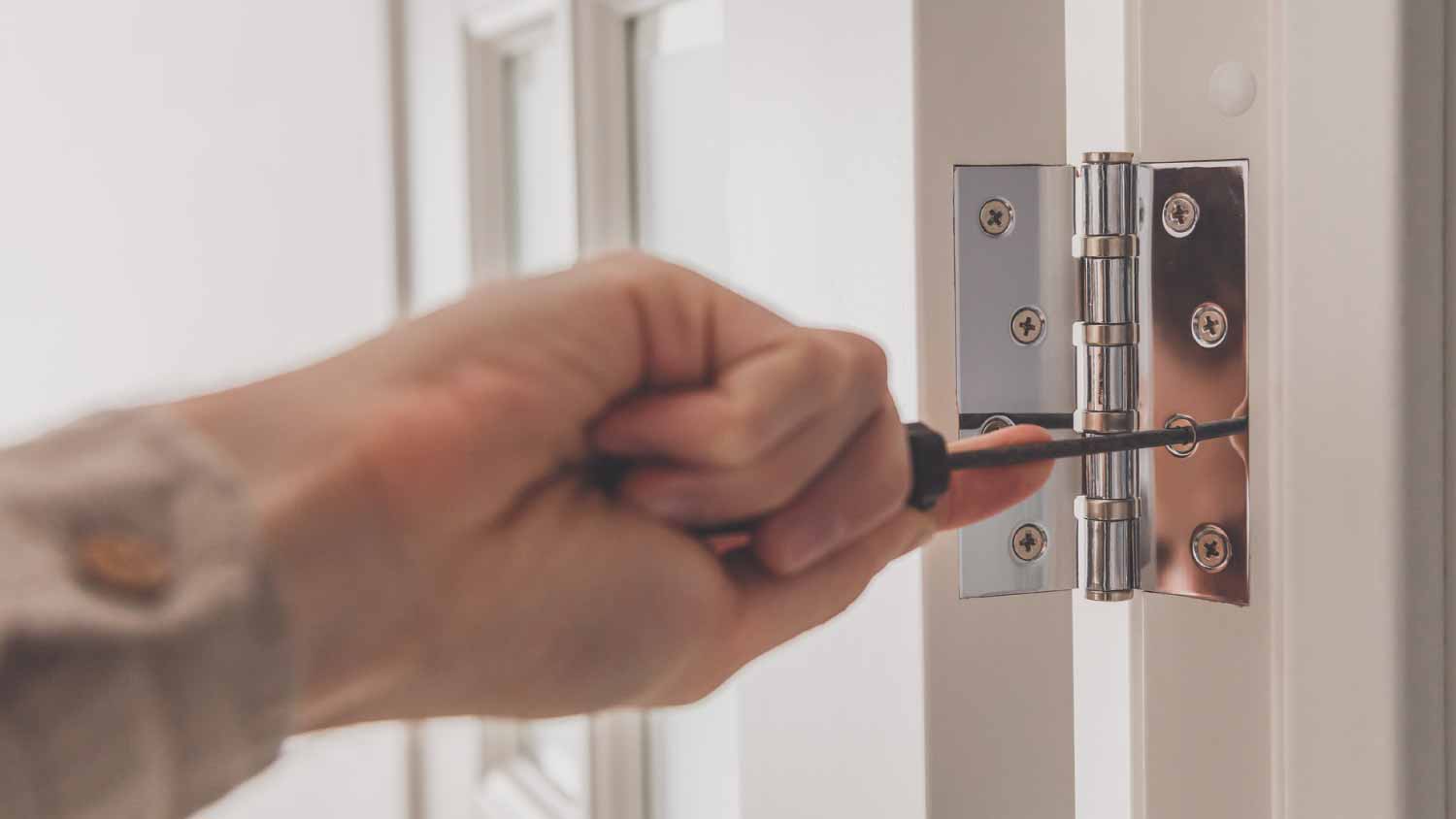
We’ve compiled the pros and cons and best uses for the nine most common types of hinges to make your hinge shopping experience as smooth as possible.
Doors can swing freely when they’re hinged correctly

Standard residential door hinges measure 3 1/2 by 3 1/2 inches for your typical 32-inch interior door, with sizes ranging up to 6 inches for heavier doors.
Residential door hinge size depends on your door's height, width, thickness, and weight, with heavier doors requiring larger hinges to support them properly.
Your door needs one hinge for every 30 inches of height, so most interior doors use two or three hinges depending on their size and material.
Hiring a local door repair professional provides reliable help with hinge sizing and installation, keeping your doors swinging smoothly and lasting longer.
Don’t underestimate the power of a good hinge, large or small. But what size door hinge do you need? It’s all based on the door’s height, width, and weight. You don’t want to go too small when choosing a hinge size because they need to support the door’s weight. Keep reading to learn more, and when in doubt, size up for happier hinges.

Standard residential hinges are 3 1/2 by 3 1/2 inches and fit a standard 32-inch wide interior door. Residential door hinges are made in ½-inch increments and range in size from 3 to 6 inches, though 5- and 6-inch hinges are more common on large or commercial doors.
Heavy-duty hinges in stainless steel and steel can handle large doors, like exterior, commercial, and specialty doors. Finding the right hinge size for these types of doors ensures the integrity of the door and its ability to function correctly.
A hinge’s size determines the size and weight it can hold. The chart below shows standard and specialty hinge sizes with the door width and thickness they’re designed to hold.
| Hinge Size (Inches) | Door Width (Inches) | Door Thickness (Inches) |
|---|---|---|
| 3 ½ | Up to 32 | 1 ⅜ |
| 4 | 32–36 | 1 ⅜ |
| 4 ½ | Up to 36 | 1 ¾ |
| 5 | 36–48 | 1 ¾ |
| 6 | Over 48 | 1 ¾ |
| 5 (heavy-duty hinge) | Up to 42 | 2–2 ½ |
| 6 (heavy-duty hinge) | Over 42 | 2–2 ½ |
In cases where the door dimensions fall between hinge sizes or the materials make the door heavier than usual, always size up to ensure the door’s weight is fully supported. Having a hinge with more capacity to support the door’s weight and size is better than less. Hinges that are too small might result in hinge and door damage. If this is the case, you might need to contact a local door repair professional to get your door back in working order.

Hinges might seem small and simple, but understanding hinge parts, terminology, and common dimensions can help ensure you get the right hinge for your project. The hinge parts you need to know include:
Leaf: A hinge has two rectangle-shaped leaves connected by a pin. Each leaf attaches to the central barrel (or knuckle), with one leaf attaching to the door and the other to the doorframe or door jamb. The leaves can have square or rounded (radius) corners.
Pin: The pin is a rod that fits in the barrel or joint between the two hinge leaves.
Barrel or knuckle: The barrel or knuckle is the hollow barrel-shaped portion of the hinge through which the pin fits and connects the two leaves.
Below are common measurements and terms that can help you determine the right hinge size for your project and prepare for installation:
Leaf height: The leaf height runs parallel to the pin and goes from the top of the leaf to the bottom.
Leaf width: To find the leaf width, measure from the pin’s center to the outer edge of the leaf.
Hinge backset: The backset is the distance from the outer edge of the hinge leaf to the edge of the door on one leaf and the edge of the hinge leaf to the edge of the frame or jamb on the other leaf.
Open leaf width: The open leaf width or the hinge leaf width is the width of the hinge with both leaves open flat.
Clearance: Clearance is the distance between the door and the jamb or frame when the door is open. Correct clearance ensures the door doesn’t touch the trim or the frame.

The types of hinges used for interior and exterior door hinges aren’t the same as those used for cabinet doors or gates, which tend to have smaller hinges. When looking at the hinge type, consider:
Door’s frequency of use
Door location
How the hinge will attach to the surface
Door material
How the hinge finish complements the room’s aesthetic
Below are the common interior and exterior door hinge types and their most common applications:
| Hinge Type | Application |
|---|---|
| Plain butt hinge | Lightweight interior doors |
| Ball-bearing butt hinge | Heavy and heavily used entry doors |
| Spring butt hinge | Self-closing doors (screen or garage doors) |
| Rising butt hinge | Interior doors over thick-pile carpet |
| Off-set hinge | Interior doors where you need extra clearance |
Cabinet doors and yard gates, which are smaller and lighter in weight, can use other types of specialty hinges, such as piano, strap, overlay, and concealed hinges. Some types create a specific look, while others hide the hinge completely. However, these specialty hinges don’t have the strength for room or entryway doors.
If your door is a standard size, you might not need to do any calculations. However, careful measuring and light math can save you trouble later on. When sizing a hinge, use the following formula (all measurements are in inches):
(Door Thickness - Backset) x 2 + Required Clearance = Overall Hinge Width
Example: (1 ⅜ - ¼) x 2 + 1 = 3.25 (Size up to 3 1/2 inches)
The hinge backset is the distance from the hinge edge to the door edge or from the hinge edge to the frame stop. Doors 1 ⅜ inches to 2 ¼ inches thick have a standard backset of ¼ inch. For thicker doors up to 2 ½ inches thick, a standard backset is ⅜ inches. Measure the clearance by determining how much space you need to open and close the door without touching the trim or door casing.
You need a hinge for every 30 inches of the door height. However, there are circumstances where you’ll need an extra hinge. Here are the rules of thumb for the number of door hinges, keeping in mind that most interior and exterior doors fall between 60 and 90 inches in height:
| Number of Hinges | Door Height (Inches) |
|---|---|
| 2 | 60 |
| 3 | 60–90 |
| 4 | 90–120 |
Door width can also affect the number of hinges needed. Standard interior doors are 30 to 32 inches wide, depending on the material and location. Standard-size hollow core or lightweight pine interior doors are stable with two hinges. However, a solid wood interior door will be sturdier with three hinges.
Exterior doors and custom-built doors range from 36 to 42 inches wide and may require an extra hinge to support the added width, even if their height doesn’t indicate the need for an additional hinge. Any door with a width between 36 and 120 inches will require extra hinges (no matter the material).
Hinge size varies to accommodate doors of all sizes and materials. However, other factors, like the material, finish, and radius, can influence your hinge choice.
Hinges can be made of different materials, with brass, steel, and stainless steel being the most common. Finishes like nickel, chrome, oil-rubbed bronze, zinc, and white also add variety.
Materials affect hinge strength, with steel offering the most strength for heavy doors. Stainless steel is ideal for doors exposed to the weather because of its water-resistant properties.
Brass hinges offer a classy and eye-catching design element. However, they’re not as strong as stainless or standard steel, so you’ll need more brass hinges to support the door’s weight. You’ll need to balance aesthetics with functionality and the door’s weight.
Hinges with curved corners are radius corner hinges. The hinge radius is the curve of the hinge's corners. The hinge radius doesn’t change how much weight the hinge can support, but it does impact the door’s functionality.
If you’re replacing radius corner hinges, the replacement hinges need to have the same radius to fit the door. Place a quarter or a dime into the hinge’s corner to find the radius. If a quarter fits, the radius is ⅝ inches. If a dime fits, the hinge has a ¼-inch radius.
Terrible experience. Walls/trim/floors/cabinets/doors all have drip marks, overspray, etc. Tiling at the fireplace had to be redone by another vendor due to incorrect and shoddy install by Profect. Contractor had his children in our house while he was on site without prior authorization or...
 Profect painting & exteriors
Jason has helped me with multiple household projects, with the most recent being new door installation. He has always showed up on time and organized and has done an incredible job! Jason is very professional and he's now my go-to for anything around my house that needs to be fixed or...
 Huff Garage Rescue, LLC
Company came to look at my garage door that was off track. They also said I needed a brace on the other garage door. They put the door back on track, and I paid to install the brace. The technician told me I needed a new garage door opener, and it would cost $1000. Red flags went off in...
 Precision Overhead Garage Door Service
On Sunday 2/26 I requested quotes via Angi from 4 refrigerator repair businesses. Northwest Appliance responded to me Monday morning (2/27) and my refrigerator was repaired by noon the same day. Great communication, they did everything they said they would. The technician had the parts on...
Excellent customer service and knowledge. I was recommend to him from my neighbour. My front door and window came in great and were installed beautifully perfectly, I m very satisfied with their excellent work, so decided to order one more big bow window for my living room. I cant wait for...
 Window Depot USA of Central Ohio
Called ahead and worked quickly to install keyless locks on vintage wooden doors.
 Expert Lock and Key, LLC
Scott did not get appropriate access to the property prior to the scheduled inspection which required us to come back later in the day to complete it. He also, unprofessionally, knocked on a neighbor?s door in his attempts to reach someone with access. His overall report was fine though the...
 Security First Home Inspections
Door Depot was very responsive - they came out the day after my call to assess my needs, then returned at my convenience to complete the work. They arrived early, and the work was completed in a shorter period of time than estimated. Very pleased with the results. I would definitely use them...
 Door Depot LLC
Replace garage doors: Fast response, competitive estimate, timely work done well.
 Village Garage Door
Jeremiah did an awesome job cleaning 28 windows inside and out! He was fast, efficient and now I have a beautiful view again. This was a Groupon for $139 for 20 windows, but I had 28 windows/doors cleaned, so there was an extra $6 per window. Totally worth it.
 Complete Home Services
From average costs to expert advice, get all the answers you need to get your job done.
We’ve compiled the pros and cons and best uses for the nine most common types of hinges to make your hinge shopping experience as smooth as possible.

There are many types of cabinet hinges, but the ones you can choose from will depend on the construction of your cabinets. Learn more here.

Learn the causes of common door hinge problems to get to the bottom of why your door is sticking, sagging, or squeaking. While some door hinges can be fixed easily with DIY, others require full door removal.

Doors don’t have a one-size-fits-all option. Read on to see the standard door sizes you can expect when purchasing your next one.
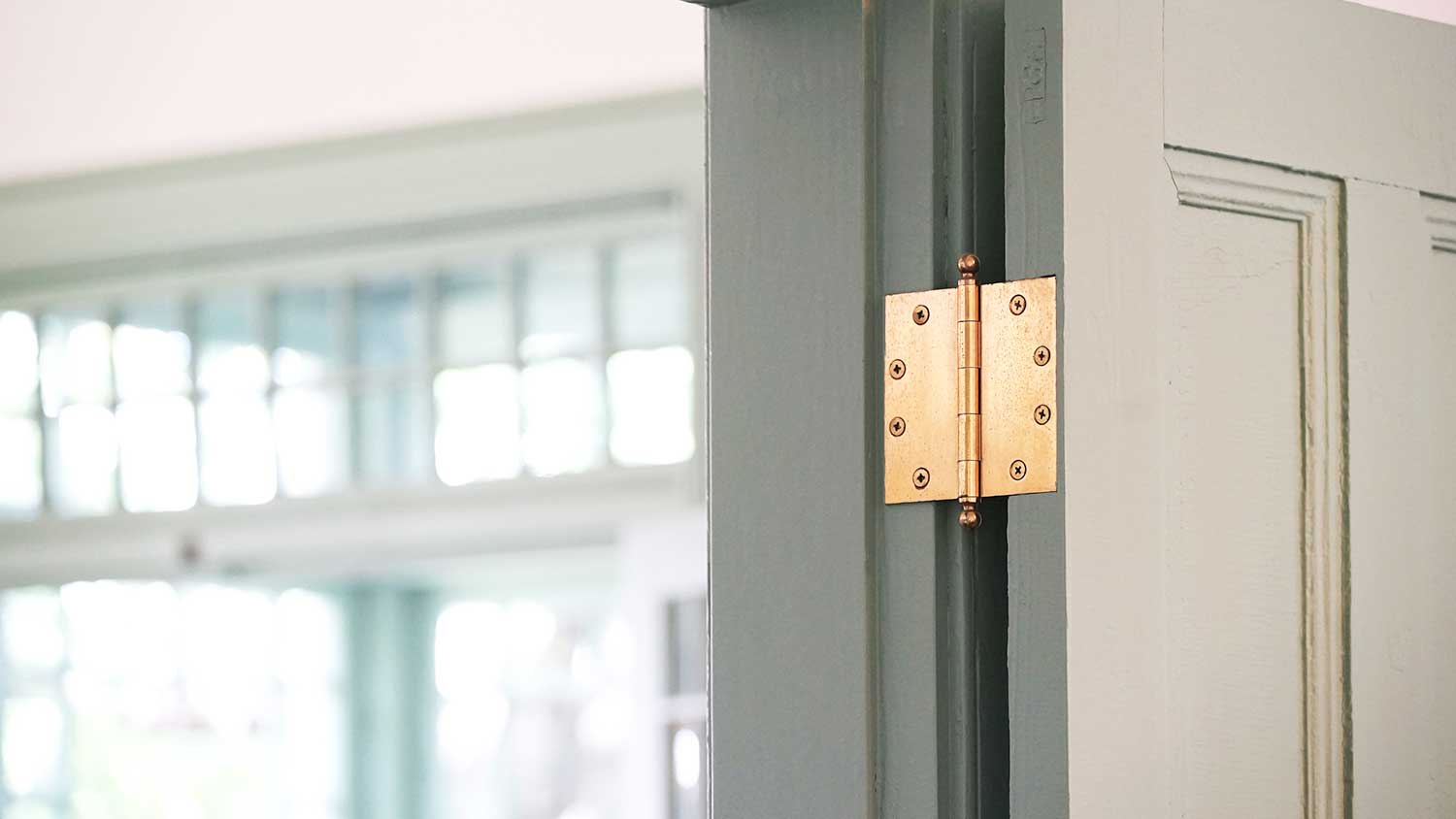
Learn the various, effective methods for easily removing old paint from door hinges without damaging them, and what to do when you encounter stubborn paint.

Do you need to learn how to remove a door hinge pin? Our guide walks you through the process in four easy-to-follow steps.