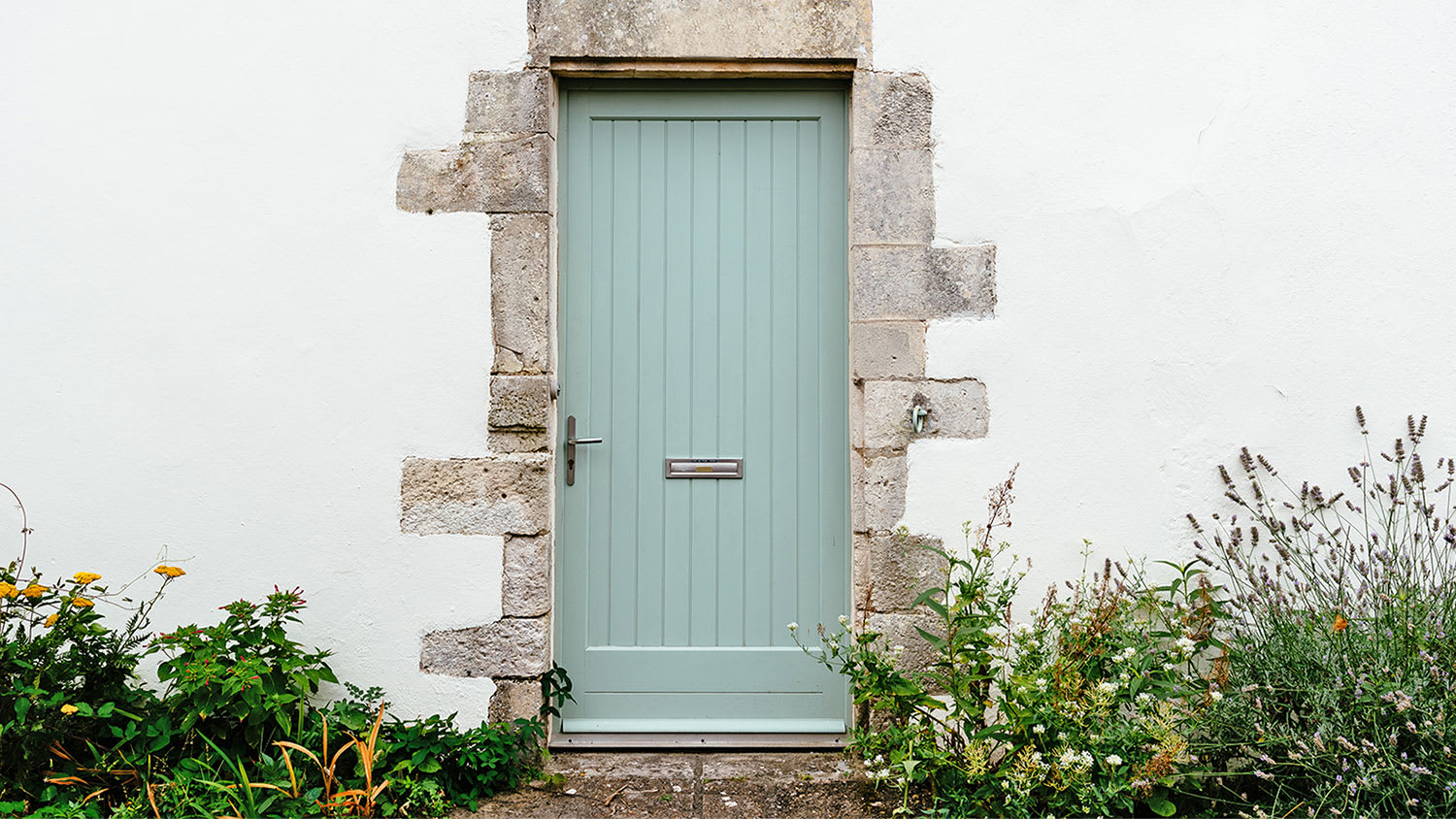
Door or window lintel replacement costs $400 on average, but there are ways you can save. On the other hand, complicated work will increase costs considerably.
Lintels are important construction features you may have never heard of

A lintel definition includes the structural beam installed above your windows and doors to support the weight of the wall above the opening.
Expect to pay $100 to $400 per lintel for repair or replacement, so addressing damage early helps you avoid higher costs later.
Your lintel's material determines its strength and durability, with concrete, steel, and stone options handling different loads better than traditional timber construction.
Hiring a local window and door professional provides reliable help with lintel inspections and repairs, keeping your home structurally sound and safe.
No, a lintel isn’t something you need to pick off of your freshly cleaned laundry. And don’t get it confused with the legume (lentil), either. A lintel in construction is actually a very important part of your home’s structure, but many people have never heard of it. So what is a lintel? It’s a structural beam, and while it may not be well-known, you’ll be thankful to know it’s installed properly in your home to give your windows and doors support after reading our guide all about lintels.

A lintel, sometimes spelled lintol, is a type of structural beam that builders install above doors or windows. The lintel’s purpose is to provide more support from above for the opening. Sometimes, lintels can also double as an aesthetic, architectural feature.
Lintels can come in different materials, and builders sometimes offer them as reinforced models. The varying types make it easier for pros to choose the lintel type best suited to a building based on the original construction material and environment. Different types of lintels may be better suited for heavier loads, wider openings, or both.

Timber is a traditional type of lintel that was once popular in construction. Today, it’s more popular on barns or in wooded areas where timber is easier to access and build with. But timber has some drawbacks that have made it less common in modern construction projects.
Timber is not as strong or durable as some other lintel materials, and it is vulnerable to rot and fire damage. When timber is used, it is often supported by steel plates, resulting in what are called flitched lintels.

You’re most likely to come across concrete lintels for openings. Concrete is popular because it can span small or large openings and will support heavy loads. Concrete lintels are also budget-friendly and easy to install, plus they offer fire resistance, unlike timber.
Concrete isn’t without its drawbacks, though. Even with reinforcements, concrete can crack over time. Horizontal cracks can expose the reinforcements to water and cause them to rust, so you’ll need to call in a pro to repair any cracks as soon as possible, and you’ll need to replace the lintel if you notice rust on the reinforcements.
Like concrete, stone is another common type of lintel, particularly in areas where stone is widely available. Pros may install the stone as one slab or as multiple pieces of stone to fit different opening sizes. This material is also an attractive option for those wanting to add an architectural design element.
Although stone is strong, it can be vulnerable to vibratory loads and can crack or bend under pressure. Stone lintels can be difficult to install because they are so heavy, and they also come at a higher price point than some other lintel types.

Perfect for brick-surrounded openings or as a design element, brick lintels are a good option for smaller openings less than 1 meter (or just over 3 feet). This material can only support light loads, so it’s popular as an architectural feature.
For larger loads or wider openings, reinforced brick is a good option. Brick lintels are reinforced with steel for more strength and durability. Brick, unlike wood, is typically spared from rot issues thanks to the addition of weep holes.
Steel lintels are great for wide openings and heavy loads. They’re less prone to rust or erosion when compared to concrete lintels, and they’re less prone to distortion than stone. Steel lintels may be installed as rolled steel joists, single-channel sections, or combinations of channel sections.

Lintels are a critical support element for openings. Your door and window frames alone cannot handle the weight of the wall above them, so the lintel’s job is to offer that support.
Support: Lintels take the load of the wall above a window or door and distribute it to the walls on either side of an opening. Lintels can also support chimneys or garage doors.
Protection: Continuous lintels can provide more support in the event of extreme winds or earthquakes.
Decoration: Lintels can be decorative. Stone and reinforced brick are popular options for adding a stylish element over openings.
Fixing a lintel is considered an intricate architectural task that should only be handled by professionals. When brick or masonry lintels fail, helical bars are typically placed for reinforcement. Helical bars are also useful when the timber of a wooden lintel needs to be replaced due to rot or insect damage. Helical bars are steel rods that allow you to preserve existing architectural work by creating a supporting beam. They offer superior load-bearing capacity and stability.
Concrete lintels often require patching or replacement to restore architectural integrity. These repairs can be more intensive simply because water seeping into cracks can create expansion that is hard to control. The same is true of broken metal lintels. However, it is often possible to arrest damage using resin injections.
If you've noticed cracking, crumbling, or other telltale signs of lintel failure, you'll need to determine the extent of the damage to decide if you need a repair or replacement. A local window or door company near you will be able to provide an inspection.
Lintels can fail for a number of reasons. Causes of failure even vary based on which type of lintel you have. In general, the top cause of lintel failure is water exposure. Over time, dampness leads to spalling of concrete lintels that causes cracking and splitting. Water is also problematic for steel lintels because it leads to rust. Meanwhile, stone lintels can be destroyed by corrosion caused by water exposure. Wood lintels are uniquely vulnerable to destruction because they can be compromised by dry rot, wet rot, and wood-boring beetles.
Not all causes of lintel breakage are environmental. Poor installation can also cause a lintel to break. For example, a lintel that isn't perfectly level will succumb to excess pressure over time. Home updates sometimes cause lintels to break. When homeowners make changes to windows and doors, the updated materials used may not be heavy enough to share the weight with existing lintels. This can ultimately stress a lintel until it cracks.
Repairing or replacing a lintel costs about $100 to $400 per lintel. The final cost can depend on many factors, from the lintel material to the condition it’s in. The worse the damage, the more expensive a repair will be. Repairing or replacing smaller lintels, like those above a window, tends to cost less than fixing or replacing lintels over standard doors or garage doors.
We have used Window Warriors many times with no issues. They arrived on time and were very professional . We have pets and Window Warrior team treated them very well, well trusted team.
 Window Warrior of Columbus, Inc.
I am highly satisfied with the window replacement service I received; the professionals from Savvy Exteriors were punctual and did an amazing job that exceeded my expectations.
 Savvy Exteriors
I hired windows depot USA of central to install new windows in house in Oshawa. Ilya was very professional from the start, not only did he offered a great price, he also made sure the installation was on time. I am very satisfied with final outcome. The windows look great and the overall...
 Window Depot USA of Central Ohio
The team is awesome!! I can generally pick up and clean throughout the week, but they CLEAN! Windows, stair rails, microwave. All the things I can’t ever seem to get to regularly. The house looks and smells great after they leave.
Description says they handle window repair including rotten hardwood - they called me back right away but didnâ t leave a voicemail. I followed up 3 days later and they said they donâ t do that kind of work.
 Window-Gurus
We had a gutter blockage that was causing water to sheet down the side of the house and ultimately it started to come in at a window (need mortar people next). Called around 7:30am, and he responded by 8am. He was able to come out the same morning and do a look over and clean out. He also...
From average costs to expert advice, get all the answers you need to get your job done.
Door or window lintel replacement costs $400 on average, but there are ways you can save. On the other hand, complicated work will increase costs considerably.

Whether you're embarking on window repairs or a large home renovation, knowing all the parts of a window will make you feel as knowledgeable as the pros.
Video chimney inspections can tell you a lot about your fireplace, including what needs to be cleaned or repaired, structural damage, and any other issues.

While sprucing up your home’s facade, you may come across home exterior terms that are new to you. Talk like a pro with this list of key home exterior terms to know.

Light fixtures are the jewelry that accessorizes a room. Like furnishings and decor, lighting adds personality, helping bring your style to life. Read ahead for eight creative, unique, and cool lighting options that are both beautiful and functional.

Federal architecture is simple but refined, and its durability and low upkeep costs make it a popular option. Learn about this style and what sets it apart.