
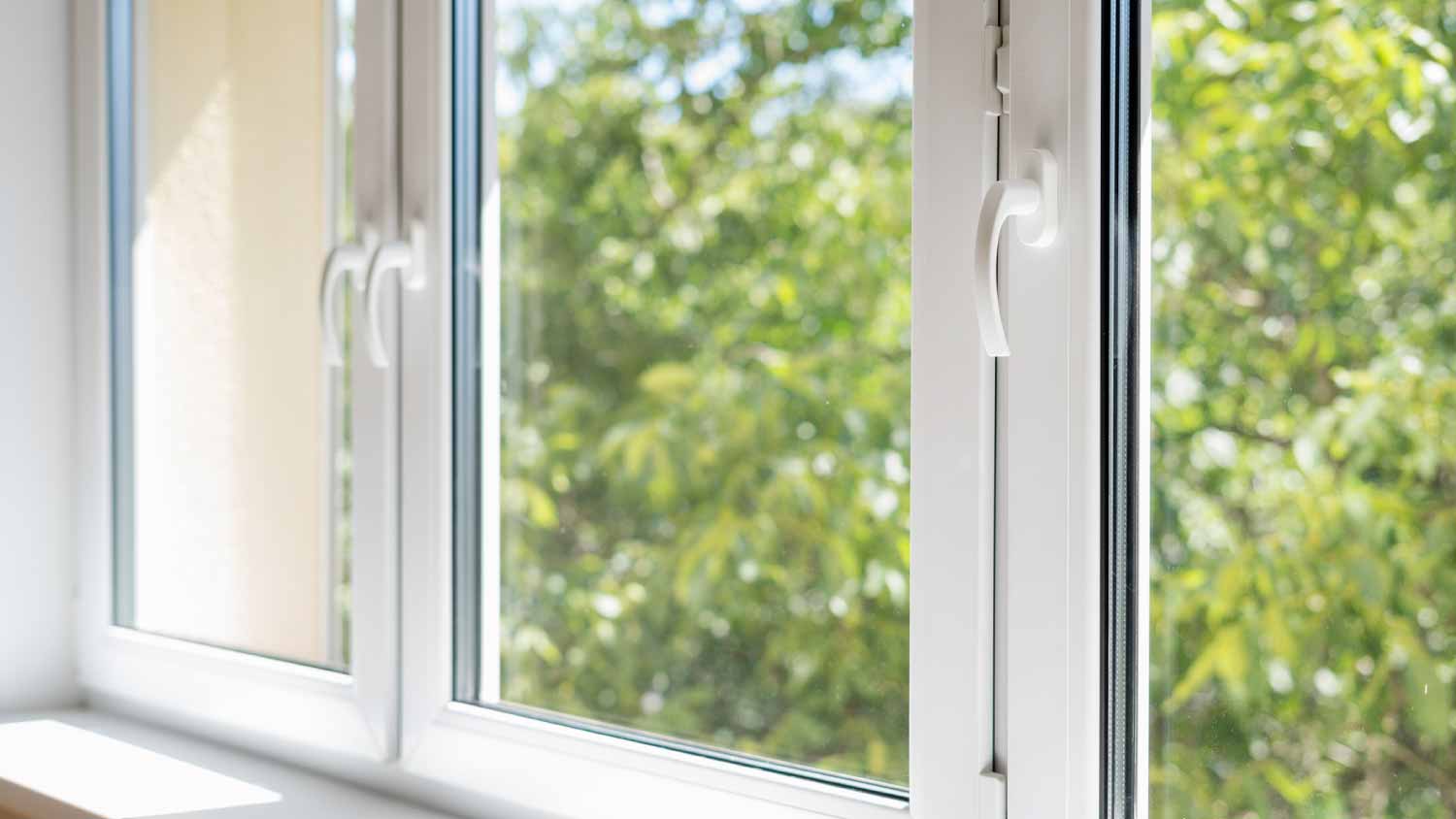
Find out how much it costs to install vinyl windows in a single room or throughout your house—and see how the size and style of the windows impact the overall price.
They’re affordable and low-maintenance, but are they right for your home?

Vinyl windows are a good option for your home when you want energy efficiency, low maintenance, and affordability without the need for painting or sealing.
Vinyl windows cost $100 to $900 per unit, and any disadvantages include limited color choices and potential warping in extreme heat or cold.
You should consider alternatives like fiberglass, wood, or aluminum windows if your climate has harsh temperature swings or you want more customization options.
Hiring a local window company provides expert guidance on material selection and installation quality, keeping your windows performing well for decades.
Vinyl is everywhere—on the siding of houses, in your shower curtains, and even in the debit and credit cards in your wallet. So, it’s no surprise that vinyl windows are a popular option when it comes to home upgrades. Although they're a common choice for many homeowners, not everyone is sold on them. In this guide, we’ll break down vinyl windows pros and cons so you can decide if they’re the right choice for your next renovation project.

Vinyl windows are made from polyvinyl chloride (PVC), a synthetic plastic that gets shaped into frames and sashes (those are the parts of the window that keep the glass panes in place) through a process called extrusion. To make sure these windows stand up to the elements, manufacturers mix in special additives with the PVC. These tweaks boost the vinyl’s resistance to weather, fading, and the wear and tear of constant exposure.
But no material is perfect. Extreme heat and cold can cause vinyl to expand and contract over time, and in areas with tons of sun exposure, vinyl can start to show signs of discoloration. Still, with the right care and installation, what you get is a modern, clean look and a low-maintenance, long-lasting window that does well in various climates.
| Pros | Cons |
|---|---|
| Energy efficient | Limited customization |
| Low-maintenance | Vulnerable to extreme temperatures |
| Affordable | Environmental concerns |
| Moisture and rot resistant | Structural limitations |
Homeowners and contractors are choosing vinyl windows more and more, and with good reason. Vinyl windows offer performance, durability, and cost-effectiveness, making them a top choice for just about any home. The main benefits of vinyl windows include:
One noticeable benefit of vinyl windows is their impressive energy efficiency. In the winter, vinyl helps prevent heat from escaping, and in the summer, it keeps the heat outside—where it belongs. Additionally, many vinyl windows come with insulated glass units (IGUs) and airtight seals. These features help make your windows more energy efficient by keeping those pesky drafts out so your HVAC system doesn’t have to work overtime—and you can save money on your energy bill.
Vinyl windows require very little maintenance. Compared to wood windows, you won’t need to worry about regular painting or staining to protect them from the elements. Vinyl is naturally resistant to chipping, peeling, and moisture, so your windows will look great year after year without the need for sealing or constant touch-ups. Plus, cleaning windows is a breeze since all you need is some soap and water—no harsh chemicals or special treatments are required. This makes vinyl windows a time-saving, hassle-free choice for homeowners who want beauty without constant maintenance.
Vinyl windows are an attractive option if you’re looking to upgrade your windows without breaking the bank. Compared to other types of window frames, like wood and fiberglass, vinyl is significantly less expensive—often two to three times cheaper. Typically, vinyl windows range from $100 to $900 per unit, depending on size and features.
Since vinyl is a non-porous material, it doesn’t absorb water, which means you won’t have to worry about the warping or swelling that often plagues wood windows. This makes vinyl especially useful in areas of high humidity or frequent rain. Additionally, because vinyl doesn’t rot or decay, and pests like termites can’t feed on it, your windows will maintain their structural integrity and appearance for years, saving you from the headache of replacing damaged frames.

Vinyl windows have plenty to offer, but it’s important to weigh any potential downsides before making your decision.
Customization options are where vinyl windows fall short. Unlike wood windows, which can be painted or stained to match any color or design, vinyl windows have a more limited color range, and these colors can fade over time. The extrusion process also puts a cap on the complexity of the window’s shapes and designs, making intricate details or custom shapes a challenge. While vinyl does have an edge over aluminum windows in terms of color durability (since aluminum can be tricky to paint well), vinyl still can’t offer the same flexibility or natural texture that wood does.
Vinyl windows, while popular, can struggle in extreme climates, especially in areas that experience harsh temperatures. As a thermoplastic material, vinyl softens in the heat, which can cause the window frame to warp. This causes gaps in the seals, allowing air and water to slip through. Over time, the constant expansion and contraction from temperature shifts can stress the seals and joints, ultimately shortening the lifespan of your windows. Prolonged sun exposure can also cause fading, especially with darker-colored vinyl, despite the UV stabilizers built into modern frames. So, while vinyl windows offer other great benefits, you may want to rethink them if you live in an area with extreme conditions.
Yes, vinyl windows may be a practical and cost-effective choice, but they do raise some environmental concerns. Vinyl contains plasticizers and stabilizers, such as phthalates, that can leach out over time and contribute to both health and environmental risks. And when it comes to disposal, vinyl isn’t easily recyclable. Much of it ends up in landfills where it can take years to break down, potentially releasing toxic chemicals into the soil.
Vinyl windows are durable, but they do have some structural limitations, particularly when it comes to larger window installations. Since vinyl is naturally more flexible than materials like wood or steel, it can bend or warp under stress, especially with big panes of glass or heavy triple-glazed windows. To make up for this flexibility, vinyl frames often need to be thicker or internally reinforced, which can make them bulkier and reduce the amount of visible glass. This can limit the size of your windows and affect the types of window glazing options available, particularly when you’re looking at heavy-duty, impact-resistant features.
If you’re shopping for new windows, vinyl isn’t your only option. Every material has its pros and cons depending on what you value most—whether it’s cost, energy efficiency, maintenance, or aesthetics. For example, vinyl is often the most budget-friendly choice, and while it’s known for being a good insulator, other alternatives like fiberglass and wood are known for offering better insulation. While wood windows provide endless design options and natural beauty that homeowners love, they require regular maintenance to keep them in the best shape. It all comes down to weighing the factors to find the best fit for your home. Fortunately, homeowners have several options, including:
Wood Clad
Steel
If your priorities are affordability and energy efficiency, vinyl windows may be right for you. They’re durable, resistant to moisture and rot, and can help you save on your energy bills—all without demanding much attention over the years.
Still, if you’re unsure whether vinyl is the best fit, consulting with a professional window company is always a good idea. They’ll help you weigh your options and make sure your choice matches your specific needs.
We have used Window Warriors many times with no issues. They arrived on time and were very professional . We have pets and Window Warrior team treated them very well, well trusted team.
 Window Warrior of Columbus, Inc.
I am highly satisfied with the window replacement service I received; the professionals from Savvy Exteriors were punctual and did an amazing job that exceeded my expectations.
 Savvy Exteriors
I hired windows depot USA of central to install new windows in house in Oshawa. Ilya was very professional from the start, not only did he offered a great price, he also made sure the installation was on time. I am very satisfied with final outcome. The windows look great and the overall...
 Window Depot USA of Central Ohio
The team is awesome!! I can generally pick up and clean throughout the week, but they CLEAN! Windows, stair rails, microwave. All the things I can’t ever seem to get to regularly. The house looks and smells great after they leave.
Description says they handle window repair including rotten hardwood - they called me back right away but didnâ t leave a voicemail. I followed up 3 days later and they said they donâ t do that kind of work.
 Window-Gurus
We had a gutter blockage that was causing water to sheet down the side of the house and ultimately it started to come in at a window (need mortar people next). Called around 7:30am, and he responded by 8am. He was able to come out the same morning and do a look over and clean out. He also...
From average costs to expert advice, get all the answers you need to get your job done.
Find out how much it costs to install vinyl windows in a single room or throughout your house—and see how the size and style of the windows impact the overall price.
Do you need impact windows to protect your home in the event of a hurricane? Find out how much impact windows cost, including the windows themselves and the labor to install them.

You’ve heard of vinyl records, but what are vinyl windows? Find out the pros and cons of this window frame to help you decide if it’s right for your home.

Our guide to the best vinyl windows explores the types of windows for which vinyl makes sense, plus how to choose the best vinyl window brand.
When it comes to vinyl vs. aluminum windows, you should consider price, insulation, and longevity. Learn about other differences and which is best for you.

There are many types of windows out there. In this article, we compare wood vs. vinyl windows to determine what sets them apart from each other.