
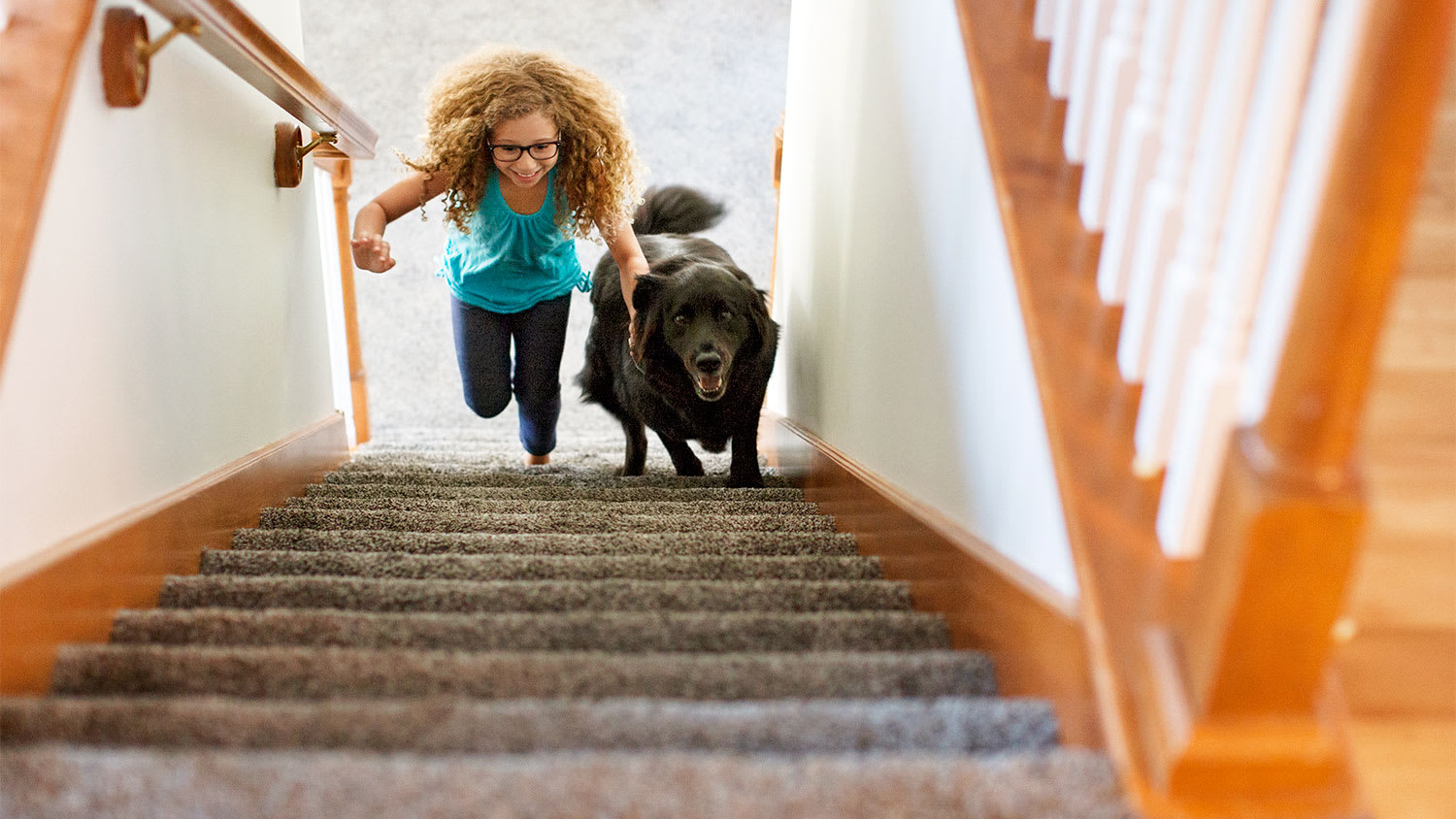
The cost to carpet stairs depends on the number of stairs, material choice, and staircase type. Read on to calculate your project expenses
Grab your tape measure and walk through this foolproof method

If you’ve got a multi-level house with a carpeting project on the horizon, you’re going to need to learn how to measure stairs for carpet. Luckily, the process is relatively straightforward and revolves around total square footage regardless of the type of carpet you choose. All you need is a tape measure and a calculator. Though some staircases may differ—with landings and bullnose stairs—this method will teach you how to handle whatever might pop up.

Measuring stairs for carpet requires some specific calculations. You’ll need to know the individual parts of your staircase, including the tread (the horizontal part of the step) and the riser (the vertical section that holds up the tread). Pay close attention to the width, which goes from the left edge of the step to the right edge, and the depth, which goes from the front edge of the tread to the back edge. Don’t forget the landing at the top of the stairs and any others if you have them.
A floor plan will help you understand the layout of your staircase and organize the measurements you gather. Use a pencil to draw out a floorplan to the best of your ability, keeping scale in mind. Add doorways, alcoves, and landings.

There are two different types of landings in a staircase. The main landing is the section at the top of your steps, right before your stairs start. Mid-landings are wider platforms within your staircase, typically to help the staircase change direction.
Your carpet will begin on the main landing, then move down your steps. Measure the width and length of the main landing in inches. Multiple the width and length measurements to get the total number of square inches, then divide that total by 12 to get the square footage. Note these measurements on your floor plan.
The riser is the vertical section between steps. Measure the width and length of the riser directly below your main landing. Multiply the width and length measurements to get the total number of square inches, then divide by 12 to get the total number of square feet. Write these figures on your floor plan.
If your main landing has a lip that sticks out beyond the riser, bend your measuring tape to account for the extra space.
Add together the square footage of your main landing and the square footage of the first riser to calculate the landing area’s total square footage. Write this figure down on your floor plan.
Your staircase may have one or more mid-landings. Before you start measuring the rest of your stairs, gather the square footage of the other landing areas. To do this, repeat the same process you used to measure the main landing area. Note these figures down on your floor plan.
If your steps are irregular sizes, you may want to measure each step individually. If not, you can find the square footage of a single step and multiply by the number of steps. To get the square footage, start on the first step below your landing. Measure the width of the tread (the part of the stair you step on).
Add 2 inches to your measurement before writing it on your floor plan. During carpet installation, your contractor will fold about an inch of carpet over either end of the stairs to hide the edges. The added inches help account for the extra needed.
Next you’ll need to measure the depth of the tread and the height of the riser. You can do this by placing your measuring tape against the back edge of the tread, folding it over the step and down to the bottom edge of the riser. Gather the total measurement in inches. Add this measurement to your floor plan.
If you need to, round your measurement up to give yourself a little leeway. It’s better to have too much carpet than too little.

To find the total square footage of a stair, multiply the two measurements you just recorded:
The width of your tread (inches)
The depth of your tread and height of the riser (inches)
This will give you the total number of square inches per stair (assuming your stairs are all the same size). Since carpet for stairs is often sold in square feet, divide this number by 12 to get the total square footage. Record it on your floor plan.
Take the square footage of a single stair (the figure you just recorded) and multiply it by the total number of stairs in your staircase, excluding landings. If your stairs are different sizes, you’ll need to measure each individually, calculate the individual square footages, and then add the figures together to get the total.
Make note of whether or not your staircase has a bullnose stair (a bottom stair that’s wider and rounded along the edge) or winder stairs (stairs with a triangular tread that help change the direction of the staircase). Measure these from the widest point of each area. You can easily cut away a surplus of carpet, but you’ll have a larger problem if you come up short.
Add the total square footage of each landing to the total square footage of your stairs. The sum is the total carpeted area. When you’re calculating the amount of carpet to buy for stairs, order 10% more than you think you’ll need—just in case.
For most homeowners, the cost to carpet stairs falls somewhere between $400 and $800—and this price includes professional measurements. You won’t save much money by measuring DIY because measuring isn’t typically the laborious part of carpet installation. In other words, you may want to hire a carpet installation company near you, especially if you:
Have a complicated set of stairs (like a spiral staircase)
Are planning a larger carpeting job
Would like to save time by leaving this job to a pro
Overall, the cost of carpet installation is similar to the cost of refinishing hardwood floors, but it can save you money if a hardwood floor replacement is too expensive. Expect to spend $1 to $7 per square foot on the carpet itself, depending on whether you choose cotton, nylon, or polyester.
Showed up on time and cleaned carpets well, but didn?t move furniture.
 Voda Cleaning & Restoration of Columbus
Carpet repair done well. Scheduling was easy. Showed up on time.
 BR Flooring Installation
Joseph did a great job with the staircase and trim. Timely and efficient, clear communication about the work, very fair pricing. For the stairs in particular, done very skillfully in an old house (1893) in a tight spiral, and very creative with how to do the handrail. Did a nice job with...
 Vouis Trim Carpentry L.L.C.
This company does it right. Firstly, I want to say that Landan was a joy to work with. He was so kind, transparent, and had everything under control. His entire team showed up ready to work and they were all very respectful of the fact that we were in an office space. A little backstory – we...
 Krumlauf Floors
Very professional, knowledgeable and helpful! Completed the install on time and as expected.
 Ward's Services
Excellent, Prompt, Courteous Service!!! They were super friendly and quite personable. I felt very comfortable with the gentlemen that did the installation. They installed it exactly where I asked them to and they did an excellent job!! I loved their service so much.
 Tether House
I hired windows depot USA of central to install new windows in house in Oshawa. Ilya was very professional from the start, not only did he offered a great price, he also made sure the installation was on time. I am very satisfied with final outcome. The windows look great and the overall...
 Window Depot USA of Central Ohio
AFS was excellent from start to finish. Jess, the sales associate, was fantastic...very knowledgeable and very professional. The installation crew was excellent. I couldn't be more pleased with the process. Best of all, my new floor looks fantastic!
 America's Floor Source
We were having 2”x 2” tile installed . There was a small installation error and the new additional replacement tile was from a different lot and the colors didn’t match. Joe assured us that he would rectify everything , which he did without hesitation. We decided to go with the 18” x 36” tile...
 CarifaTile
Great experience all together. Dog friendly, courteous, great results and honest with recommendations. Will certainly be using Cardinal in the future for any carpet repairs
 Cardinal Carpet Care & Repair
From average costs to expert advice, get all the answers you need to get your job done.
The cost to carpet stairs depends on the number of stairs, material choice, and staircase type. Read on to calculate your project expenses
Discover how much carpet replacement costs based on factors like the project size, the carpet material, and the labor required.
When your home needs new carpet, you’ll need to answer the question, “How much carpet do I need?” Here’s how to measure the right way.
The best carpet for stairs is durable and suited for high-traffic environments. However, they aren’t as soft and can be more expensive. Read on to learn more.
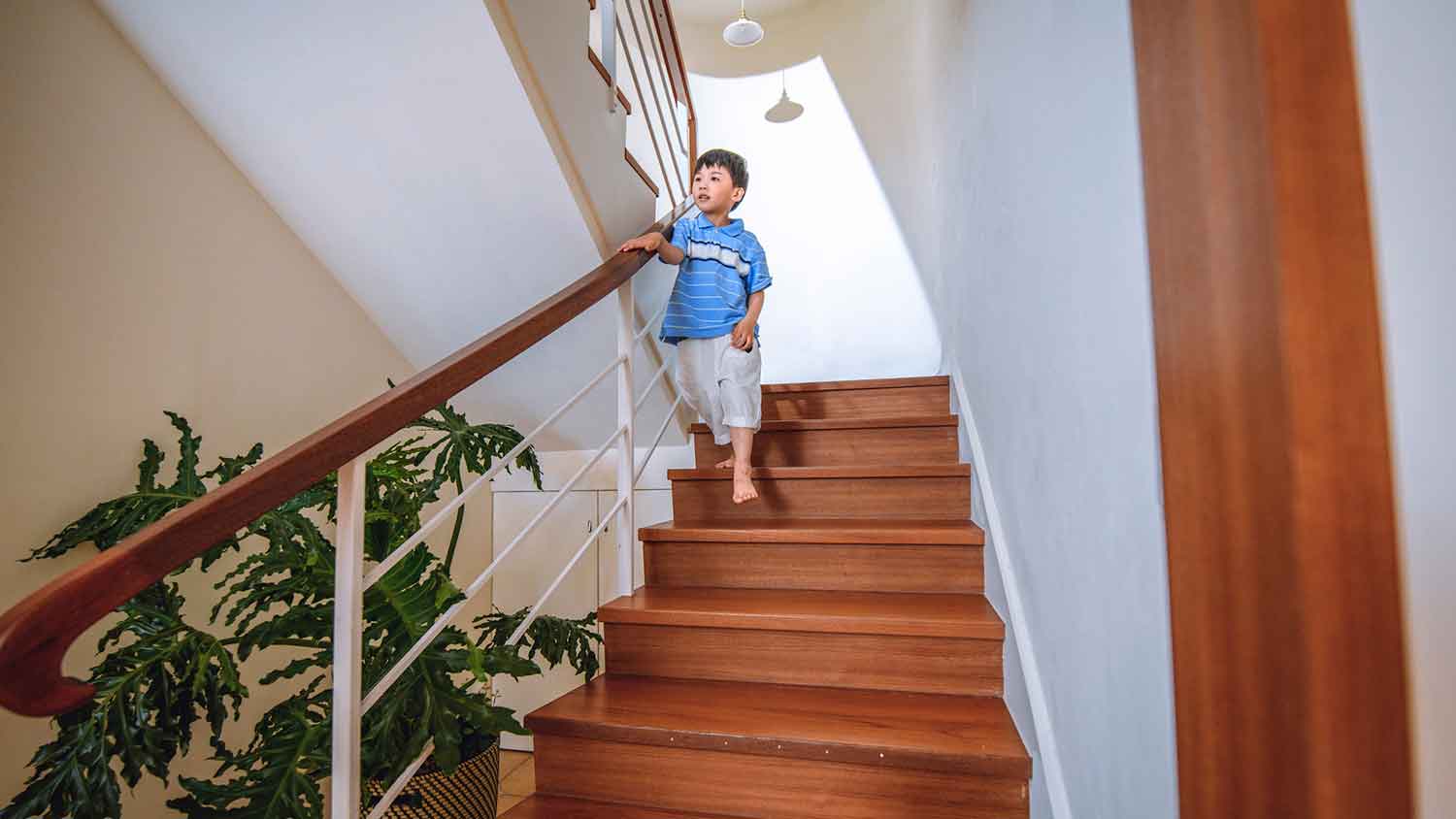
If carpet isn’t your thing or you prefer a runner, learn how to remove carpet from stairs for a weekend DIY. Use this tutorial to give your stairs a makeover.
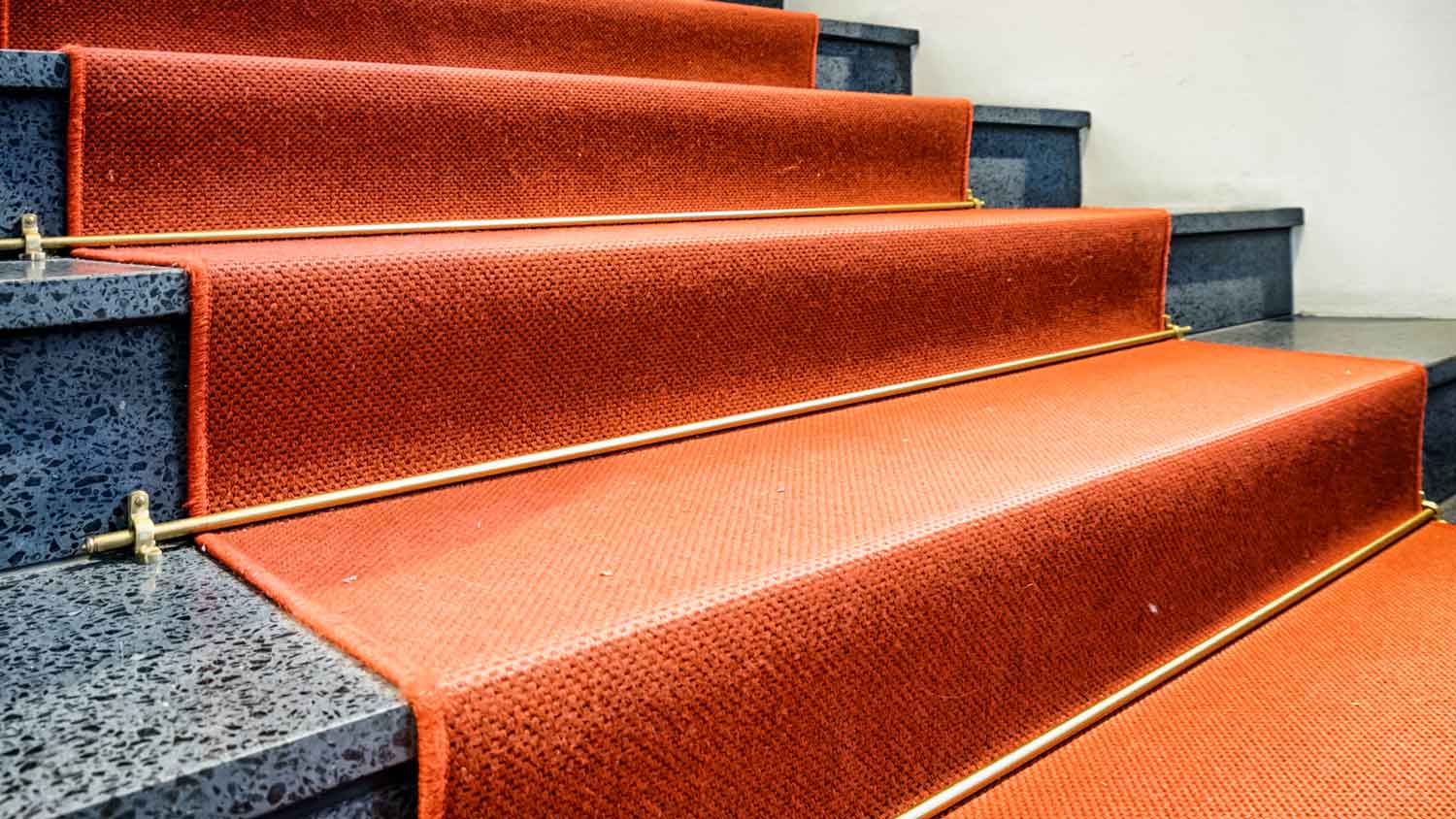
Want step-by-step elegance? Learn how to install carpet runners on your stairs, taking them from slick and boring to textured and attractive.