

Range hoods come in various styles and help keep your kitchen clear of odors, smoke, and grease. Here’s how much it costs to install a range hood by type.
Keep your kitchen smoke and odor-free

Your range hood's CFM rating depends on your stove width, kitchen size, and heat output, with most homes needing between 200 and 600 CFM.
Ductless range hoods cost $100 to $300, while ducted models range from $100 to $1,000 depending on the CFM rating and features you need.
Calculate your minimum recommended CFM by dividing your kitchen's total volume by four to ensure the hood clears smoke and odors every four minutes.
Hiring a local range hood professional removes the guesswork from ductwork routing and electrical connections, keeping your installation safe and code-compliant.
Accidentally setting off a smoke detector feels like a rite of passage for most homeowners. If you’re tired of desperately fanning the detector or quickly throwing your door open, upgrading your kitchen with a range hood is the best solution. And while a range hood is a good start, it’s only as effective as its CFM rating. So how much CFM do you need for your range hood?
Keep reading to learn more about range hoods, CFM, and how you can calculate yours.
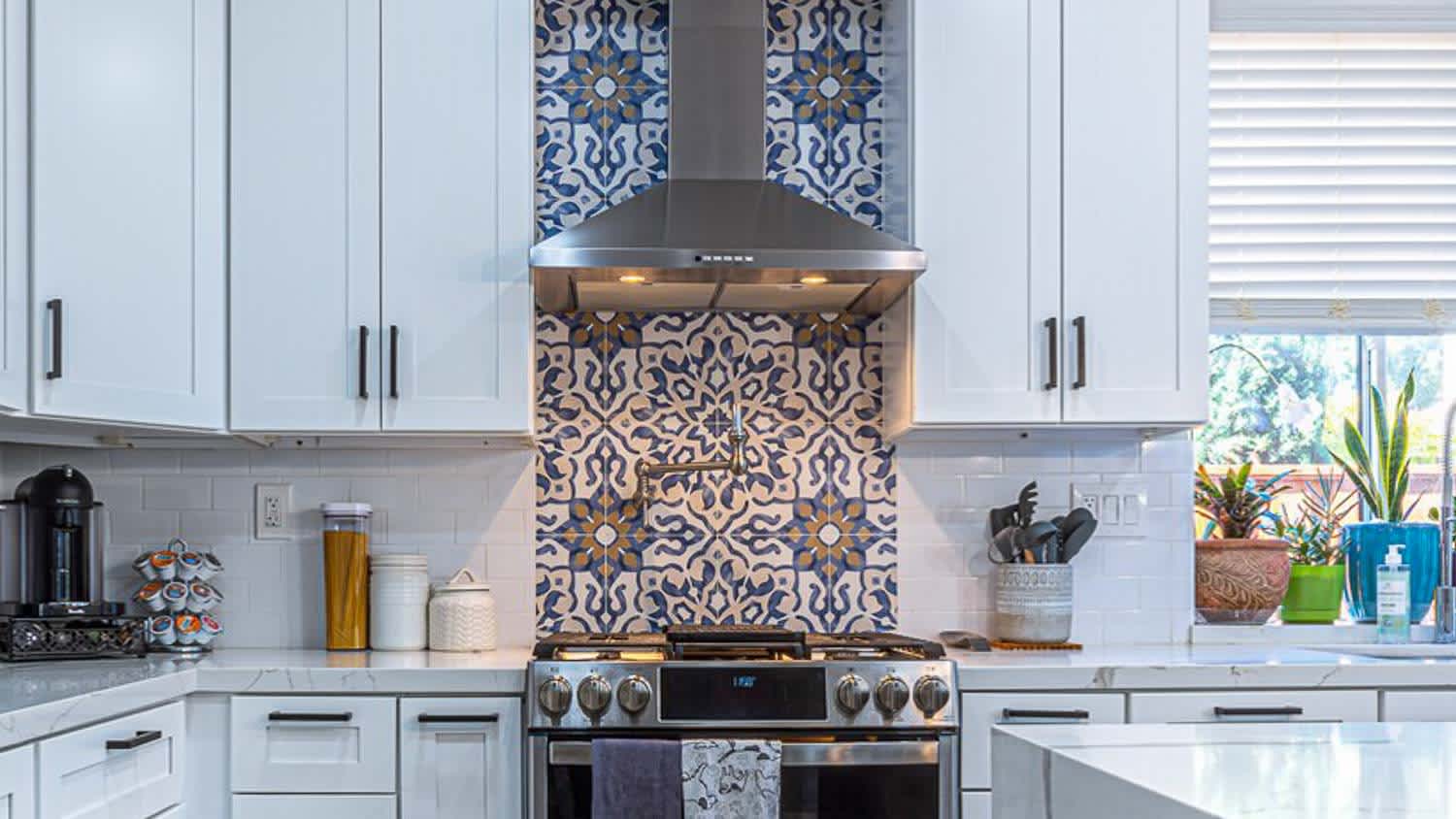
A range hood is a kitchen appliance that hangs above your stovetop. Kitchens are prone to smoke, grime, and grease buildup with smells that not only permeate the room itself but also get into the rest of the house. Range hoods help get rid of this. Homeowners can choose between vented and non-vented range hoods—or ducted and ductless. Ducted range hoods use a fan motor to remove smoke and odors by pushing the air out of your home. Ductless range hoods filter the air and recirculate it inside the kitchen. And lastly, convertible range hoods are the best of both worlds, giving you the option to vent air outdoors or recirculate it indoors.
Cubic feet per minute (CFM) is a measurement of a fan’s ability to move air. It measures how long it takes air to pass through the range hood. While we’re using this measurement for range hoods, it’s not exclusive to kitchens. You’d also use CFM when choosing an exhaust fan for your bathroom.
There isn’t any generalized CFM rating for the rooms in your home. Instead. It depends on several factors, but mostly the size of your kitchen. Essentially, the bigger the room, the higher the CFM rating you’ll need.

Figuring out what CFM you need for your range hood depends on a few factors. Get your calculators ready because you’ll need to crunch some numbers. To calculate CFM, you need to consider:
To begin calculating CFM for your range hood, you need to use your stove’s width.
If your stove sits against a wall, you’ll need 100 CFM for every 12 inches of your stove’s width. If your stove is on an island, you’ll need 150 CFM per foot.
For example, if you have a stove that’s 24 inches wide, you’ll need a minimum of 200 CFM if it’s against the wall or a minimum of 300 CFM if it’s on an island.
Using inches, you can calculate CFM with the following formula:
CFM = 100 CFM x (Stove Width / 12)
The most common stove dimensions are 30 inches wide. Using the formula, the average stove would need a minimum of 250 CFM.
250 CFM = 100 CFM x (30 / 12)
The CFM rating for your range hood should also be calculated using your stove’s heat output. The heat output of a stove is often measured in British thermal units (BTUs). If you have no idea what that measurement is, don’t panic. Many homeowners don’t. You can either refer back to your stove’s packaging or search using the model number online.
To calculate the recommended CFM based on heat output, divide the BTU rating by 100. On average, residential stoves have BTUs that range anywhere between 500 and 18,000. The minimum CFM rating you’d need to accommodate the heat output in your home likely ranges between 5 and 180.
The size of your kitchen is one of the most—if not the most—important factors when calculating your CFM rating. The purpose of the range hood is to cycle all of the air in your kitchen. And ideally, it should do that every four minutes (or 15 times an hour) while it’s on. To do that, your range hood needs to match the size of your kitchen.
Start by calculating the volume of your kitchen. Multiply the width, length, and height of the room to get the volume in cubic feet. Multiply the total volume by 15 (for the air exchanges) to find how many cubic feet the range hood needs to cover per hour. Then, divide that result by 60 (minutes in an hour). If you’re looking to “work smarter, not harder,” try the shortcut. Instead, divide the volume of your kitchen by 4 to get the minimum recommended CFM.
For example, if your kitchen has a floor area of 156 square feet and a ceiling height of 9 feet, you’d divide the volume (1,404 cubic feet) by 4 to get a minimum CFM of 350.
Once you calculate the minimum recommended CFM for your stove width, heat output, and kitchen size, use the highest CFM rating you calculated to move forward with selecting your range hood.

All your calculations will point you toward the minimum recommended CFM. Is it better to go with that CFM rating or go higher? Here’s a look at how they compare in cost, noise, and energy efficiency.
The cost to install a range hood can depend on the type of ducted system, material, and CFM rating. Ductless range hoods usually have lower CFM ratings because they don’t have to connect to ductwork that pushes smoke, odors, and grease outside. They cost less than ducted range hoods that require a higher CFM to get the air into the vent and out of the house. On average, ductless range hoods cost between $100 and $300, while you can expect to pay anywhere from $100 to $1,000 for a ducted range hood system.
Installing a range hood, especially one that requires ductwork, can be tricky. It’s worth hiring a local range hood installation professional to make sure the vent routes and connections are up to par.
Most homeowners will pay attention to the CFM rating, but range hoods are also measured in sones. Sones are a measurement of noise and refer to how loud an appliance is when it’s running. A one-sone rating is equivalent to the sound of your refrigerator. The ratings go up to eight sones which is comparable to traffic.
A higher CFM means a louder fan, but it’s still better than a low CFM range hood. Low CFM range hoods may be quiet, but if they’re not equipped for the features of your stove and kitchen, you’ll still find yourself dealing with smoke and odors. Additionally, many high CFM range hoods come with adjustable settings so you can control their level and noise.
Using your range hood at its highest CFM will help clear out your kitchen and your bank account. Running your range hood at a high setting requires a lot of energy. While range hoods with a higher CFM rating use a lot of energy, you can adjust them for your needs. This lets you manipulate the fan speed so you can settle on a CFM level that won’t hurt your wallet.
When compared to high CFM range hoods, low CFM range hoods are less expensive, more quiet, and more energy efficient. Even so, it’s still recommended to go with a high (or higher) CFM because of its versatility. While you can’t work around initial costs for the unit and installation, the adjustable settings of high CFM make them more desirable. Whether you need to turn it down for a light meal or turn it up when you’re searing a steak, an adjustable CFM gives you all the control.
According to Angi data, the most common service request for an appliance installation is split between a dishwasher and a microwave or oven, both at 17% of customers. Other common appliances homeowners request help installing include washers, dryers, and a refrigerator or freezer.
Positive experience. As previously stated, the replacement/repair could not be completed (no fault of the plumbing tech) b/c misinformation was rec?d by property management maintenance. Thanks to the plumbing tech for your efforts. Appreciate you!
 The Waterworks
Carpet repair done well. Scheduling was easy. Showed up on time.
 BR Flooring Installation
As usual with ECO, tech Jordan was outstanding, very professional, very knowledgeable, and very thorough with repairs made to tankless water heaters. Very highly recommend ECO!!!
 Eco Plumbers, Electricians, and HVAC Technicians
I would recommend this company to anyone! He showed up on time, was friendly, completed a very difficult repair on our dryer vent cover, was responsive, and pricing was extremely fair and competitive. I would have him back to do any of our repairs or cleanings without hesitation!
 U.S.A. Dryer Vent, LLC
Everything from initial contact to completion was absolutely top notch. We contacted the business during off hours to leave a message, and the owner still reached out to feel out the issue within minutes. We were scheduled and repaired within 48 hours. I cannot say enough about the...
 Supreme brick & chimney
Ace Fireplace Services came to the rescue for my chimney repair. They were quick to pinpoint the issue and worked their magic to fix it. My chimney is now in excellent shape, and I'm a satisfied customer.
 Ace Fireplace Services
On Sunday 2/26 I requested quotes via Angi from 4 refrigerator repair businesses. Northwest Appliance responded to me Monday morning (2/27) and my refrigerator was repaired by noon the same day. Great communication, they did everything they said they would. The technician had the parts on...
Great experience all together. Dog friendly, courteous, great results and honest with recommendations. Will certainly be using Cardinal in the future for any carpet repairs
 Cardinal Carpet Care & Repair
Working with Peter and his crew was a breeze. They were exceptionally polite and did a neat job to repair and seal our driveway. I will definitely talk to them first for additional work.
 Central Paving
Excellent! We were very satisfied with the service provided and the entire experience from start to finish. Very friendly and professional staff. I was able to instantly get in contact with them for a quote and the response time and overall communication remained quick and easy throughout the...
 Prime Cleaning Service
From average costs to expert advice, get all the answers you need to get your job done.
Range hoods come in various styles and help keep your kitchen clear of odors, smoke, and grease. Here’s how much it costs to install a range hood by type.

Discover the average kitchen hood cleaning cost, what impacts pricing, and how to budget for this essential maintenance. Get tips to save and keep your kitchen safe.
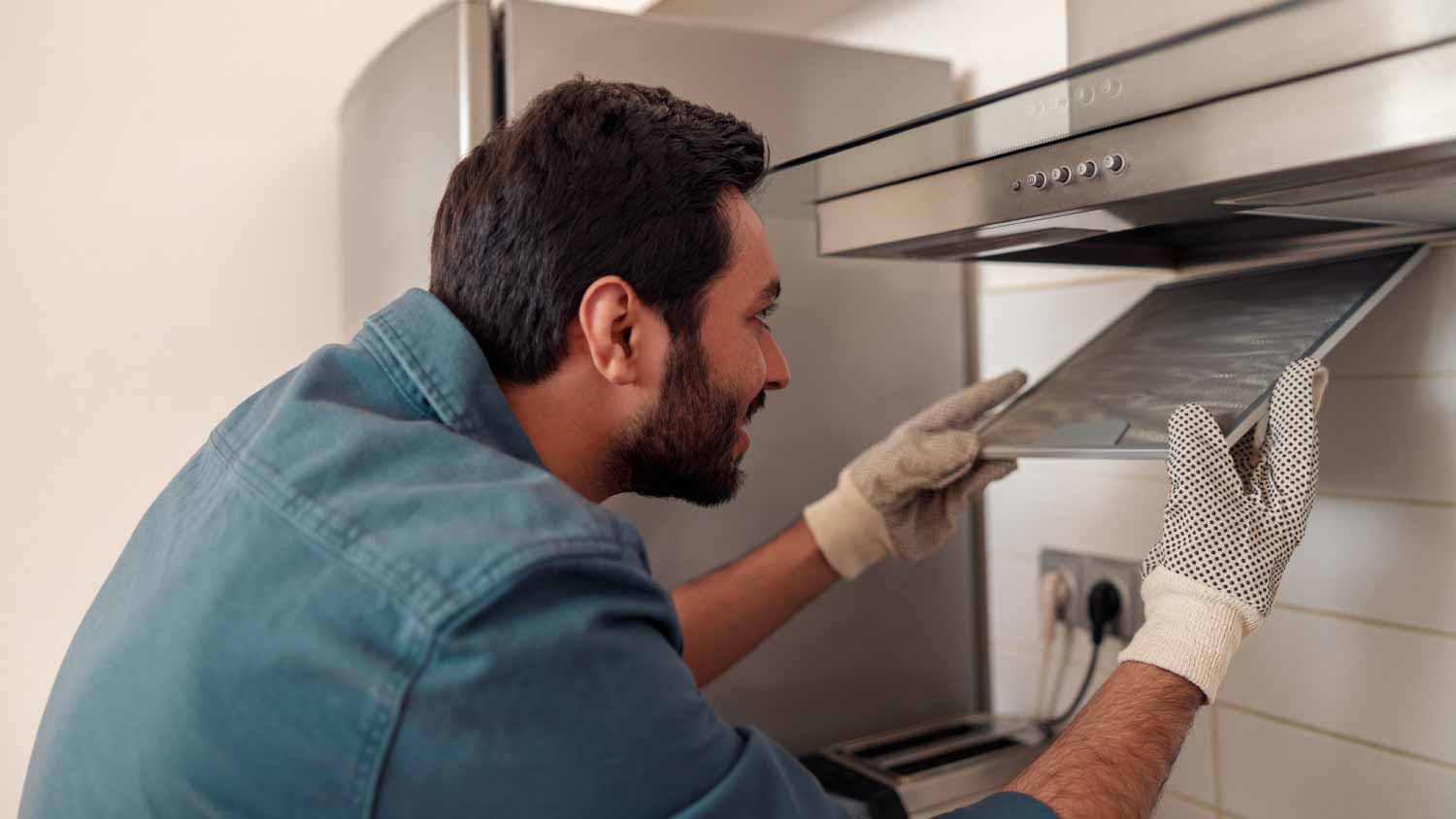
Who fixes range hoods depends on the cause of the problem, but appliance technicians, HVAC pros, and electricians are all possibilities. Read on to learn more.
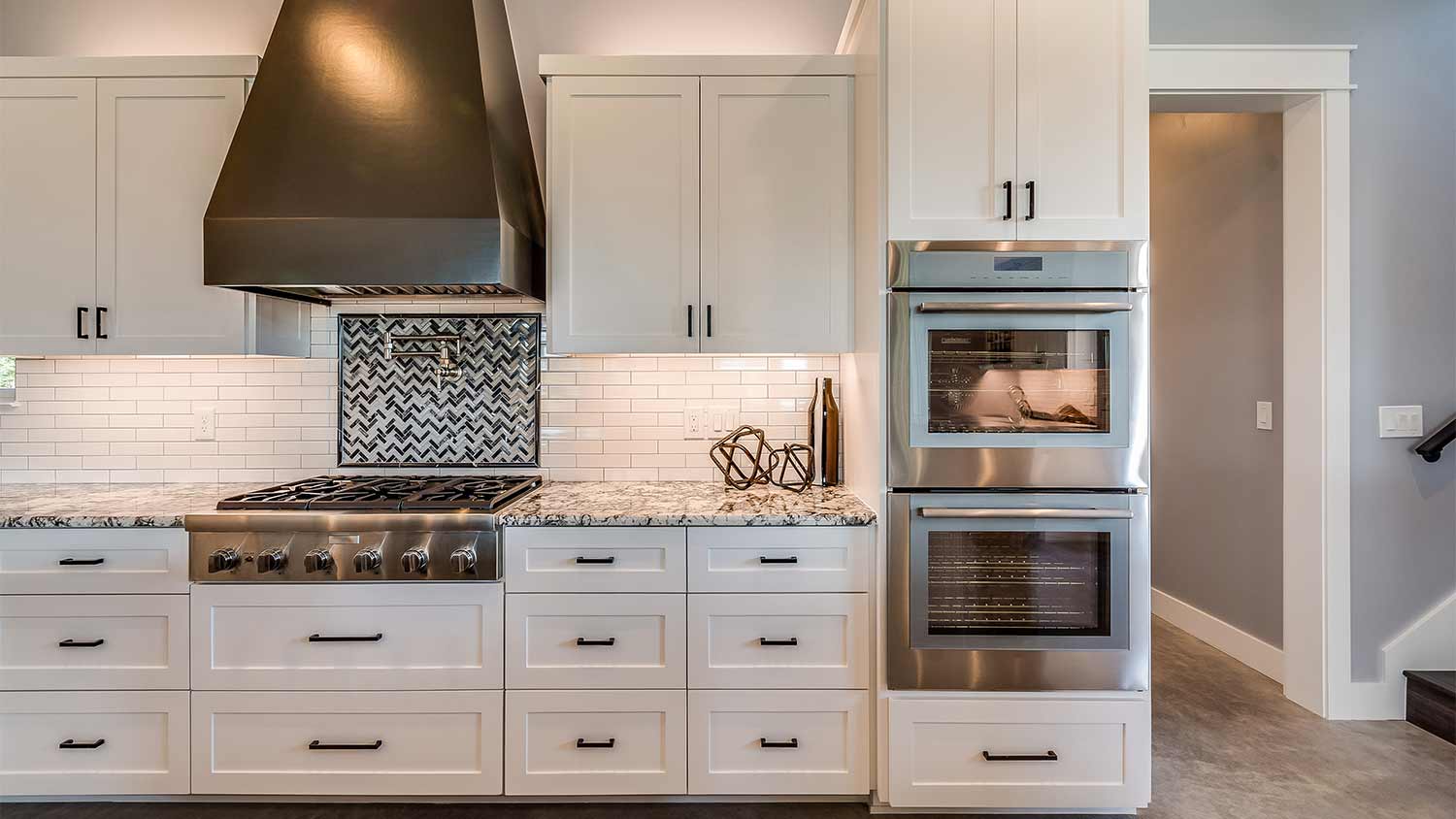
You may want to add a vented stove or ductless version to your kitchen remodel. Our guide will show you the differences between vented and non-vented range hoods.
Planning a kitchen upgrade? Learn about range hood installation, expected costs, and how to hire the right local pro for your project.
Learn how to hire a qualified range hood installer for your kitchen. Find reputable pros, ask the right questions, and get your ventilation project done right.