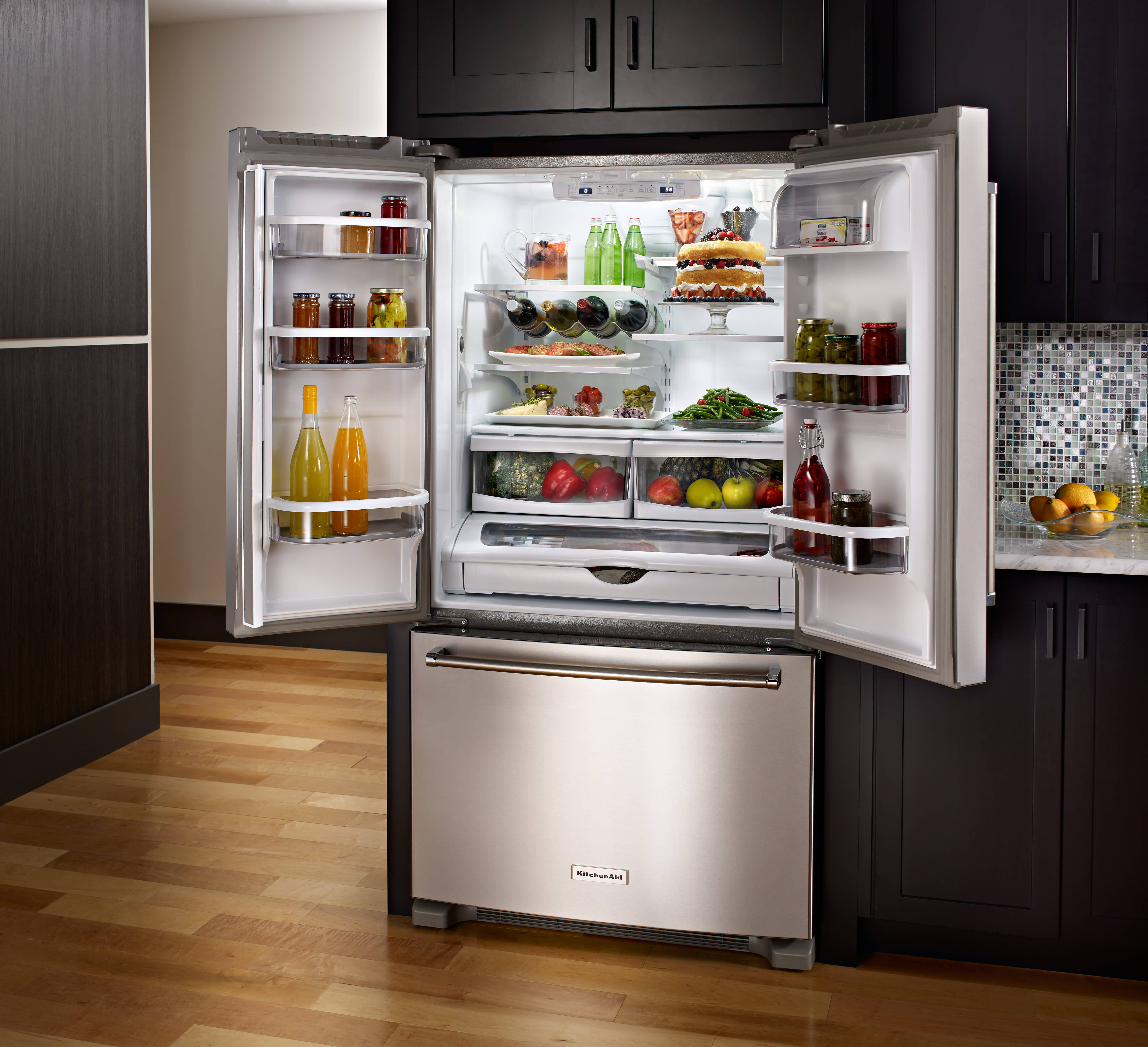
One of the most common fridge problems is a blown compressor motor. Use this guide to determine the cost of replacing the compressor and to estimate the total cost of your repair.
Help your food keep its chill with these options

Counter-depth refrigerators measure 24 to 30 inches deep and sit flush with your counters, while standard-depth models extend 30 to 36 inches for more storage.
Counter-depth models cost more upfront and offer less food storage, while standard-depth refrigerators take up more kitchen space and can make food harder to find.
Your choice between counter-depth and standard refrigerators depends on kitchen size, food storage needs, design preferences, and how much space you have for meal prep.
Hiring a local fridge repair professional provides helpful guidance on door seal maintenance and condenser coil cleaning, keeping your refrigerator running smoothly for years.
If you’re shopping for a new fridge, you’ll have your choice between standard-depth and counter-depth models. Standard ones are more traditional in shape and size and offer ample food storage. Meanwhile, counter-depth models offer a more uniform look with the rest of your kitchen’s design but don't have the same depth for food storage. Our guide helps you break down the differences between each so you can choose the right snack companion for your home’s needs.

Here are a few benefits and drawbacks of counter-depth refrigerators:
With its compact design, it won’t jut out after installation. If you have a smaller kitchen or want to achieve a uniform look, they’re smart options to consider because they give you more room to function in a cozy space. And, because it offers a shallower space inside, it allows you to scoot food to the front. That way, it doesn’t become lost in the shuffle and lead to forgotten food rotting. Finally, you can customize your counter-depth fridge with trim or exterior doors to match the look of your cabinets.
These are smaller fridges than your typical models because part of their goal is to look flush with the rest of your kitchen’s design. Counter-depth models are 24 to 30 inches in depth, supplying less storage than you would find with medium—or larger-sized fridges. This, along with the average higher price, are the main drawbacks to consider.

Meanwhile, here are the pros and cons when choosing a standard-depth refrigerator:
Standard-depth refrigerators are more traditional in design. It also has interior depths of 30 to 36 inches for medium refrigerator sizes, providing ample room for food storage. It makes it perfect if you have a larger household or do a lot of food prep and you need more storage throughout the week.
Also, it achieves a more traditional look for your kitchen. If the original design of your kitchen calls for a larger space to accommodate a fridge, then a standard-depth will tie into its design better than a counter-one will.
Of course, there are a few things to consider as well. One is that standard-depth fridges are bulkier, taking up more space. So, if you have a small kitchen, they minimize its functionality by giving you less room to operate. And with a deeper inside, food could become easily lost, leading to food waste.

When comparing these two options, you’ll want to account for factors, such as cost, space, functionality, and design. Here’s a breakdown of each:
Counter-depth models tend to be more expensive than standard-depth models, especially if you plan to add the trim. Along with unit costs, appliance installation costs are also a key consideration. For most fridges, expect to pay anywhere from $150 to $300 for installation, while if you need cabinetry work done for counter-depth models, your cost runs from $130 to $3,900.
More affordable: Standard-depth
Counter-depth models are sleeker by design, with depths between 24 to 30 inches. Conversely, you can buy standard-depth refrigerators in the following sizes:
Small: Are often 29 to 33 inches deep, perfect for cozier kitchens or smaller apartments.
Medium: These deliver between 30 to 36 inches in depth, making them ideal for larger apartments and homes.
Large: These offer depths of 30 to 36 inches but are also the tallest option available, with sizes up to 70 inches in height. This makes them perfect for larger homes or households requiring ample food storage.
More space options: Standard-depth
With a counter-depth refrigerator, you won’t have as much storage space in your fridge, but you’ll also gain more space around it for increased functionality—something to note if you have a lot of countertop appliances or need extra elbow room for chopping and dicing.
That said, if food storage is what you need, standard-depth refrigerators are the clear winners as they come in a range of sizes, with some offering 36 inches of depth—this is more than the 30 inches of depth that counter-depth fridges usually max out at. Those six inches can make a big difference if you have a large family or cook a lot.
Significant food storage: Standard-depth
If you want a more uniform look without any appliances jutting out, a counter-depth refrigerator works better. Conversely, if you want the functionality of a larger fridge and your kitchen design accommodates it, standard-depth models are the way to go.
Design: Tie
Standard fridges, when purchased from major appliance stores, often include delivery and installation in the price. If not, this service is usually available for a very small fee (about $100 to $200). Installation costs for a counter-depth fridge are usually higher, especially if you need cabinetry work. Installation costs for counter-depth fridges range between $130 to $3,900.
Wallet-friendly installation: Standard-depth
No matter which type you choose, here are some refrigerator maintenance tips to ensure it keeps running smoothly:
Clean the door seals: Twice a year, clean the door seals with a toothbrush and a combination of baking soda and water. You can also check the seal’s integrity by placing a dollar bill in and closing the door. If the dollar bill easily slides out, you’ll need a refrigerator repair pro to inspect your fridge.
Clean the condenser coils: At this same time, unplug and pull your fridge away from the wall to clean its condenser coils with a vacuum.
Replace the water filter: If your fridge comes with a water dispenser, replace the filter when the indicator light tells you to.
Empty and clean ice tray: If your fridge has an ice maker, you’ll want to remove ice monthly, as it can absorb odors from nearby food.
Clean freezer vents: These vents circulate air throughout the freezer. However, if they’re clogged with food particles, the air won’t move easily, which can potentially clog the drain tube.
Adjust temperature settings: Set it to the middle temperature setting. This ensures your refrigerator won’t have to overwork from higher temperature settings, which can reduce its operating life and lead to higher electrical costs.
Don’t fill your freezer fully: Ideally, keep your freezer three-quarters full at most. That way, it still gives your vents room to move air around, and you won’t have a frozen snowball of forgotten meal ideas.
Positive experience. As previously stated, the replacement/repair could not be completed (no fault of the plumbing tech) b/c misinformation was rec?d by property management maintenance. Thanks to the plumbing tech for your efforts. Appreciate you!
 The Waterworks
Carpet repair done well. Scheduling was easy. Showed up on time.
 BR Flooring Installation
As usual with ECO, tech Jordan was outstanding, very professional, very knowledgeable, and very thorough with repairs made to tankless water heaters. Very highly recommend ECO!!!
 Eco Plumbers, Electricians, and HVAC Technicians
I would recommend this company to anyone! He showed up on time, was friendly, completed a very difficult repair on our dryer vent cover, was responsive, and pricing was extremely fair and competitive. I would have him back to do any of our repairs or cleanings without hesitation!
 U.S.A. Dryer Vent, LLC
Everything from initial contact to completion was absolutely top notch. We contacted the business during off hours to leave a message, and the owner still reached out to feel out the issue within minutes. We were scheduled and repaired within 48 hours. I cannot say enough about the...
 Supreme brick & chimney
Ace Fireplace Services came to the rescue for my chimney repair. They were quick to pinpoint the issue and worked their magic to fix it. My chimney is now in excellent shape, and I'm a satisfied customer.
 Ace Fireplace Services
On Sunday 2/26 I requested quotes via Angi from 4 refrigerator repair businesses. Northwest Appliance responded to me Monday morning (2/27) and my refrigerator was repaired by noon the same day. Great communication, they did everything they said they would. The technician had the parts on...
Excellent! We were very satisfied with the service provided and the entire experience from start to finish. Very friendly and professional staff. I was able to instantly get in contact with them for a quote and the response time and overall communication remained quick and easy throughout the...
 Prime Cleaning Service
Description says they handle window repair including rotten hardwood - they called me back right away but didnâ t leave a voicemail. I followed up 3 days later and they said they donâ t do that kind of work.
 Window-Gurus
I needed reliable, affordable help the day of with moving a couple of appliances and misc items. It was a relief to hear back from Tanzillo almost instantly that morning so I could stop looking and move on to plan and prepare. Every part of the move was friendly and professional. Next time I...
 Tanzillo Concrete & Landscape
From average costs to expert advice, get all the answers you need to get your job done.
One of the most common fridge problems is a blown compressor motor. Use this guide to determine the cost of replacing the compressor and to estimate the total cost of your repair.
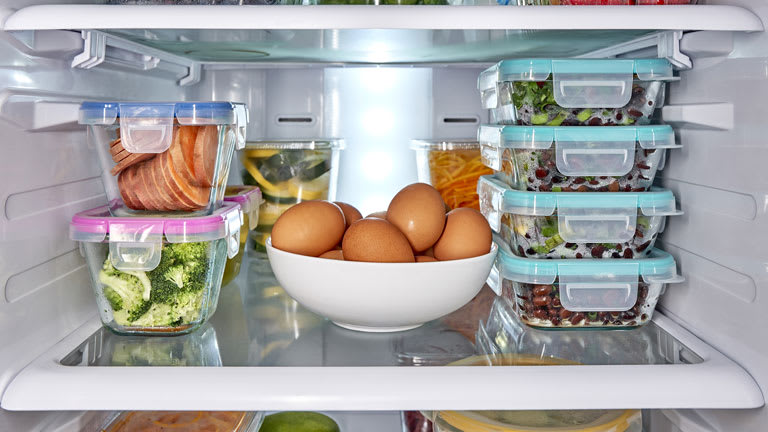
Get transparent refrigerator repair cost info. Learn what impacts price, compare repair vs. replacement, and find ways to save on your fridge repair.
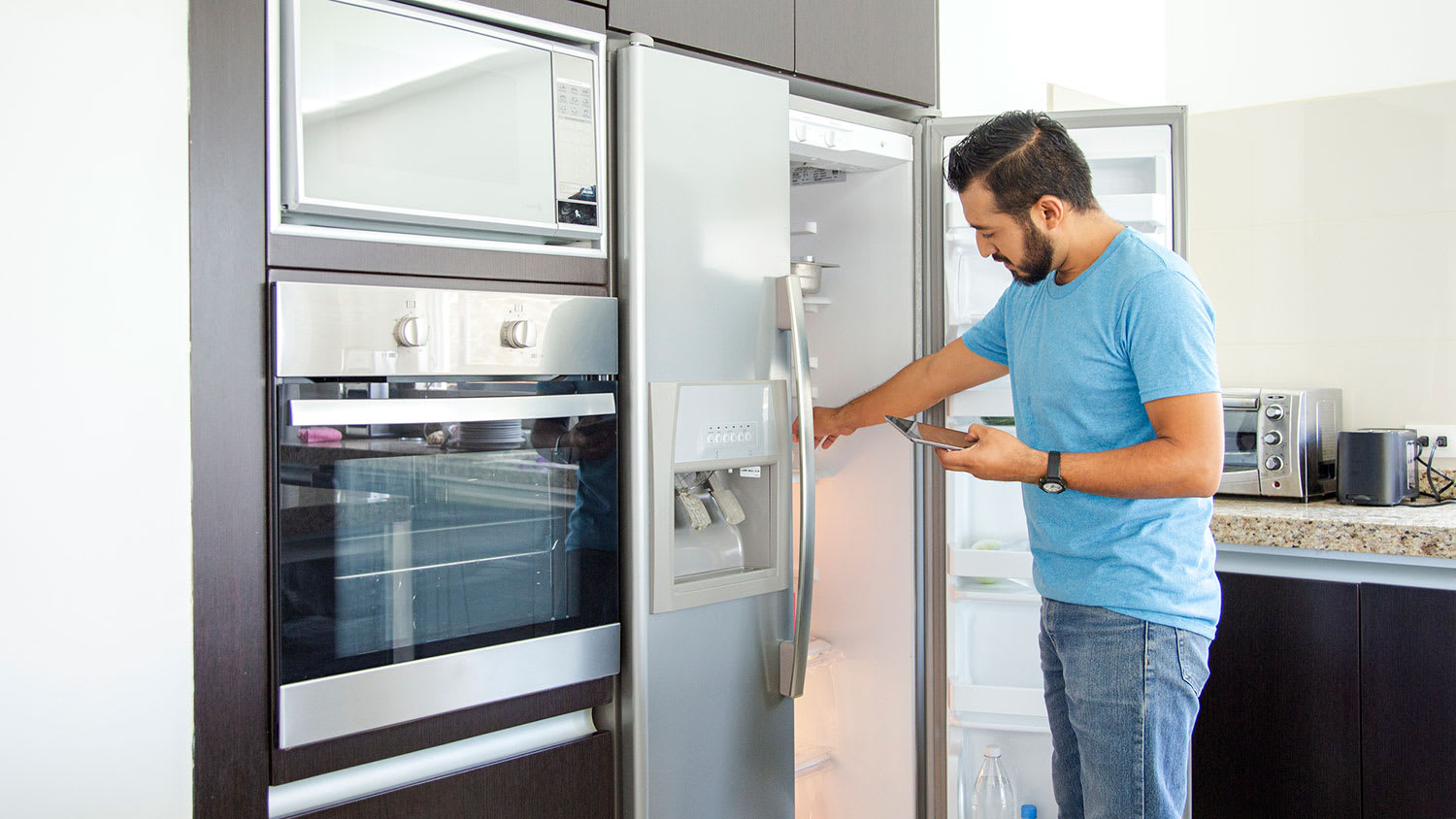
Buying a new fridge? Use this guide to refrigerator sizes to see what dimensions will fit in your space and provide the storage you need for your family.

If your old refrigerator is working too hard, it’s time to retire it and find a new one. Learn everything you need to know with our refrigerator buying guide.
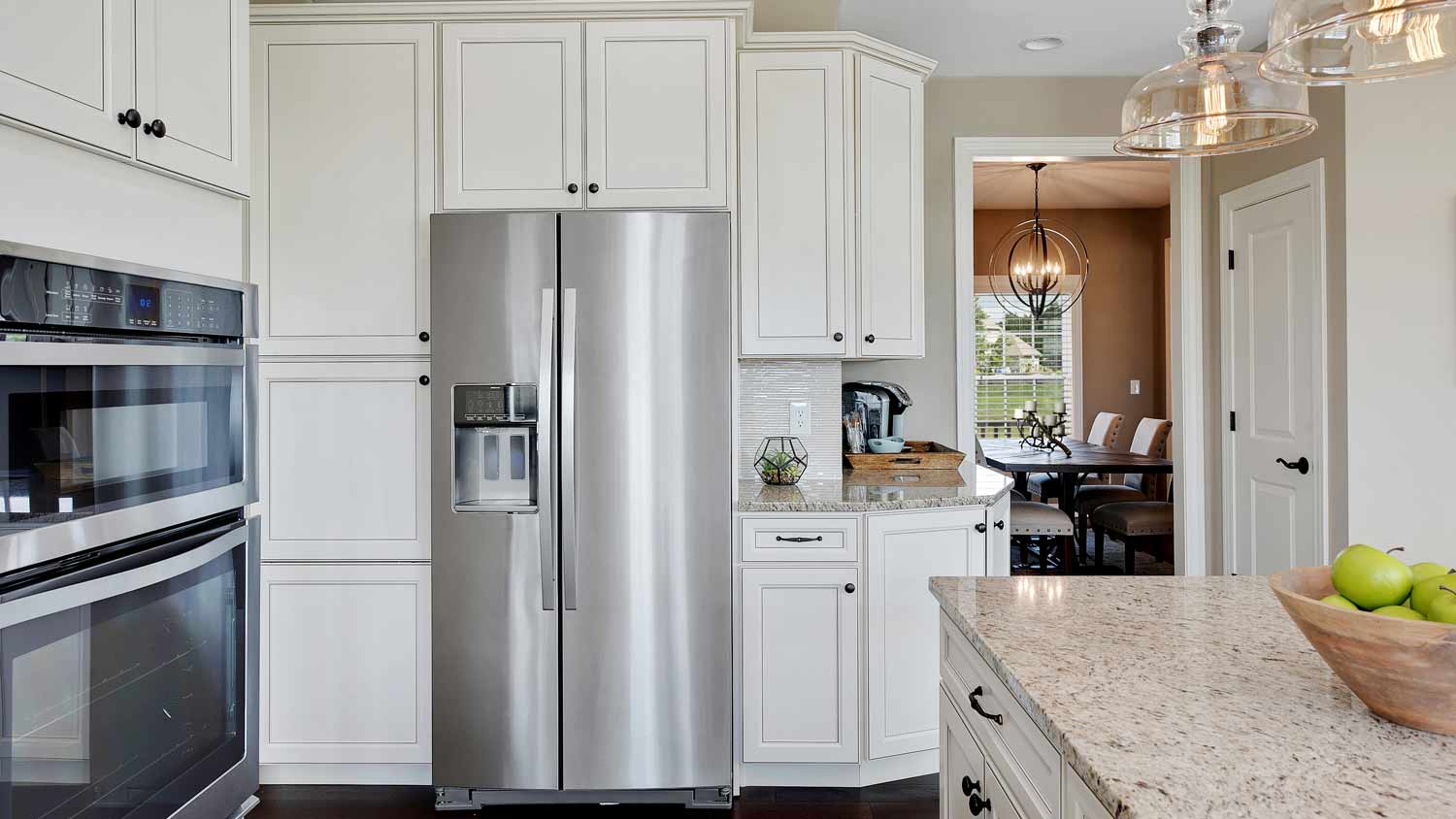
When your refrigerator runs continuously, it has to work harder, which can reduce its life span and efficiency. Use this guide to troubleshoot a running refrigerator.

It's important to get the dimensions right if you're installing new kitchen countertops. Read on to find out more about the standard depth of countertops.