




Top-rated animal fencing pros.

Get matched with top animal fencing pros in Avon, SD

Enter your zip and get matched with up to 5 pros

Need a pro for your animal fencing service project in Avon, SD?

Select your specific project to find the pro for you.

Find Animal fencing pros in Avon


Sioux City Fence

5.00(
4
)

Sioux City Fence

5.00(
4
)
Customers say: Quality work
Recommended by 100% of Angi customers
Recommended by 100% of HomeAdvisor customers

With over 20 years experience installing commercial and residential fencing, Sioux City Fence is the best choice for all of your fencing needs. Whether you are looking for a small dog run, a gorgeous vinyl fence to keep your children safe or a chain link fence to increase the security of your property, Sioux City Fence will exceed your expectations. Our skilled installers can assist you with almost any project you can imagine: Call us now at 605-540-0194 to have your project completed before the winter snows.

With over 20 years experience installing commercial and residential fencing, Sioux City Fence is the best choice for all of your fencing needs. Whether you are looking for a small dog run, a gorgeous vinyl fence to keep your children safe or a chain link fence to increase the security of your property, Sioux City Fence will exceed your expectations. Our skilled installers can assist you with almost any project you can imagine: Call us now at 605-540-0194 to have your project completed before the winter snows.

Animal Fencing questions, answered by experts

The depth of your post hole depends on your post length. If you decide on a two-rail fence, the posts are likely 6 feet long. You want your hole to be at least 1/3 of the post length. In this case, your post hole should be two feet deep.

If you opt for a three-rail fence, the posts will typically be 7 feet long, meaning your post hole should be 28 inches deep.

You’ll need to bury the garden fence about 1 foot underground. It’s tempting to save on materials by burying the fence just a couple of inches, but if you do so, determined pests will still be able to dig under the fence and access your plants. Burying your garden fence deep into the soil is an important step that allows you to attach a wire barrier to the fencing. 

Burrowing animals (like voles, moles, rabbits, and gophers) can’t dig or chew through this wiring, meaning that you’ll be keeping your prized petunias or your robust veggie garden from being eaten.

When deciding to replace or repair your existing fence, consider the 20% rule that fence builders reference. This rule states that if more than 20% of your fence needs repair, you should skip the repair and replace it. Additionally, if your fence is nearing the end of its life, it's often best to replace it.

Repairing the fence is a good option when you have minimal damage or damage from a specific event versus wear and tear. Your fence repair professional can assess the damage and compare the repair price with the cost of a new fence.

Who pays for a fence between neighbors depends on where the fence falls in regard to the property line. If the fence is completely on your property, you’ll have to pay for its installation, maintenance, and repair—even if it’s close to your neighbor’s side. If the fence falls directly on the property line, each neighbor is responsible for its costs. It’s a good idea to know your property lines before building a fence. If you want to build a fence on the property line, you must consult with your neighbor to work out a plan on who pays and how much.

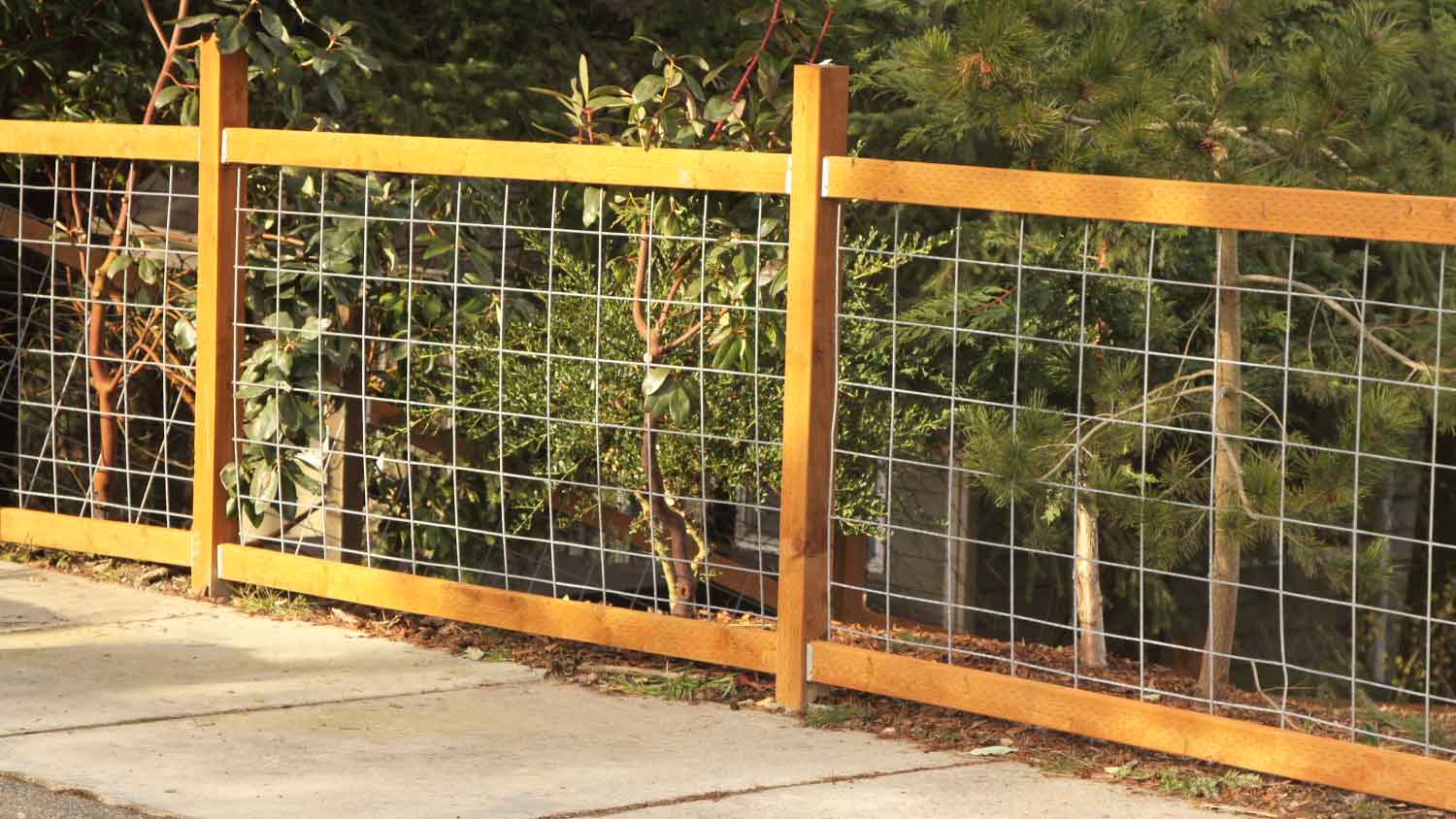
The plants that grow well on a hog wire fence are any type of climbing or vining plant. This includes garden crops such as green beans, squash, and potatoes as well as jasmine and ivy. Compared to other farm fencing costs, hog wire comes at an affordable price and makes a great trellis if you plant climbing vines along the base of the fence.

The Avon, SD homeowners’ guide to animal fencing services

From average costs to expert advice, get all the answers you need to get your job done.