






Top-rated deck maintenance specialists.

Get matched with top deck maintenance specialists in Atoka, NM

Enter your zip and get matched with up to 5 pros

Need a pro for your deck maintenance project in Atoka, NM?

Select your specific project to find the pro for you.

Find Deck maintenance specialists in Atoka

Avatar for Benny's Original Motor Works
Benny's Original Motor Works
5.0(
5
)

Serving Atoka, NM and surrounding areas

Approved

Free estimates

Emergency services offered

Small jobs welcome

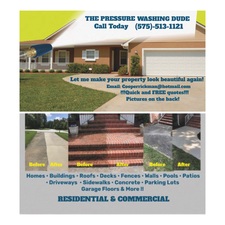
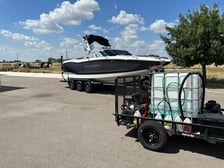
We are a power washing services mainly in power washing cars,aviation,heavy equipment,fleet washing and concrete.We are a new young business excited and motivated by every job and opportunity we get we are willing to work with anyone any special request or easy jobs.
Avatar for Becky's Painting
Becky's Painting
5.0(
3
)

Serving Atoka, NM and surrounding areas

In business since 2010

Free estimates

Emergency services offered

"She did great work and got it done quickly. Have hired her again for painting a bathroom again did great work. I am very pleased and will hire her again for any future projects!!!"
Recommended by100%of homeowners
Showing 1-10 of 38
Deck Maintenance questions, answered by experts

The best direction for a gate to swing depends on its location and purpose, but swinging inward is the general rule. An inward swing is often considered safer, prevents the gate from opening into public spaces like a sidewalk, and may be required by local building codes.

There are exceptions and specific considerations. If your property is on a slope, an inward swing might not be possible. For a deck gate, it's safest to have it swing away from any steps. In a backyard, the direction can be a matter of preference, though an inward swing can be helpful when carrying heavy items like a wheelbarrow into a garden.

Regardless of direction, ensure the gate can open fully without hitting any objects or blocking spaces. While an inward swing is standard, a gate that can swing both in and out offers the most flexibility if your setup allows for it.

Both deck footings and deck posts help prop up your deck. However, footings are the bottommost parts of a deck that touch the ground. They’re usually made of concrete. Posts are pieces of wood that attach to the top of the footings with brackets. They run upwards and connect to the underside of your deck to support its weight.

A deck that isn’t attached to a house is called a floating or freestanding deck. These standalone decks are built near ground level, so they usually don’t need deck stairs. Some don’t even require permits. Generally speaking, building a floating deck is faster and more DIY-friendly than constructing one that’s connected to your home.

Yes, deck pier blocks can be used as an alternative to traditional deck footings, particularly for small or low-to-the-ground decks. Unlike poured concrete and buried post footings, deck blocks don’t require digging or pouring. However, their use is regulated by local building codes, and they may not be permitted in areas prone to high winds, earthquakes, or hurricanes. Always consult your local building codes before choosing them for your deck project.

The problems with composite decking include a high rate of expansion and contraction from temperature swings. This characteristic can cause boards to split, delaminate, or peel. In addition, significant movement can cause shrinking, warping, twisting, and bending. For this reason, you should minimize moisture and ensure proper airflow below your deck.

The Atoka, NM homeowners’ guide to deck maintenance services

From average costs to expert advice, get all the answers you need to get your job done.