






Top-rated deck repair pros.

Get matched with top deck repair pros in Smith River, CA

Enter your zip and get matched with up to 5 pros

Need a pro for your deck repair project in Smith River, CA?

Select your specific project to find the pro for you.

Find Deck repair pros in Smith River

Honest Handyman
4.6(
89
)
Deck or Porch - RepairDeck or Porch - Repair - For Business

Serving Smith River, CA and surrounding areas

Free estimates

Emergency services offered

"Joshua has done a lot of work for us over the last year - from replacing blinds to fixing faucets, toilets and installing light fixtures, smoke alarms, shower fixtures, etc.  His work is always excellent!  He is very prompt, reliable, and does a thorough job.  I was thrilled to find such a great handyman since we had to move and rent out our house.  The only problem is that his schedule is very busy because he's so good!!
"
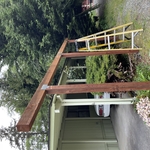
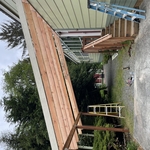
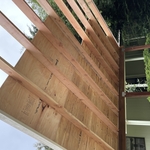
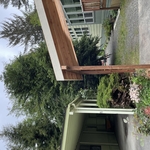
Additional Photos
Additional Photos
Recommended by96%of homeowners
Avatar for The Oddities
The Oddities
New to Angi
Deck or Porch - Repair

Serving Smith River, CA and surrounding areas

Free estimates

Small jobs welcome

Handyman services offered in the Rogue Valley.\n\n-House repairs/general carpentry\n-Lawn maintenance/landscaping\n-Irrigation & gutters\n-Deck build/rebuild\n-General home maintenance\n-Organizing/dump runs/property clean up\n-Other odd jobs\n\nNO major plumbing, electrical, or HVAC\n\nI am insured and licensed through the State of Oregon (The Oddities LLC) and will provide invoices for every job.\n\nPlease contact me with any needs you may have.

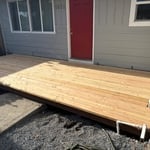
First step
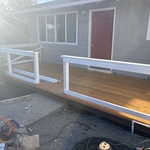
Baluster Frame
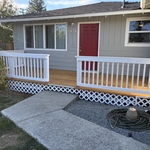
Finished project
Deck Repair questions, answered by experts

DIY staining or painting is manageable with proper preparation, including safety measures, necessary tools, and adherence to safe weather conditions for application.

There are approximately 5.33 board feet in a 2x4. You can use the board foot calculator in this article to easily find the answer. A 2x4 is 2 inches of thickness by 4 inches of width, so you need to find the length, with 8 feet being the most common. You’d use the calculator here to multiply 2 times 4 times 8, and then divide by 12, arriving at a total of 5.33 board feet. 

The best base materials for a ground-level or floating deck are typically gravel and crushed stone (also known as landscaping rocks). These options are inexpensive, provide excellent drainage, prevent weeds, and help minimize moisture buildup, which reduces shifting and rotting. For added stability and to evenly distribute the weight, you can use concrete deck blocks or pavers. While more expensive, concrete blocks and pavers offer a sturdier base than gravel or crushed stone alone.

Yes, deck pier blocks can be used as an alternative to traditional deck footings, particularly for small or low-to-the-ground decks. Unlike poured concrete and buried post footings, deck blocks don’t require digging or pouring. However, their use is regulated by local building codes, and they may not be permitted in areas prone to high winds, earthquakes, or hurricanes. Always consult your local building codes before choosing them for your deck project.

Yes, it is possible to add an under-deck drainage system to an existing deck by retrofitting it to the structure. This process may require some prep work. For example, many drainage systems are installed on top of the deck joists, which would require you to remove the decking boards and railings first. To avoid this, you could opt for a below-the-joist drainage system. For best results and to ensure proper installation, it is recommended to consult a professional. A pro can inspect your deck, make any necessary repairs, and then install the drainage system correctly.

The Smith River, CA homeowners’ guide to deck repair services

From average costs to expert advice, get all the answers you need to get your job done.