

Curious about air duct cleaning costs? Get insights into pricing factors, benefits, and how to tell when it’s time for a good cleaning.
Clean your air ducts and enjoy fresher indoor air

Cleaning air ducts with a wet rag removes dust and debris from accessible duct sections, improving your home's air quality and HVAC efficiency.
Expect to pay $270 to $510 for professional air duct cleaning, with average costs around $390, making it an affordable service.
You should replace your air filter every three months after cleaning ducts to keep your system running efficiently and prevent future buildup.
Hiring a local air duct cleaning professional provides thorough cleaning throughout your entire duct system using specialized equipment, preventing damage from improper DIY methods.
Your home’s ductwork is essential to keeping your home at a comfortable temperature in all seasons. But over time, dust and dirt buildup in the ducts can lower your home’s air quality and force your HVAC unit to work harder. This guide will explain how to clean air ducts to keep your home dust-free and prolong the life of your heating and cooling system.
Before you start work, completely turn off your HVAC system. Depending on your system, you can do this from the thermostat or by switching off the circuit breaker that powers the HVAC system.

Use a screwdriver to remove the supply and return vent covers. The supply vents blow hot or cool air into a room, while the return vents remove the air from the room and send it back to the HVAC unit to be reheated or cooled.
Next, cover the supply vents with paper towels to prevent dust from blowing into the room while cleaning the ducts. Once you've finished cleaning a vent, replace the paper towel.
As you make your way around the vents in each room, uncover the one you’re cleaning while leaving the rest covered.
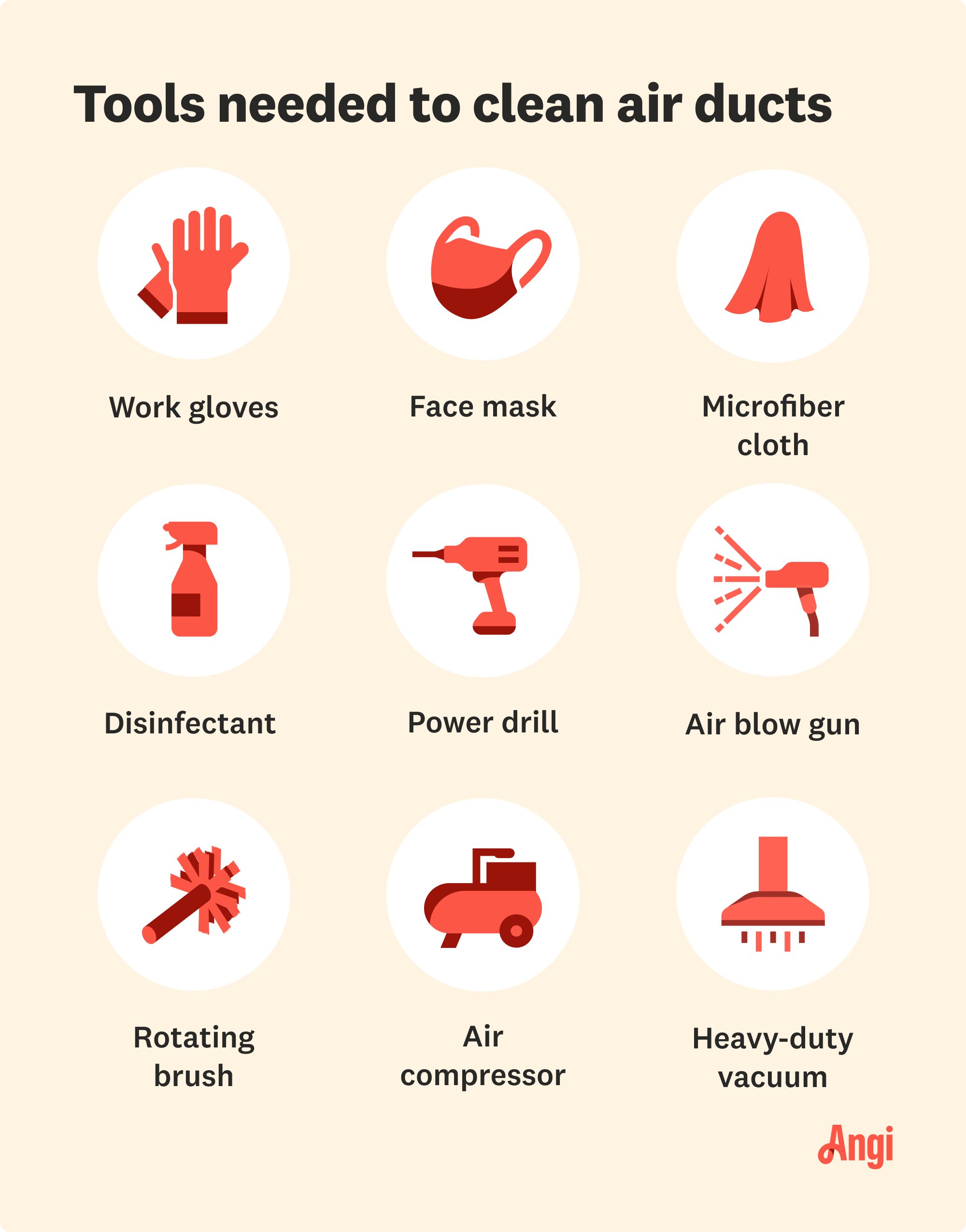
Once the supply vents are covered, grab the dryer vent brush and attach it to the cordless drill. Insert the brush into the vent and turn on the drill to clean inside the vent and loosen any stuck dirt or debris. Go slow and use caution to avoid damaging your ducts.
Put on your protective gear, including safety eyewear and an N-95 mask. Attach the vacuum extension hose to your shop vac and insert the hose into the vent opening as far as it will go. Turn on the vacuum and draw the hose toward you to remove the loosened debris inside the ducts.

Grab your microfiber cloth and dampen it. Use the damp cloth to wipe the inside of the air ducts as far as you can reach. Rinse the cloth each time you remove it from the vent, and repeat until the ducts are completely clean.
Wipe down the supply registers and return vents with your damp microfiber cloth. Use warm, soapy water to clean any stuck-on dirt and debris. Dry the registers and vents thoroughly before replacing them.

Once you’ve cleaned the ducts, replace your air filter. A clean air filter will help keep your ducts clean for longer. Ideally, you should replace your furnace filter every three months, though thinner ones must be replaced more frequently. Some types of filters, like media and HEPA filters, may last longer before needing to be replaced.
The final step is to turn your HVAC system back on via the thermostat or the circuit breaker panel. Check that everything works as it should, and call a pro if you have any concerns.
There’s no one-size-fits-all answer to how often to clean air ducts. Instead, there are several signs to watch for that suggest air duct cleaning is necessary:
Increased allergy symptoms in the home’s residents
Musty-smelling air in the home
Excessive dust in the air
Recent dusty home renovations
New HVAC system installation
Additionally, air duct cleaning is necessary if there’s extensive pest damage in the system or evidence of mold growth. It’s also a good idea to perform this service when you first move into a home to ensure the ducts are clear of debris from previous residents. If the air ducts are too dirty, your HVAC unit may need to work harder to deliver hot or cold air to your home, which can shorten its lifespan.
Duct cleaning can keep your HVAC system in good working shape. However, DIY cleaning can be labor-intensive, and the results are usually not as thorough as those of professional cleaning. The greater issue is that improper and careless cleaning can cause significant and expensive damage to your ductwork.
A professional air duct cleaning service near you has specialized tools and equipment to clean ductwork safely throughout the house, while DIY cleaning may be limited to the ductwork close to the supply and return vents.
Professional air duct cleaning costs $270 to $510, with an average of $390, so it’s an affordable service that can save you time and ensure your ductwork is left clean throughout. Don’t forget to tip air duct cleaners for a job well done!
I have used Columbus Worthington Air for years and recommend them whenever I have a chance. The staff is quick, courteous, and well-trained.
 ARS Columbus Worthington Air
This service was great. My air conditioner went out during the heat spell that we had. My husband has health issues and they came out that night and at 9:30pm the air conditioner was fixed and running. We are sooo very thankful, this is the company I will be using from now on and would...
 Mr. Mechanical Ohio
I had FabClean 614 clean my apartment, and she did an outstanding job. She was so professional and efficient. My apartment looks absolutely spotless every surface, every corner, all cleaned to perfection. Definitely highly recommend FabClean 614 if you're looking for top-notch cleaning...
 Fab Clean 614
I would recommend this company to anyone! He showed up on time, was friendly, completed a very difficult repair on our dryer vent cover, was responsive, and pricing was extremely fair and competitive. I would have him back to do any of our repairs or cleanings without hesitation!
 U.S.A. Dryer Vent, LLC
Best cleaning I've had at my property
Fantastic group, very communicative, and they really did a great job cleaning my condo. Will be hiring them for recurring cleaning!
 eMaids of Northern Columbus
Ace Fireplace Services' chimney sweep service is truly exceptional. They used advanced technology to ensure a thorough cleaning process, and my chimney has never looked better. I highly recommend their services.
 Ace Fireplace Services
100% satisfied with the work done by Supreme Brick & Chimney. Josh responded to my Angi request very quickly and squeezed our house into his schedule only a couple business days out. The chimney cleaning process was extremely clean with ZERO dirt going anywhere besides in Josh's vacuum. Very...
 Supreme brick & chimney
Excellent the crew was great did what I ask cleaned up and the price was awesome
 All Star Paving and Sealing
I definitely recommend Ramonaâ s cleaning service! I have booked services with her many times and she arrives on time, ready to work and provides a great service.
 Your Cleaning Solutions LLC
From average costs to expert advice, get all the answers you need to get your job done.
Curious about air duct cleaning costs? Get insights into pricing factors, benefits, and how to tell when it’s time for a good cleaning.
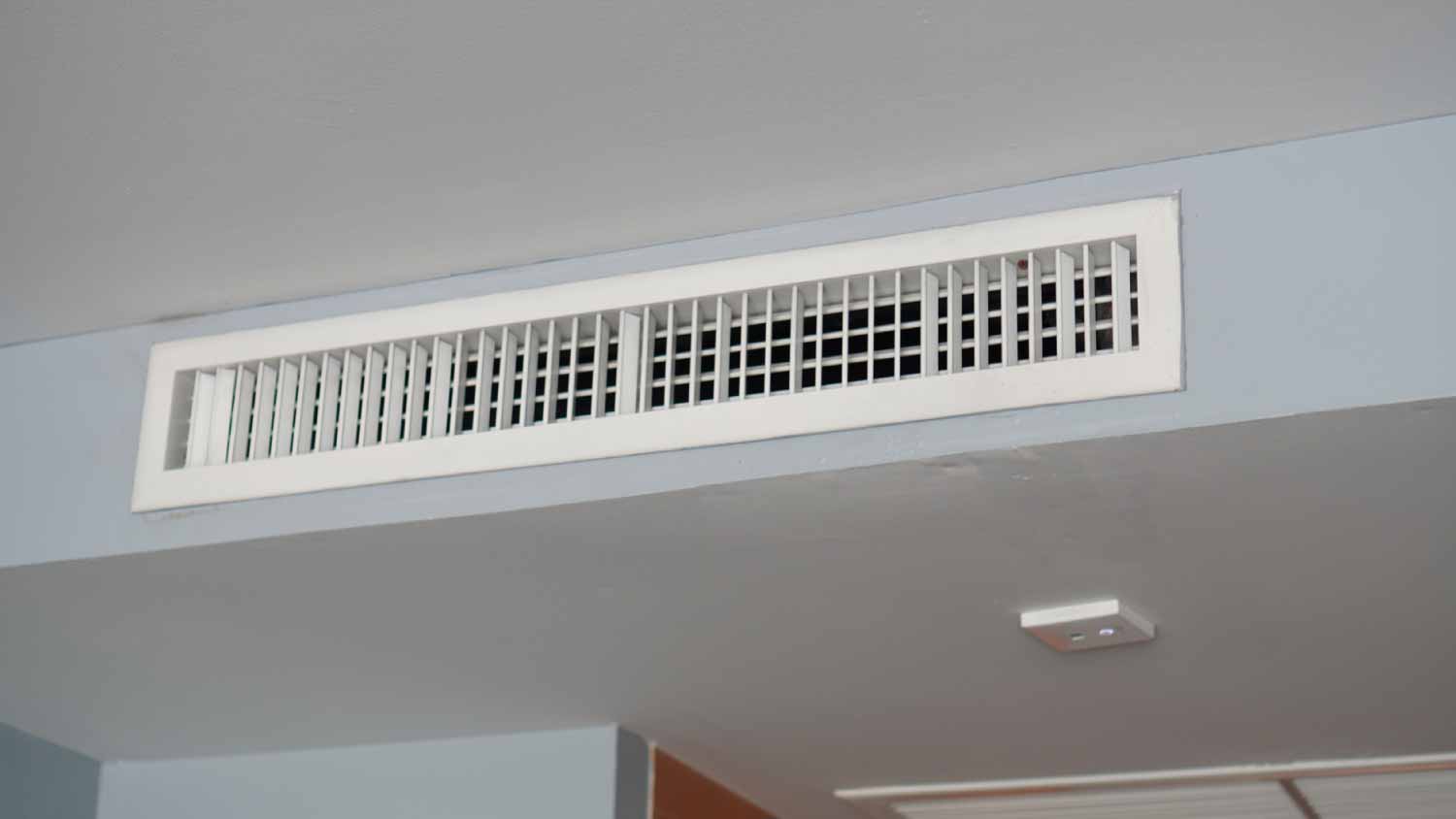
Regular air duct cleaning can keep the air quality in your home healthier. Learn about the most common air duct cleaning methods for removing debris, bacteria, and mold.
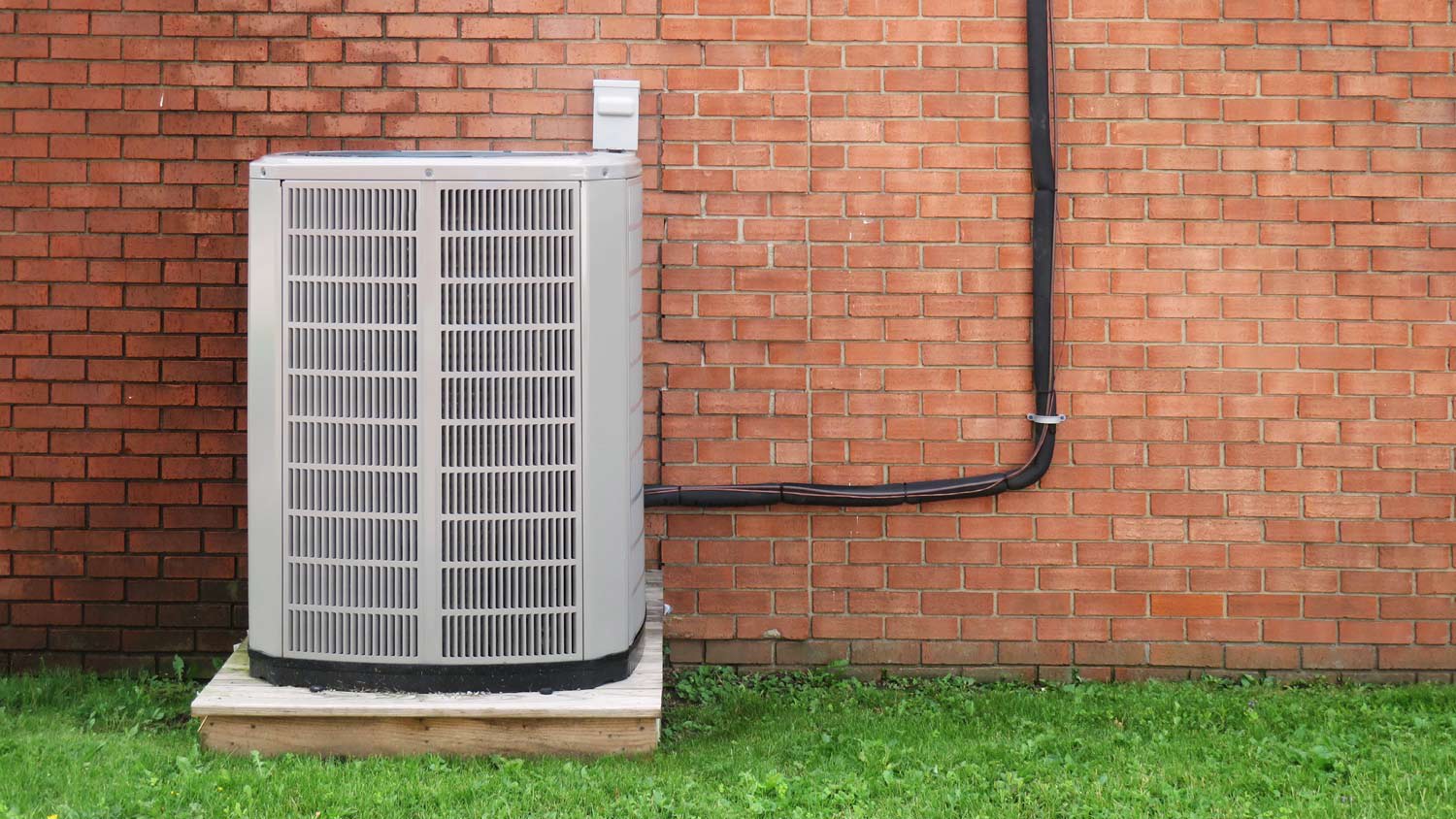
Properly maintained air ducts are essential to keep up the air quality of a home. However, it can be tough to know when to professionally clean an air duct, when to repair it, and when to chuck it and buy a new one.

Some believe that hiring an air duct cleaning pro to clean your ducts can have benefits for your air circulation. Here’s how to determine if it’s useful for you.

Perhaps you want to clean your ductwork but aren't sure when is the best time to clean air ducts. We'll explain everything to help you get on the right schedule.
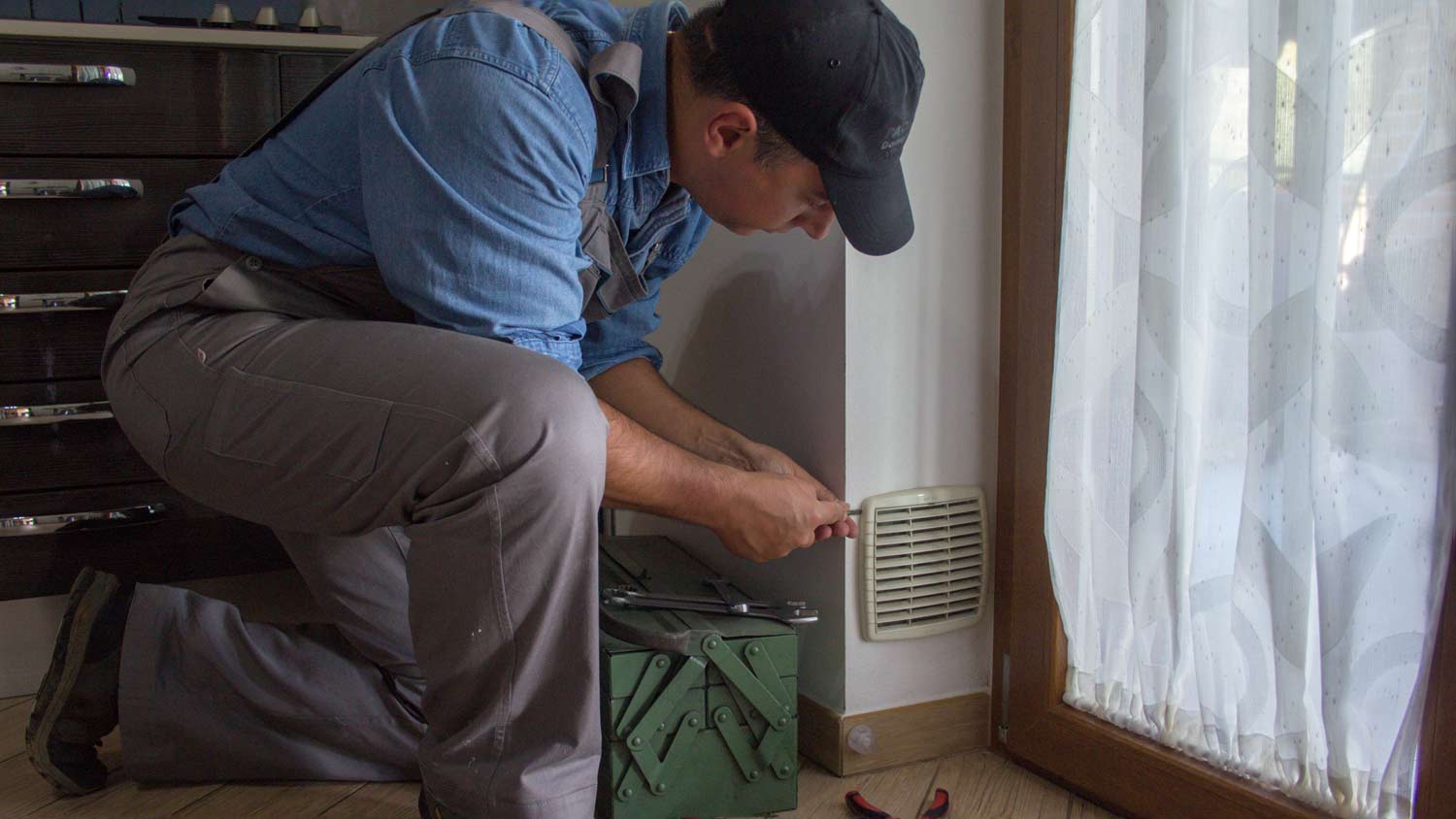
Are you wondering what to expect when your ductwork is cleaned? We explain the air duct cleaning process that professional HVAC technicians follow.