

Before you hire a licensed electrical contractor, you should learn the cost to run electric from the road to your house so you can budget for the project.
Go on and flex those DIY muscles; you can probably tackle these four electrical repair jobs

DIY electrical repairs stay manageable when you choose simple tasks like replacing light switches, outlets, or light fixtures and follow safety steps.
Outlet replacement and ceiling fan installation require careful wiring, secure mounting, and following local code requirements so your home stays safe.
Turn off power at your panel, use a voltmeter to confirm the circuit is off, and photo wiring before disconnecting.
Hiring a local electrical professional provides expert help with panel work, dedicated circuits, and home rewiring projects that require permits and specialized training.
In most cases, DIY home electrical repairs are not something the average homeowner should attempt. Your home’s electrical systems are inherently dangerous, and without the proper training, it’s easy to make a dangerous error. However, many minor electrical repairs are well-suited for novice DIYers. With advanced preparation and proper safety precautions, you can safely tackle the following home electrical repair projects.

If you’re itching to tread lightly into DIY electrical work, start by replacing a light switch. This project will expose you to many different switches, including single-pole, double-pole, three- and four-way. It’s important to replace the switch with the correct type for the power and switch to function properly. Be extra cautious if you’re installing a dimmer switch for the first time, as dimmer switches can overheat, especially if you use the wrong kind of bulb.
Most homeowners can readily replace an existing light fixture. This project allows you to flex your DIY muscles and modernize your home all in an hour’s work. Once the power is off and you’ve removed the existing fixture’s hardware, you’ll need to locate the junction box and separate the wires to remove the existing fixture and install the new one. Check to ensure the mounting brackets are sturdy enough to support the new fixture.
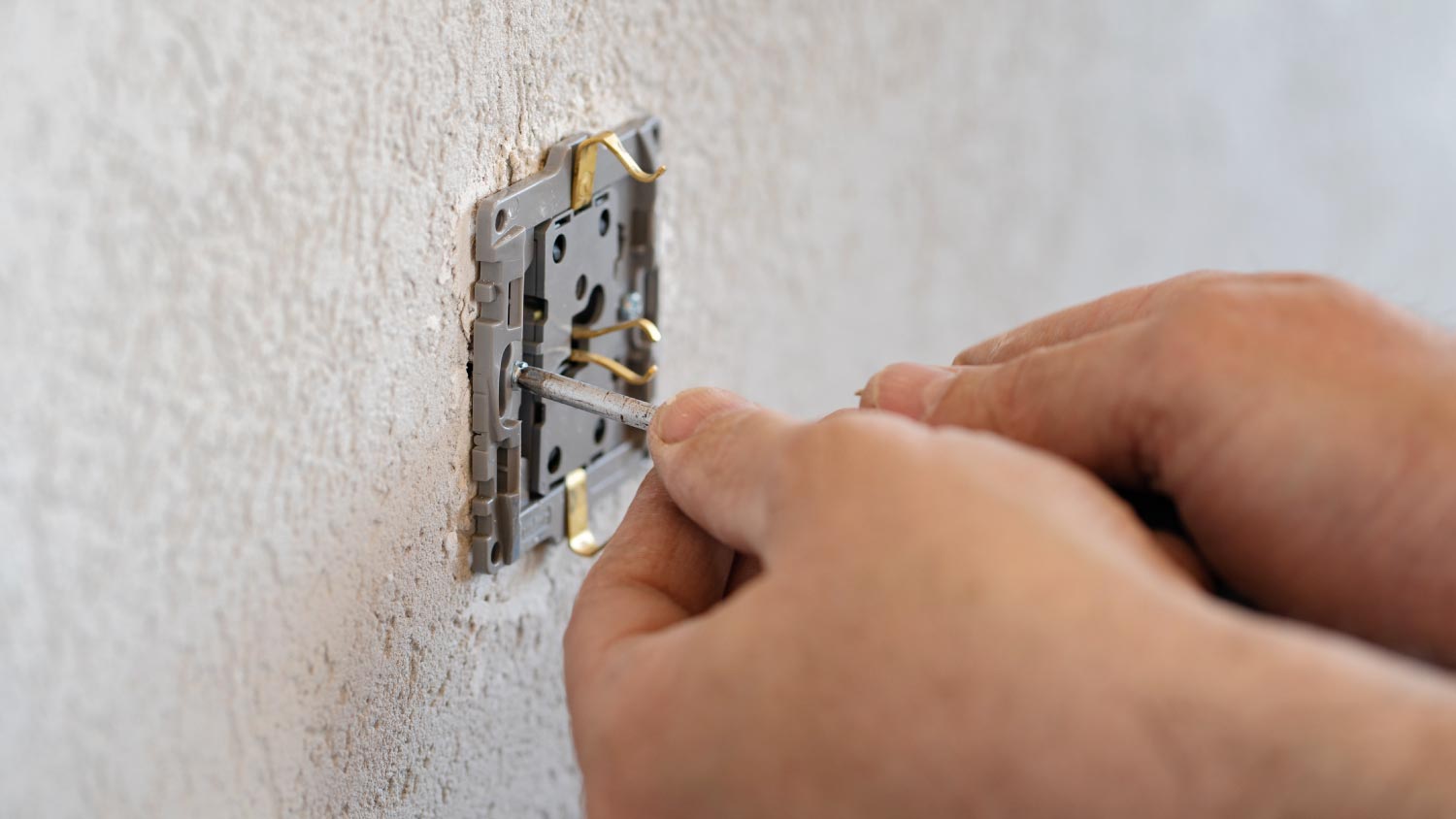
The humble electrical outlet: every room has them. Sometimes it’s just a crooked plate, but if your outlet feels hot to the touch or you’ve noticed sparks when you plug in an appliance, it’s time for a new one. After you test the wires behind the outlet plate for power flow, you’ll need to trim and strip the wire ends that are damaged, rewire them to the new outlet, and replace the wall plate.
If the room already has an existing light fixture and you’ve got a bit of DIY experience under your belt, you can most likely tackle a ceiling fan installation. You’ll need to ensure that the mounting bracket for the fan can support its weight. You may also want to have an assistant on standby to help you manipulate the fan and blades.
If you don’t have any experience working with electrical wires and there’s no existing wiring at the installation point, you might consider hiring a pro to handle the job.
Your favorite lamp will give out at some point. But with a little patience and about 45 minutes, you can wire new life into an old lamp. You can buy a lamp kit, or individual parts, to rewire a lamp. Make sure the lamp is unplugged before working on it. Carefully remove the lampshade, bulb, harp, and protective base. Loosen the socket and pull the wire out of the lamp. Once the socket is removed, guide the new wire through the lamp’s base. Attach the wires to the socket, reassemble, and test out your work.
Often, breakers can trip when there’s too many appliances plugged in at once. Other reasons why circuit breakers trip can include ground fault surges and short circuits. Don’t stay in the dark; find your circuit breaker box, usually a gray metal box attached to a wall. Open the door, and look for the switch in the “off” position. Move the switch back to the “on” position. If the switch is in the middle position, move it to the “off” position and then flip it to the “on” position. Test an appliance to see if this worked to reset the circuit breaker.
Extension cords come handy all over the house, whether you’re powering holiday lights or a fan to cool off guests during an outdoor summer party. If an extension cord stops working, repair it instead of throwing it away. Cut off the old plug and cut back the insulation. Strip the wires and twist them tightly. Screw them into the back of the plug. Match up the wires to the appropriate terminal screw:
The green wire goes to the green screw.
The black wire goes to the brass, or gold, screw.
The white wire goes to the silver screw.
Reassemble the plug and tighten the screws holding it. Plug in the three-prong receptacle to test out your DIY work.
The best way to avoid an accident in any DIY project is to prepare for the job properly ahead of time. Follow these home electrical DIY safety tips for a smooth project and successful outcome:
Ensure that you turn off the power at your electrical panel for the appropriate circuit. Use black electrical tape over the circuit switch so that no one else accidentally turns the power back on.
Use a voltmeter to ensure the circuit is really off.
Unplug any appliance or lamp before you begin working on it, even if you’re absolutely certain you cut the power to the circuit.
Before disconnecting any wiring in your repair work, snap some close-up photos with your cell phone camera. This will help you remember how to reconnect the wires correctly once you’ve completed the work.
An experienced professional should always tackle electrical projects that involve wiring or rewiring your home, installing a dedicated circuit, repairing or replacing your electrical panel. Getting these jobs wrong can result in damage to your property or even physical injury. Hire an experienced local electrician to tackle projects like these. On average, the cost to hire an electrician to replace an outlet ranges from $150 to $200. Professional ceiling fan installation costs anywhere from $50 to $200.
Some projects that involve electricity may require a licensed electrical contractor or a permit to perform the work. Bear in mind that your homeowner’s insurance may exclude from coverage any damage that occurs when an unlicensed person completes the work.
Great company! Price was competitive, technician showed up on time and completed the job (exterior electric Radon fan replacement) quickly. Would hire them again.
 MaGen Property Inspections and Radon Mitigation
I conferred with 2 other contractors before Armstrong Electric. Nick and his crew showed me that the project was not as convoluted as the other contractors made it appear to be. They completed the entire project on time. They were professional, friendly and cleaned up after at completion. I...
 Armstrong Electric LLC
The techs on my project, Shawn and Cliff, were great. They were prompt, courteous, and efficient. I am very happy with the results and would definitely contact Mr. Electric for any future electrical projects.
 Mr. Electric of Columbus
Victor was wonderful. He was on time, professional, and explained everything he was doing. He was thorough and figured out that the problem was electrical instead of with my HVAC system. Very knowledgeable. I will be using this company in the future for any HVAC needs. Thanks!
 Hubbs Heating & Air LLC
They were excellent. They did a great job. I was totally satisfied. They put tremendous effort in making sure the work was completed. They were great. They provided immediate response to any inquires I made. I would hire them again. I would recommend them to anyone who needs electrical work....
 Property-Tech Industries, LLC
Initially, the repairman could not find the problem. Apparently, there was some electrical shortage, but he could not find the definite problem. He left, but called back later to say he had a new idea. He returned and replaced the light switches on the doors. The refrigerator seemed to return...
 Appliance Pro LLC
The initial quoted price from a walk-through seemed high, but we discussed that the quote represented worst case scenario (re-wiring to two floors) and we were excited about the opportunity to have the work done in a timely manner with closing for fire safety reasons, etc. When the job was...
I have to tell you I am all about customer service - I will go out of my way and even pay more for it if you give me great customer service. <br> <br>In a world where this is hard to find, these guys were awesome! I can not sing their praises enough. They were prompt, personable, funny, got...
 Waibel Electric
When I challenged the markup on the generator, Bruder Electric withdrew its bid. They only want naïve customers.
We had no power to any of the electrical outlets in the MBR. We'd had an intermittent problem for a few years and they finally went out all together. We live on the 3rd floor of a 100 year old building and I know from past experience the wiring has been added to in hodgepodge ways over the...
From average costs to expert advice, get all the answers you need to get your job done.
Before you hire a licensed electrical contractor, you should learn the cost to run electric from the road to your house so you can budget for the project.

Discover the electrical outlet repair cost of different outlet types depending on the problem, location, amperage, and other factors.

Home electrical inspections add a layer of security to the home buying process and show you the overall health and safety of the property’s electrical system. For peace of mind, before you buy, read about what electrical inspections can do for you.

Is it time to upgrade your electrical panel? For the sake of safety, find out sooner than later by exploring our top signs that it’s time for an upgrade.

Electrical upgrades can improve your home’s energy efficiency. Keep reading to find out which electrical upgrades you should consider.
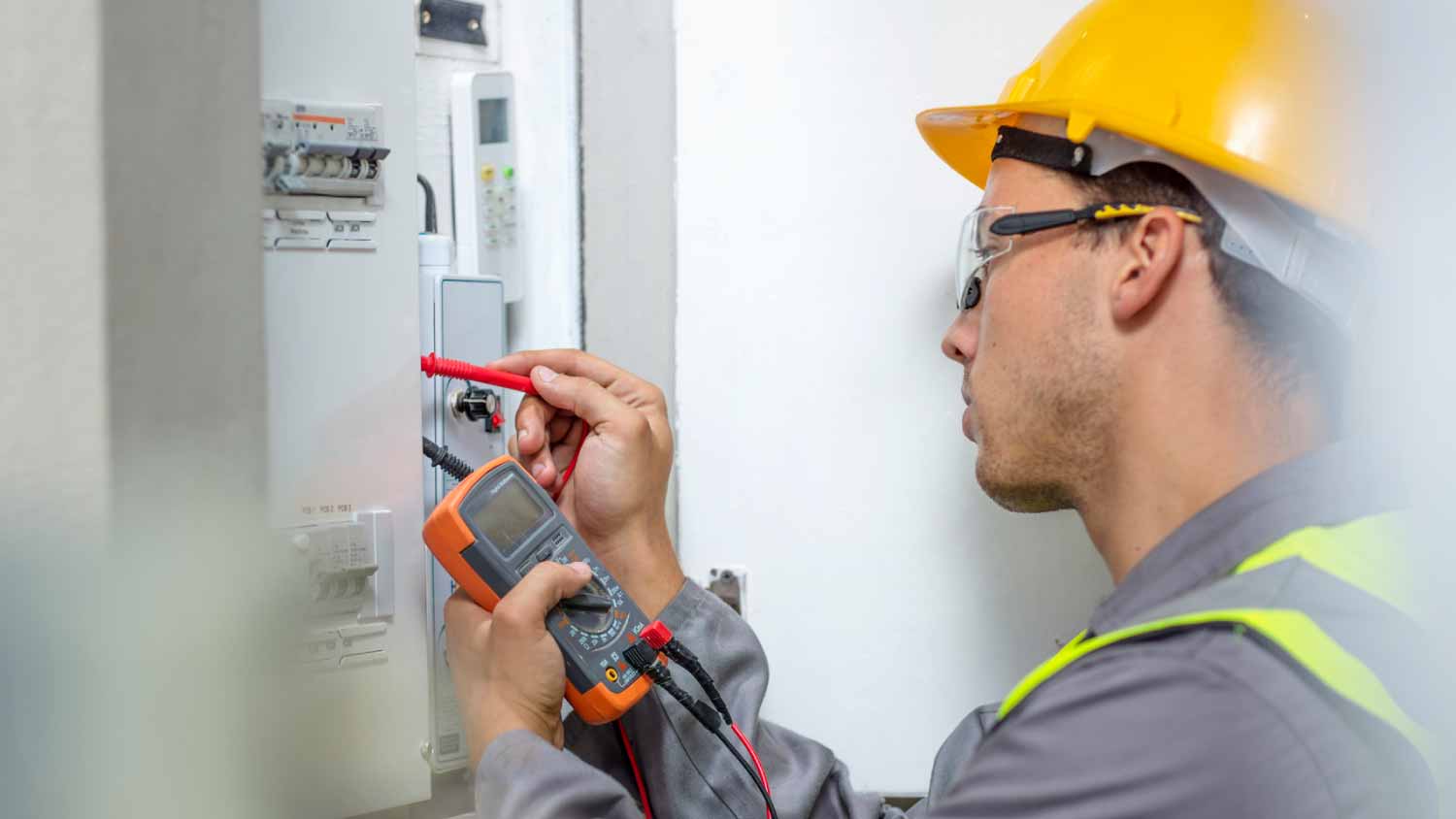
Nervous about what an electrical inspection might reveal about your new home? Following our home inspection electrical checklist can help ease your mind.